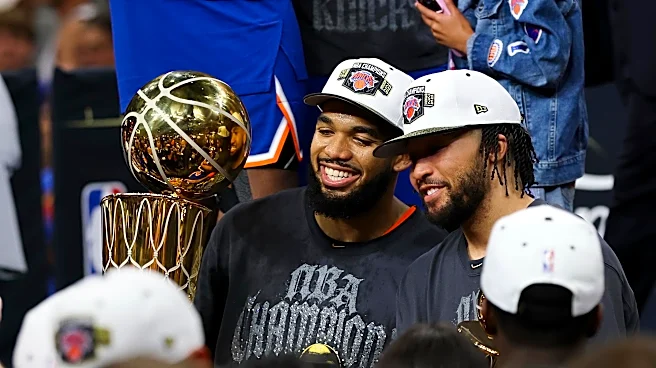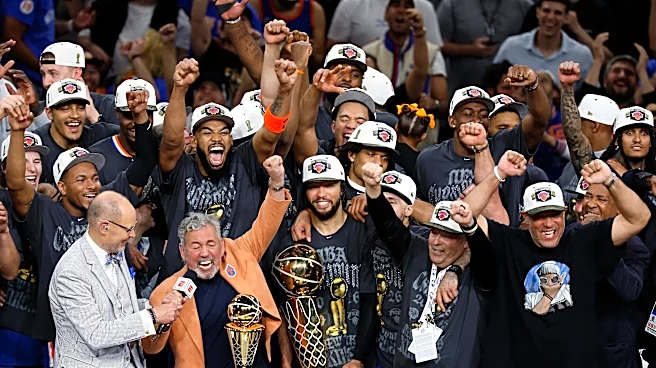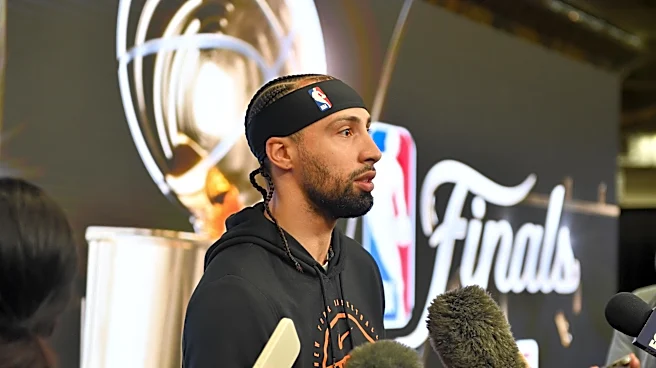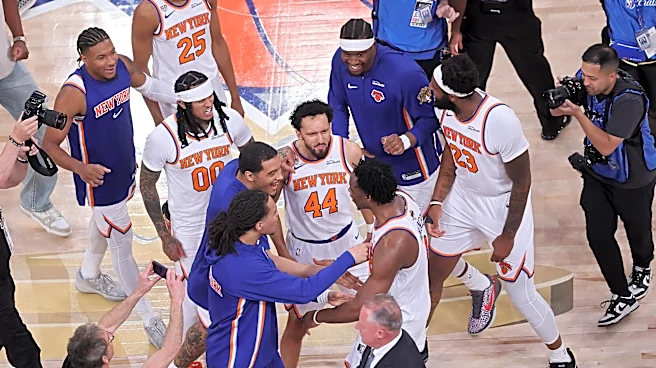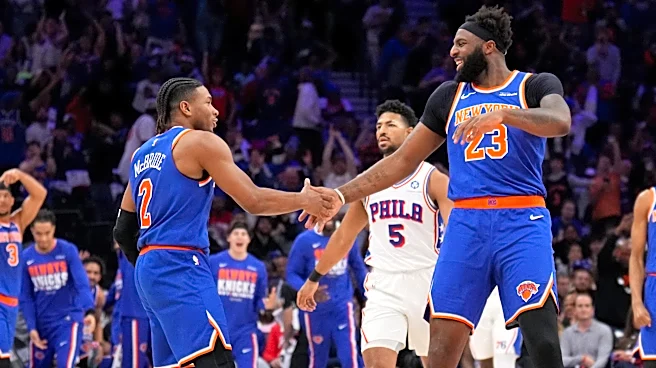





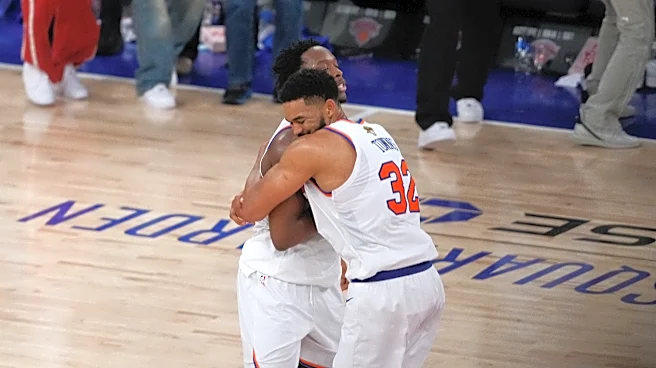
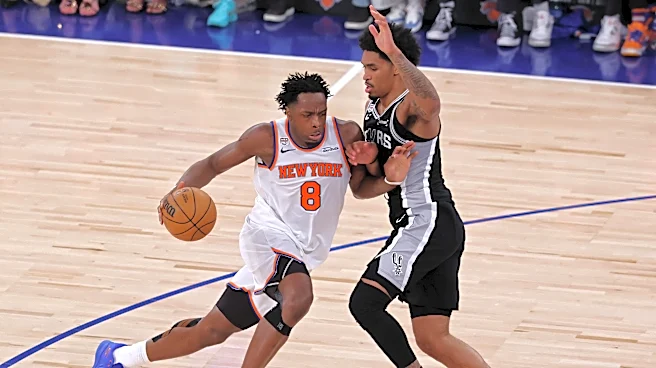


On Saturday night, the New York Knicks snapped their 53-year title drought.
Nick Nurse and the Sixers—whose own championship drought has now reached 43 years—could learn some valuable lessons from their Atlantic Division rivals.
Jalen Brunson, Karl-Anthony Towns and OG Anunoby led the way for the Knicks on their incredible championship run, but they were hardly the only players who made a major impact. Throughout the playoffs, the Knicks had a handful of reserves come up big in key moments.
Landry Shamet—who
wasn’t even a sure thing to make the Knicks’ roster at the start of the season—averaged 11.5 points per game between Game 3 of the Eastern Conference semifinals and Game 2 of the NBA Finals. Jose Alvarado had eight points, three assists and two rebounds as the Knicks rallied from an NBA-record 29-point deficit in Game 4 of the Finals. Miles McBride buried the Sixers with seven triples in Game 4 of the conference semifinals. And Mitchell Robinson averaged 4.8 points, 5.5 rebounds and 0.6 blocks in only 13.9 minutes per game throughout the playoffs.
Brunson, Anunoby, Towns, Mikal Bridges and Josh Hart shouldered most of the load for the Knicks, but they wouldn’t have won a title without those contributions from their bench. That should be a valuable takeaway for Nurse and the Sixers, who leaned far too heavily on their starters throughout the regular season at the expense of developing their reserves.
In today’s NBA, depth is king
Under then-head coach Tom Thibodeau, the Knicks were overly reliant on their starters, much like the Sixers have been under Nurse.
In 2024-25, Hart led the league with 37.6 minutes per game. Bridges was third at 37.0, while Anunoby was fifth at 36.6. Brunson was tied for 14th at 35.4, while Towns was tied for 19th at 35.0. The Knicks were the only team with even three players in the top 20 of minutes per game, much less five.
After the Indiana Pacers ran circles around the out-of-gas Knicks in the Eastern Conference Finals last year, the Knicks parted ways with Thibodeau and hired Mike Brown as his replacement. They did so in part because he worked under Golden State Warriors head coach Steve Kerr, who made a habit of going deep into his bench.
“In terms of the minutes, it’s a philosophy I had,” Brown told reporters ahead of the NBA Finals. “One of the many things I learned from Pop and Steve [Kerr]. Steve was really good at trying to play a lot of different guys. Not only that, a guy that hadn’t been in the rotation for a while, one game [a coach] might throw him out there as a starter. That kept guys engaged or on their toes.”
That wasn’t always a smooth process.
“No, I definitely didn’t see the bigger picture in those moments,” Hart told reporters ahead of the Finals when asked about being benched at times in the fourth quarter. “There was moments I went home and I’m like, ‘Damn, am I ass? Do I suck as a basketball player?’ There was a lot of those moments. Whenever your minutes go down or you get benched, you have that thought process. But for me, it was, okay, how can I build off of it?”
But it did pay off for the Knicks in the long run.
“Now I’m cool with it, sometimes,” Hart added. “Game 1 [of the Eastern Conference Finals], I got benched because Landry was out there hooping, and I was happy about it. But that took a little bit of time and self-reflection to get to that point.”
The Sixers haven’t reached that point yet.
Will the Sixers follow the Knicks’ lead?
Much like the Thibodeau-led Knicks, the Sixers played Tyrese Maxey a league-leading 38.0 minutes per game this past season. He averaged a career-high 28.3 points per game en route to his first All-NBA nod, but that type of workload is not sustainable in today’s NBA, particularly in the regular season.
VJ Edgecombe was second on the Sixers with 35.0 minutes per game. Brunson, who was named both Eastern Conference Finals MVP and Finals MVP, led the Knicks with 35.0 minutes per game during the regular season.
Joel Embiid (31.7 minutes), Kelly Oubre Jr. (31.5 minutes) and Paul George (30.7 minutes) all had their playing time kept relatively in check during the regular season, although that was partially due to injuries. However, Quentin Grimes (29.4 minutes) and Dominick Barlow (23.8 minutes) were the only other Sixers to play at least 20 minutes per game in the regular season.
Jared McCain, whom the Sixers sent to the Oklahoma City Thunder ahead of the trade deadline, played only 16.8 minutes per game prior to that trade. Despite landing on a Thunder team with significantly more backcourt depth than the Sixers, he averaged 18.0 minutes per game for them across 30 regular-season appearances and wound up playing a major role for them in the playoffs because Jalen Williams (hamstring) and Ajay Mitchell (calf) got injured.
Nurse seemingly had McCain on a short leash even though he was working his way back from both a torn meniscus and torn UCL in his right (shooting) hand. He never regained the form that briefly made him the Rookie of the Year favorite in Philadelphia, but with more freedom to make mistakes in OKC, he quickly found his footing again.
The Sixers don’t get take-backs on the McCain trade, but it should teach them a valuable lesson about empowering their reserves more throughout the regular season. They’re going to be top-heavy as long as they have Paul George and Joel Embiid under contract, but they can’t just rely on a six- or seven-man rotation and expect to go on a deep playoff run.
Once the postseason began, the Sixers began leaning even more heavily on their starters. Grimes was the only bench player to play at least 15 minutes per game. Perhaps Nurse didn’t trust the options at his disposal this season, but that can’t happen again next year.
The Sixers might not be as well-balanced as the Knicks’ starting five, but that doesn’t mean they can’t learn lessons from their division rivals. New team president Mike Gansey, who helped build a deep bench in Cleveland, should be emboldened to replicate that strategy in Philly after seeing how much the Knicks’ reserves contributed to their title run.
Unless otherwise noted, all stats via NBA.com, PBPStats, Cleaning the Glass or Basketball Reference. All salary information via Spotrac and salary-cap information via RealGM.
Follow Bryan on Bluesky.