
The bulk of the Detroit Tigers’ heavy lifting for the offseason has likely been accomplished already. They’ve brought back all of Gleyber Torres, Jack Flaherty, and Kyle Finnegan to keep the team together from the stretch run. Newcomers Kenley Jansen and Drew Anderson are tasked with securing the pitching staff better than Tommy Kahnle and Alex Cobb did last year. With some internal additions like Troy Melton and Kevin McGonigle, the team is currently a bit better on paper than when it opened 2025,
but veterans like Javy Baez or Zack McKinstry are unlikely to repeat their career-saving years. Still, marginal improvements are improvements, and the club is deep in average or better players. They’re still short in star power.
If there’s one area that seems due for improvement, lefty relief stands out. Tyler Holton remains the number one option while Brant Hurter fits into a flexible swing role. The best upgrade would be a high leverage lefty to let Holton serve as a Swiss army knife style reliever, but that player doesn’t really exist on the market. There weren’t many lefty relievers available this offseason, and the most interesting, like Matt Strahm and Caleb Thielbar, have already signed. The remaining options are more matchup relievers than everyday setup candidates.
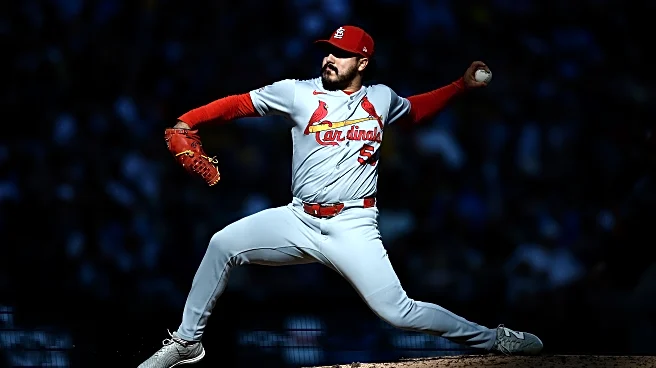
With that in mind, a leading candidate for the Tigers would seem to be JoJo Romero of the Saint Louis Cardinals. St Louis is in the midst of a sell-off; Sonny Gray and Willson Contreras are already Boston Red Sox, and rumors suggest more are to follow them out the door. A medium-leverage rental reliever seems very likely to join them.
Romero is a pretty typical left hander, but would easily slot in as a matchup reliever in Detroit’s bullpen behind Holton. Last year, Romero posted a 21.6% strikeout rate, 11.4% walk rate, a 2.07 ERA and a 3.40 FIP. His primary three-pitch mix is slider, sinker, changeup, and he’ll occasionally pop a four-seamer against right handers. The sinker comes in at 94.3 mph, a bit ahead of the 93.5 mph average for lefty relievers. Make no mistake, though, this is generally a pitch mix geared towards soft contact and damage prevention than strikeouts.
Romero’s primary strength is generating ground balls. His career rate is over 53% and in the top-50 in the league since 2020 among the several hundred relievers to throw enough innings over that time. Pair that with tremendous splits when he holds the platoon advantage – a career 28.8% K rate versus lefties will certainly play – and you’ve got a pretty easy fit on this team, even if all he does is repeat 2025’s numbers. Looking into the recent past shows how things can pay off if Detroit gets Romero back on track.
2023 was Romero’s best year in the major leagues. His strikeout rate spiked to an unprecedented 28.6% across the board and his walk rate was a fairly average 6.8%. There seems to be a few differences from how he pitched in 2023 than 2025 which might explain the gap in production. The first is a simple matter of velocity; until last year he averaged 95+ on the fastball, a full tick harder than his 2025 rate. Another is that his arm slot has gradually drifted down. In his best seasons, Romero was between 38-45 degrees, which is pretty different than the 31 degree arm slot he showcased this year. Whether intentional or not, it seems likely that dropping his arm slot hurt his velocity and his overall success. Generally, a higher arm angle helps a pitcher against the platoon advantage, which is where Romero has struggled the most of late. Working to bump his arm slot back up could be one of the mechanical tweaks an acquiring team works on to help optimize Romero.
A more simple fix could be to re-balance his pitch mix. In 2023, Romero was a 4-pitch pitcher. His four-seamer saw action about 15% of the time, while his sinker, slider and changeup all saw more equal usage between 22 and 33% of the time. Now, the four-seamer is mostly shelved, and his slider is used nearly 38% of the time. Some of this is likely because his role shifted from multi-inning man to lefty matchup artist, so he needed the changeup and four-seamer less often, but bringing them back could be an easy way to re-expand his role. What pitches you need and who you’re facing go hand in hand, of course, but Detroit is one of the teams least afraid of same-handed changeups. Working a good pitch back into his arsenal seems wise from here.
Cost-wise, Romero should be available for a minor return, although there are some reports the Baltimore Orioles are also interested in dealing for him. This is a single year of a good-not-great matchup reliever getting over $4M in his projected arbitration salary. That’s basically market rate, if not higher, for a pitcher of his caliber. Strahm, a substantially more legitimate late-inning reliever, was moved for an entirely average-looking pre-arb reliever. Swapping out a pair of 40 FV tier pitching prospects like Joseph Montalvo, Gabriel Reyes, or Eric Silva for Romero seems pretty fair on both sides.
The argument against adding most of the pitchers left in free agency is that the Tigers need more flexibility in their depth chart. Trading for a player without options like Romero could clog up the roster if he happened to struggle. Unless they’re going after a top starter or reliever, it may well be better to stand with what they have and adjust in-season. Still, the Cardinals are selling, and adding a left-handed groundball specialist wouldn’t be a bad idea if the Tigers are shopping the Cardinals’ roster.
This wouldn’t be a major blockbuster type of transaction to overhaul the roster. In fact, it would be a pretty boring acquisition, but one that fills an acute need in a way that fits Detroit’s current budget and spending pattern. As the roster stands, Finnegan and Holton seem set to handle the majority of lefties late in games, which is a fine, if inefficient, use of their talents. Bringing in a lefty more reliable than Hurter or Bailey Horn for lower-leverage situations against a pocket of lefties could prevent an arm like Brennan Hanifee or Beau Brieske from getting overexposed in unfavorable matchups. It would also free up Brant Hurter to work in a starting role should injuries to the rotation pile up early in the season. Romero would seem like the best available option to fill that role, and has a little upside for Chris Fetter to play with.