





In the wake of the loaded 2026 WNBA Draft class, most analysts and fans predicted this year’s first-year troupe to run one of the most competitive Rookie of the Year races in recent memory.
And while the newest members of the W have shown no shortage of talent, one supernova up north has nearly crossed the finish line, already.
Here’s our assessment of the Rookie of the Year race at midseason. In the comments, share your analysis and predictions.
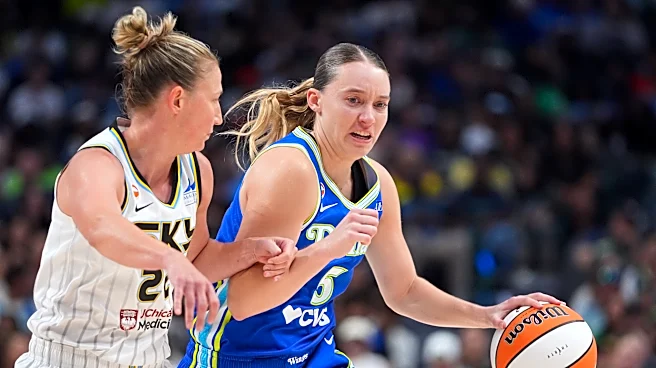
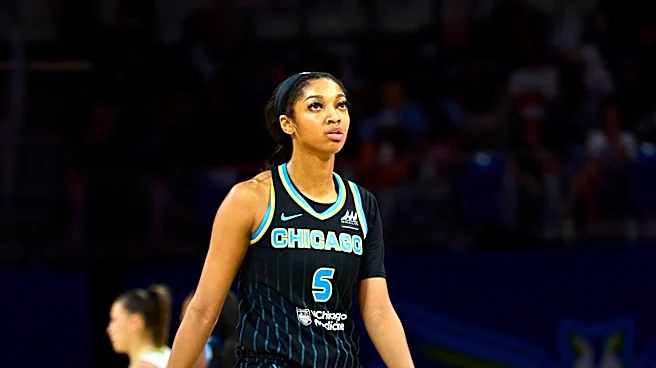
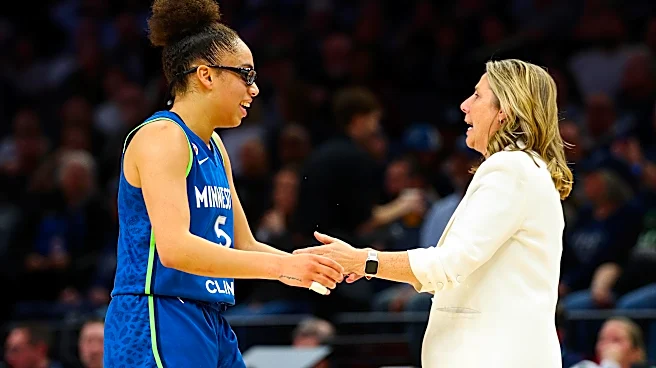
Olivia Miles (Minnesota Lynx)

After “falling” to No. 2 in the 2026 WNBA Draft, the biggest
question around Olivia Miles was whether or not she deserved to be the No. 1 pick.
One week before the All-Star break, that question has been answered, as Miles already has advanced her name in higher-level competitions: the MVP race.
Miles is eighth in the league in points per game at 19.4, eighth in assists at 5.7, and fifth in the league in offensive win shares. She’s shooting 51 percent from the floor, 36 percent from 3 and 88 percent from the line while leading the 19-6 Lynx in points and assists.
As good as the numbers are, Miles somehow passes the eye test in an even more dominant fashion. Her pick-and-roll mastery that we saw at Notre Dame and TCU has naturally translated behind her synergy with Minnesota’s bigs, and her scoring has eclipsed the heights it reached in the NCAA. Miles isn’t just putting up meaningless numbers in blowouts like many past rookies who lead their teams in scoring. She’s actively steering a veteran group back towards title contention.
That’s rare. Miles is the runaway favorite for rookie of the year, and it would take a disaster—and hopefully one did not occur in the Lynx’s latest win over the Los Angeles Sparks—to change that.
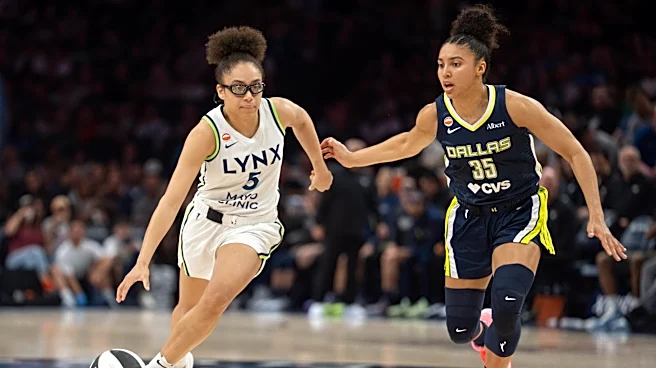
Azzi Fudd (Dallas Wings)

UConn star and national champion Azzi Fudd entered the WNBA with a lot on her shoulders.
External storylines clouded the public perception of Dallas’ choice to pick her at the No. 1 spot, and many questioned her ability to show a higher ceiling than the off-ball savant she was in Storrs.
While she hasn’t, and likely won’t for a while, shown some high-caliber creation ability, Fudd has certainly dispelled a lot of the doubt around her WNBA readiness.
Fudd started the season on Dallas’ bench, but hasn’t left the starting lineup since earning her first start in late May. She’s logged four 20-point outings, and has only been held to single-digit scoring lines in seven of her 23 games. She’s shooting 37 percent from 3 on high volume, but her 53 percent clip from 2-point range on more than six attempts per game is a more promising sign of versatility that many worried wouldn’t show up in the pros.
Fudd is still navigating ancillary moments of impact on offense, which was a real concern for her prospect profile. She’s a very poor rebounder, and doesn’t create enough advantages to be seen as anything more than a connective passer. The scoring is keeping her afloat, but she still hasn’t cemented herself as a high-ceiling No. 1 pick.
Awa Fam (Seattle Storm)

Awa Fam and Flau’jae Johnson have both been painting equally beautiful rookie portraits in Seattle, but a personal preference for efficiency makes me lean towards Fam as the stronger candidate for Rookie of the Year.
Fam missed the first six games of the WNBA season while concluding her season with Valencia in Spain, but quickly hit the ground running as she was integrated into Seattle’s system. Fam is averaging 11 points per game on almost 50 percent shooting and a surprising 35 percent from the 3-point line. Her shooting was a possible upside in her prospect profile, but most expected a more delayed manifestation of that part of her game.
Fam still has the rawness of a 20-year-old rookie, as was expected, but she has had games where she’s looked closer to impactful than some may have expected coming into the W. She had a streak in mid-June where she scored 15-plus points in four of five games, helping Seattle find upset wins over New York and Atlanta.
Fam has left something to be desired with her rebounding, but that can be fairly attributed to her positional change since coming to the W. Seattle head coach Sonia Raman has Fam slotted in as a wing rather than a post player, allowing for Dominique Malonga to man the middle of the Storm defense. Because Fam has been guarding opposing wings, she’s often out of position for easy rebounds and therefore can’t be expected to grab seven or more rebounds per night, despite her size and athleticism.
Still, some greater intensity and scoring volume would be a nice boost to Fam’s underdog Rookie of the Year campaign.