

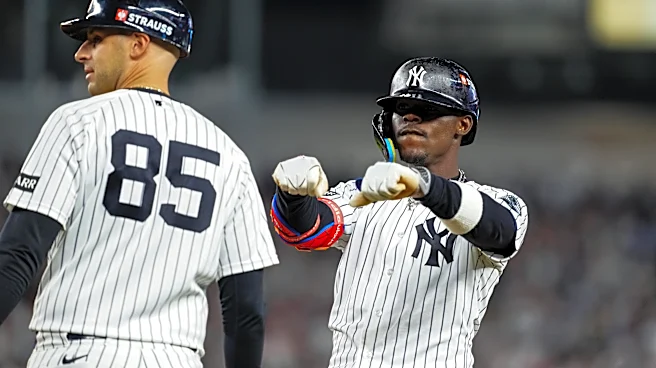

Ten of the 26 men on the Yankees’ roster will be free agents after the World Series, and as a team that has a tremendous amount of money already locked up in various players — $177.8 million already allocated to Cody Bellinger, Aaron Judge, Gerrit Cole, Max Fried and Carlos Rodón — while caring a little bit about CBT thresholds, the money does matter to the club even if it doesn’t to me. Labor strife on the horizon also weighs in on all these conversations, while most people around baseball think
some games will be played in 2027, a possible abbreviated Spring Training or otherwise shortened season means you need players that can ramp up quickly.
Here’s our list of 10 men:

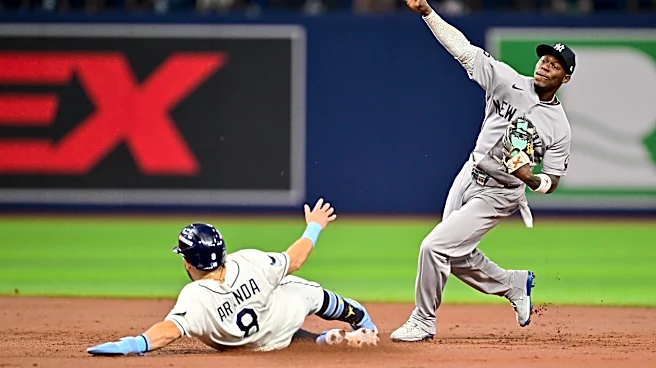
The first question is who gets the Qualifying Offer, a one-year deal at just over $23 million. Trent Grisham got the QO last year and is therefore ineligible this time around, and frankly should be allowed to walk. Backward steps offensively and defensively, along with his inability to be QO’d, makes that an easy decision for me. Contrary to perhaps popular sentiment, Jazz Chisholm Jr. should be given the Qualifying Offer, even if it seems the Yankees are unwilling to extend it.
Jazz can be an incredibly frustrating experience as a fan, but he still put up three and a half wins in what was a down year offensively. Among primary second baseman, that was good enough to be the second best at the position in the American League, and with the Yankees his 10.1 fWAR builds out to a 4.8 win season projected over 600 plate appearances. He’s frustrating to watch, and he’s also a good player!
You have to bake in some IL time and you have to square the circle of second base, where the Yankees seem willing to platoon Anthony Volpe, and there’s no sense in paying a platoon player $23 million. If you QO Jazz, he needs to be your primary option at the keystone.
David Bednar is the other guy that seems worth QO’ing, but committing high dollar amounts to relievers always worries me. The Yankees spent $26.637 million on their bullpen this year, the second-best unit in the game by ERA. In 2019, they spent just a hair over $50 million. Again, I don’t care about their budget, but the team does, and spending $23 million on a guy pitching one inning makes me a little wary of the team’s ability to make moves in-season, even more so when we consider potential changes to the way players are compensated.
At the same time I don’t love the idea of locking Bednar up for the next four or five years. His K-BB rate, my personal favorite single pitching stat, fell six and a half points this year. His four-seam velo dropped almost a full mile per hour, and you don’t really recover velocity at age 32. He’s been very good since coming to the Bronx, and seems to have the mentality to handle pitching in New York, but boy I don’t want to see what he looks like at 36.
The rest of this group is hard to parse. I don’t mind Paul Goldschmidt as a strict platoon bat in theory, but I don’t trust the org to not overplay him, and in two straight seasons we’ve seen serious dropoffs in the second half — going from a 124 wRC+ to an 83 this year, and a 114 to a 76 last year. I think the game has passed the future Hall of Famer by.
Ryan Yarbrough and especially Paul Blackburn should have some offers from multiple teams, and both should garner interest from the Yankees. Yarbrough’s flexibility in going multiple innings and Blackburn’s emergence as a true high-leverage arm both make them good candidates for something like the two-year, $20 million deal Luke Weaver signed a couple years ago, massive upgrades from their current deals.
The rest of the crop I can take or leave.
So, assuming a non-catastrophic resolution to the CBA troubles, we’ve got two, perhaps up to four, of the Yankees’ free agents returning, adding about $65 million to payroll if all four guys come back. I don’t care about the budget but the team does, and that makes me a little worried about them making any other moves.