
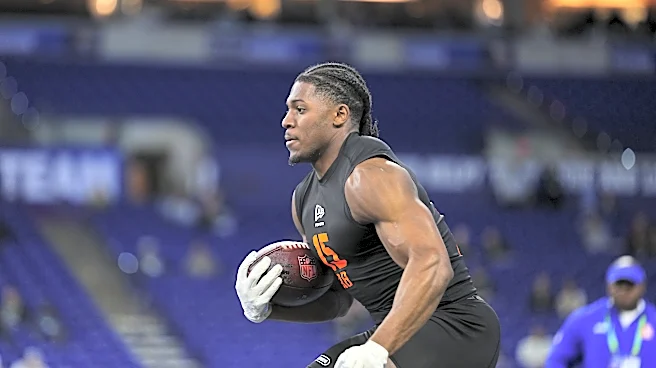
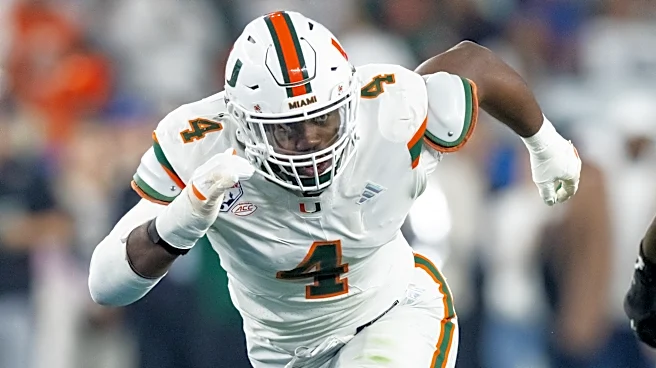
While wide receiver isn’t the most pressing need for the Seattle Seahawks, it’s a position that could quietly turn into one. This is not a predictive mock draft, but rather a consensus-based board — aligning prospects with realistic draft ranges and Seattle’s roster construction.
There are underlying concerns for Seattle. Tory Horton’s situation remains uncertain due to injury and he is expected to be out until training camp. Cooper Kupp is on the older side, and that leaves Seattle heavily reliant
on the recently extended duo of Jaxon Smith-Njigba and Rashid Shaheed. Adding a receiver would be less about urgency and more about long-term stability and offensive flexibility.
First round
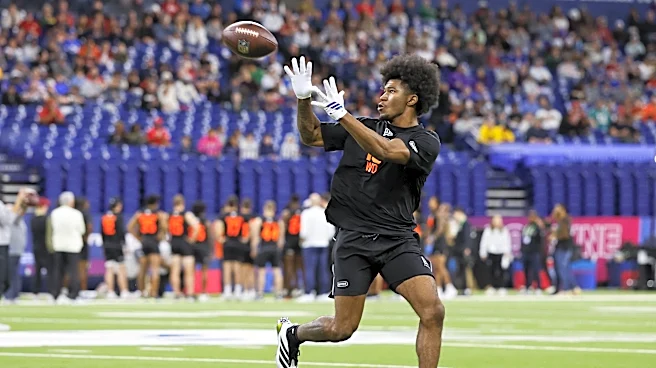
KC Concepcion, WR, Texas A&M
Concepcion is one of the most dynamic separators in this class, winning with immediate burst and elite short-area quickness. He consistently creates early throwing windows, showing a natural feel for spacing against zone and the ability to snap off routes with suddenness that stresses leverage defenders.
He’s not a true vertical burner, but that’s not where his value lies. Concepcion thrives on quick-hitting concepts, choice routes, and schemed touches where his run-after-catch ability can take over. He’s especially dangerous near the goal line and in man coverage, where his ability to uncover quickly becomes a nightmare for defenders.
There are, however, some concerns. Concepcion has dealt with drops — many of them tied to concentration lapses, often appearing to turn upfield and think about yards after the catch before fully securing the ball. On the flip side, that mindset also reflects what makes him dangerous with the ball in his hands. He also brings added value as a returner, increasing his immediate impact potential.
For Seattle, this is a clean fit. With a potentially young quarterback and inconsistent protection, a receiver who can win fast and create easy completions has real value. Pairing him with JSN would give the Seahawks two high-level separators who can consistently keep the offense on schedule.
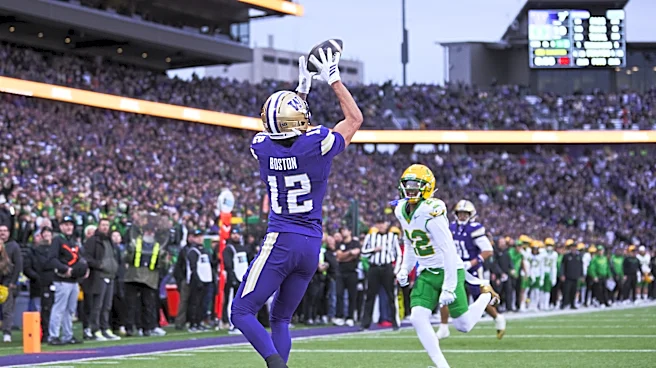
Denzel Boston, WR, Washington
Boston is a classic boundary receiver with elite ball skills and a competitive edge that allows him to outperform his athletic profile. While there are questions about his pure speed and separation, he compensates with timing, physicality, and outstanding ability at the catch point.
One key unknown is his long speed — he has yet to run, which only amplifies concerns about his ability to separate vertically at the next level. That uncertainty will be something teams weigh heavily during the process.
He’s particularly effective on contested throws and in the red zone, where his body control and tracking stand out. Boston can get into routes with enough burst, but he may struggle against physical press corners early on — something that can be mitigated through scheme.
There are shades of a possession-style playmaker here — someone who may take time to fully adjust but has the makeup to become a highly reliable target. For Seattle, he would fill a very clear role as an outside receiver who can win in tight windows and provide value in scoring situations.
Second round
Germie Bernard, WR, Alabama
Bernard is a well-rounded, ascending receiver who brings alignment versatility and polish as a route runner. He accelerates efficiently, runs clean routes across all three levels, and shows the ability to separate with technique rather than pure athleticism.
He can play both inside and outside, giving offensive coordinators flexibility in how they deploy him. With the ball in his hands, he’s capable of generating extra yardage, though he’s not a true home-run threat downfield.
His limitations show up in contested situations, where he doesn’t always maximize his size, and his vertical gear is more solid than special. Still, he projects as a dependable WR2/WR3 type — exactly the kind of player who stabilizes a receiving corps.
For Seattle, Bernard fits as a glue piece — someone who can rotate across roles and complement the skill sets already in the room.
Chris Bell, WR, Louisville
Bell is a physical possession receiver coming off his most productive season, though a late ACL injury adds some projection risk. His game is built around build-up speed and using his frame effectively once he gets moving, particularly on routes that develop over the middle of the field.
He has shown the ability to turn intermediate catches into explosive plays, especially when working across the hashes. However, he can struggle early in routes against press and tight man coverage, and his consistency at the catch point still needs refinement.
Bell isn’t a dynamic separator, but he offers size and developmental upside. If he returns fully healthy, he could grow into a solid WR2/WR3 option. For Seattle, he represents a mid-round swing on traits and physicality, with the understanding that patience will be required.
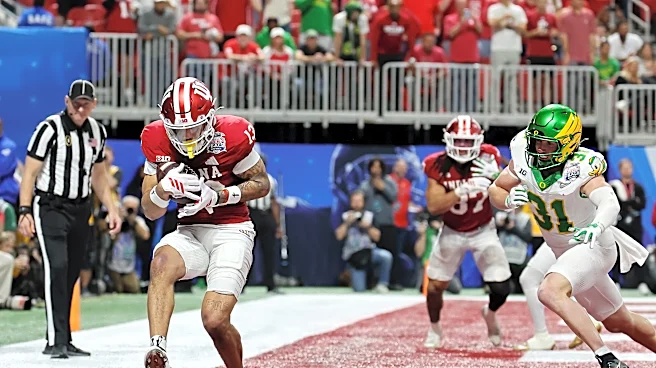
Elijah Sarratt, WR, Indiana
Sarratt is a physically dominant possession receiver whose game revolves around winning at the catch point. He lacks ideal quickness and struggles to consistently separate, often drawing contested targets as a result.
However, once the ball is in the air, he flips the script. His body control, strength, and competitiveness allow him to win in tight coverage with impressive consistency. He’s built to operate over the first two levels, moving chains and absorbing contact.
He may run into issues against press coverage at the next level, especially against more physical corners, but his play style is clearly defined. For Seattle, Sarratt would add a reliable possession presence — a target who can handle volume even without elite separation.
Third round
Skyler Bell, WR, UConn
Bell offers intriguing inside-outside versatility with the tools to stress defenses vertically. He has the acceleration and cut quickness to generate separation, and he’s capable of beating press early in the route.
There’s some stiffness to his route-running at times, and consistency has been an issue — particularly with drops over his career. That said, improvements in his ball skills have been noticeable, and there’s reason to believe his production could scale with more accurate quarterback play.
Bell’s combination of speed and upside makes him an interesting developmental starter. In Seattle, he would add a vertical dimension that complements the current receiver room.
Bryce Lance, WR, North Dakota State
The brother of NFL quarterback Trey Lance, Bryce is a productive boundary receiver with strong ball skills and a natural feel for positioning. From an athletic standpoint, he brings intriguing size-speed traits that show up on tape, particularly in how he tracks the ball and finishes plays downfield.
That said, there are clear limitations. He lacks short-area quickness and refinement as a route runner, and the jump in competition from the FCS level raises valid questions about how quickly his game will translate.
His vertical success in college won’t come as easily against NFL corners, meaning development will be key — especially in expanding his route tree and improving releases.
Lance profiles as a developmental depth piece early on, but his intelligence and ball skills give him a path to sticking. For Seattle, he’s a traits-based bet with upside, balanced by the level-of-competition projection.
Sixth round
Kaden Wetjen, WR, Iowa
Wetjen brings immediate value as a return specialist, with the vision and elusiveness to flip field position at any moment. He’s dangerous in space, capable of making defenders miss or breaking initial tackle attempts.
Offensively, his role would be manufactured touches — jet sweeps, screens, and shallow routes designed to get the ball in his hands quickly. With the right play-caller, he can provide weekly utility beyond special teams.
For Seattle, this is a classic late-round addition who contributes right away in the return game while offering gadget upside.
Kendrick Law, WR, Kentucky
Law is a compact, physical receiver whose role has largely revolved around quick touches near the line of scrimmage. He’s effective with the ball in his hands, breaking tackles and generating yards after contact.
His route tree is limited, and his stiffness shows up when asked to separate downfield. While he has reliable hands and some contested-catch ability, his overall offensive ceiling is somewhat capped.
Special teams experience helps his case, but he’ll need to carve out a niche role to stick. For Seattle, he’s a depth option with YAC ability who would need to earn his spot through versatility and effort.
Final Thoughts
Wide receiver may not headline Seattle’s list of needs, but it’s a position where planning ahead makes sense. Between injury uncertainty and aging veterans, the room could benefit from an injection of youth and role-specific skill sets.
Whether it’s a quick-separating weapon like Concepcion, a physical boundary target like Boston, or a developmental Day 3 addition, the Seahawks have multiple pathways to reinforce the position without forcing the issue early.