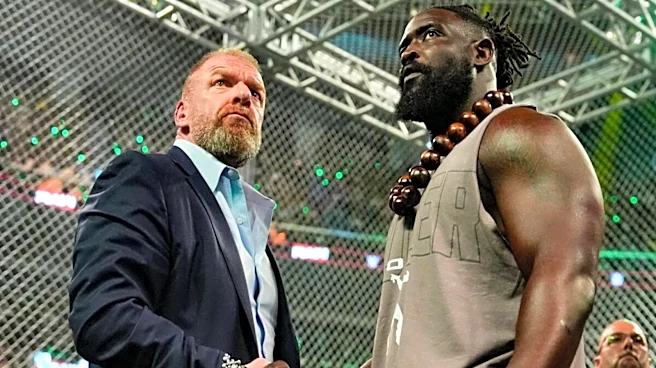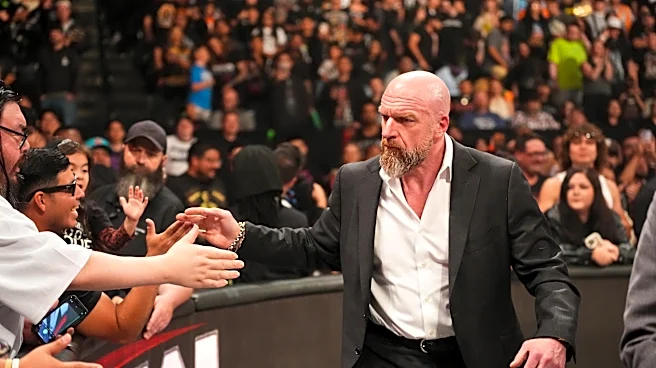



When Paul Levesque’s latest comments hit social media on Wednesday, it was easy to see why some fans might take issue with them.
But in full context, the appearance of WWE’s Chief Content Officer on Busted Open revealed a longing for how fans used to take in pro wrestling.
Speaking with Dave LaGreca and Nic Nemeth, Levesque came across as a fan himself, expressing enthusiasm for WWE’s latest platform on SiriusXM.
“For me,” Levesque said, “it’s just such an exciting time that people can now immerse themselves
24/7 in our business like never before in the best way possible. And I think that engagement makes it even better.”
Levesque’s latest comments about that engagement stood in contrast to his remarks in 2025 before WrestleMania 41. At that time, he told Peter Rosenberg, “I wish I could tell people ‘fuck off’ being a critic. Be a fan. Go watch this and be a fan.”
This time, Levesque took a less abrasive tone on Busted Open. But he echoed a sentiment similar to his final point, speaking nostalgically about a time when fans directed their anger at the bad guys in the ring instead of the writers behind the scenes.
“I wish sometimes we could put that passion into the talent now as opposed to, it’s like when somebody gets heat in our business, it’s like, ‘God, why would they write it that way?’ As opposed to, ‘That no good piece of crap did this.’
Levesque added, “There’s something to saying that innocence of not knowing, and it’s ‘still being real to me.’”
As he described it, modern pro wrestling is closer to a movie or television series about a sport. But by pulling back the curtain through programs like WWE Unreal and giving fans a glimpse into the writers’ room, WWE has created an environment ripe for critiquing its creative process — the same as any other TV show.
“They open the backstage doors with an entire series dedicated to showing how the sausage is made only to then tell us we shouldn’t be mad at how it’s made,” said Cageside Seats writer Marcus Benjamin.
Given Levesque’s past dismissiveness toward criticism, it often feels as though WWE wants to have it both ways. The company invites fans behind the curtain, then chastises them for criticizing what they see.
While it’s clear Levesque would prefer fans focus less on creative decisions, he acknowledged that WWE has opened itself up to increased scrutiny because of shows like Unreal. Yet, he seemed more accepting of what it means to be a wrestling fan in 2026.
“It is what it is,” Levesque said. “But I love that. I love the hate. I love the love. It’s all passion for what we do.”