

With the 2026–27 NBA season on the horizon, the excitement is becoming all-consuming. From Media Day quotes to theories about what each team could become, every organization carries a sense of hope and wonder as we anxiously await the start of the season. But that excitement can also mask some of the deficiencies in the game we love. Our anticipation and intrigue create blind spots, allowing us to temporarily forget about the realities that can make basketball so frustrating.
Yep. I’m talking about
officiating.
It isn’t until the games begin and the moments become tight that we’re reminded of the disdain and frustration that come with the human element of officiating. Ultimately, we have to accept and understand that officiating will never be perfect. But that acceptance shouldn’t prevent us from wanting improvement.
I’ve shared my theories on how I would fix the game, and officiating plays a significant role in those ideas. And while we wait for the season to begin, the NBA has released its points of emphasis for the upcoming year. This should be good.
The first point of emphasis is offensive push-offs, which players use to generate additional space with their off arm. This is one I certainly agree with, especially given the rules that already allow offensive players to do those weird-looking tap dancing step-backs and create tremendous separation, making them increasingly difficult to defend. It’s something that deserves attention and, ideally, should be eliminated.
I know there are plenty of fans in Oklahoma City who aren’t going to be thrilled about this one. It’s one of the patented moves Shai Gilgeous-Alexander uses to create space, using his long arms to push defenders away and clear room to get his jumper off. He’s obviously not alone (Jalen Brunson and James Harden come to mind, as well as new Boston Celtic Paul George, affectionately known as “Pushoff P”), and an increased emphasis on this rule should provide some much-needed assistance to defenders.
Given how the modern NBA is played, anything that helps level the playing field for defenders is welcome. And considering the Phoenix Suns are building a team whose identity is rooted in defense, I’ll gladly embrace an emphasis that penalizes offensive players for creating additional space through contact that provides an unfair advantage.
There’s always a pendulum with these things, however. If officials begin calling offensive push-offs more frequently, we could see defenders start flopping to draw those whistles. I could see the Villain trying to earn a couple of those cheapies in the first week of the season. Once again, officials will be tasked with making split-second decisions about whether legitimate contact occurred or a defender exaggerated the impact to manufacture a call. That’s what makes consistently enforcing this rule so difficult. If you’re rewarding flopping, you’re missing the intention of the rule entirely.
I’ll also note that, in the video provided above, I thought plenty of the examples were offensive push-offs, even when Monty McCutchen, the NBA’s head of referee development and training, explained otherwise. A subtle jab to the hip of a defender who’s already off balance and moving can be enough to knock him off his axis. It doesn’t take an extended arm or an obvious shove to create separation that benefits the offensive player. So how the heck do you call it or let it ride?
That’s where I begin questioning how much this emphasis will actually change. Based on the examples provided, my takeaway is that we probably won’t see much of a difference in how these plays are officiated. Our good old buddy “marginal contact” will be back.
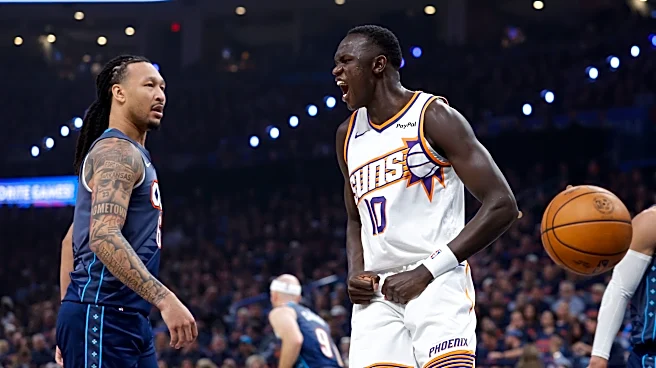
Then there’s freedom of movement on screens. The point of emphasis is that players setting screens shouldn’t be permitted to extend both arms to move a defender out of the way as they roll away from the screen. And I love how the first example in the video provided is Robert Williams III pushing Ryan Dunn in the back as he rolls, with no whistle to be found. Phoenix Suns irony, I suppose.
Again, I’m not entirely sure this needs to be a point of emphasis, as it was more of an example of bad officiating. Anytime a player extends his arms to move a defender while setting a screen, rather than keeping them tight to his body in a legal screening position, it should be called an offensive foul. So, um, dug?
The third point of emphasis for officials this season is freedom of movement for perimeter and post players. Essentially, defenders aren’t permitted to hold offensive players as they attempt to move without the ball. You’d think this would be a relatively straightforward call, yet I feel like it’s rarely enforced, despite multiple teams using this tactic to their advantage.
From a Phoenix Suns perspective, this is one that could potentially affect the team, considering how much of their identity is built around being a gritty, physical defensive unit. They poke, prod, pull, and restrict the movement of opposing players. It’s part of what makes them difficult to play against. That level of physicality could become problematic in off-ball situations if officials consistently enforce this rule. But at the end of the day, a foul is a foul. You’re not supposed to be an offensive lineman out there, restricting someone’s movement in an effort to protect your quarterback.
The final point of emphasis is straight line pathway plays, situations in which an offensive player makes a beeline toward the basket and gets knocked off balance while attempting to penetrate. I feel like this is quite possibly the most difficult one to officiate correctly, given how many players across the league have become experts at using their quickness to beat defenders before jumping into them to create contact while attempting a shot.
As McCutchen notes in the video, legal guarding position involves a defender maintaining a parallel position with the offensive player. But the league’s foul-baiting experts know how to speed up or slow down enough to put that defender in a compromised position before initiating contact that appears to affect their shot. Yes, I’m once again referring to the aforementioned FTA…err…SGA.
Don’t get me wrong, it does affect their shot. Because they’re focused on creating the contact rather than making the basket. In the video, the most blatant example comes when Dylan Harper runs into Toumani Camara to generate contact. That one was egregious.
The complexity of this rule lies in the subtlety with which these situations typically occur. The slightest change in speed or direction can create an opportunity for an offensive player to initiate contact and draw a whistle. Which makes me question why this is necessarily a point of emphasis for the NBA. I feel like officials already call these situations inconsistently, frequently rewarding the offensive player with a defensive foul. And based on the explanation provided, the league isn’t necessarily indicating that officials will call these plays any differently. They’re attempting to educate people on what constitutes legal guarding position and how these situations should be evaluated.
Ultimately, it’s a somewhat indefensible play. If you’re a defender who gets beaten on the perimeter, you might as well let the layup happen rather than risk getting yourself into foul trouble. At that point, you’d better hope your weak-side defender is there to save your ass.
Will any of these points of emphasis ultimately change the game? Perhaps. We might see a few extra whistles during the first couple of months, but history has shown that points of emphasis tend to fade as the season progresses. Part of that comes from players becoming increasingly vocal with their complaints. Officials are human, after all, and that constant verbal beating can influence how they officiate. Part of it comes down to habit. As the season progresses, unless officials are actively focusing on these specific aspects of the game, they tend to fall back into the patterns and tendencies they’ve developed over the years.
And that’s ultimately my biggest frustration with these annual points of emphasis. The NBA identifies problems, explains how officials should address them, and then leaves us wondering whether anything will actually change. Consistency is what matters. Call the offensive push off in October and call it in April. Apply the same standards to superstars and role players. Give defenders a legitimate opportunity to defend. Because if these points of emphasis disappear once the season finds its rhythm, we’re right back where we started. Arguing about the damn officials.