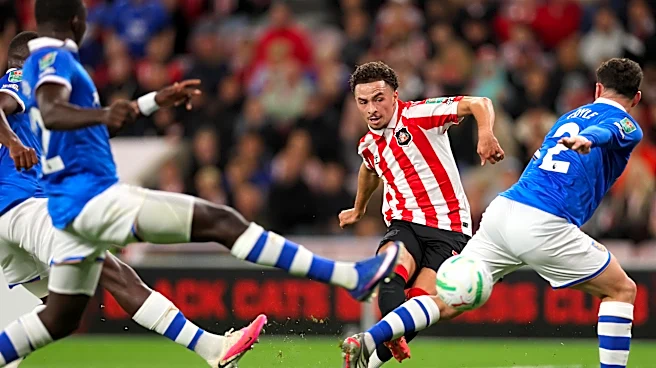








Heading into this early-season away fixture at Stamford Bridge, Sunderland knew the odds were very much against them. The club hadn’t won away from home for 20 games, with their last victory on the road coming almost a year prior, on 18 September 1965 at Blackpool. Ian McColl was now in charge – he’d been brought in during the summer to replace George Hardwick, who himself had been belatedly drafted into oversee Sunderland’s return to the top flight, after an unprecedented six year absence.
McColl’s
reign hadn’t got off to the best of starts – two wins and four defeats, including three reversals in three away games, hadn’t boosted spirits too much at Roker, and a trip to face Tommy Docherty’s Chelsea at Stamford Bridge was something of a daunting prospect.
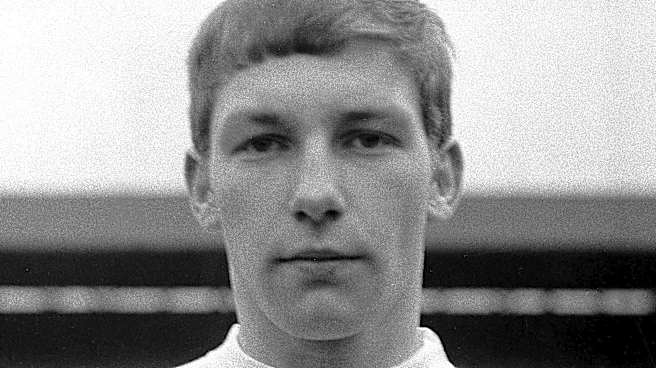
On a hot, sunny spring day in West London, Charlie Hurley – 30 in a month – was making his 300th appearance for the club, while hoping to get his first taste of action was young defender Colin Todd, who was named on the bench after being an unused sub at Elland Road in a 2-1 defeat three days earlier.
The 17-year-old was highly rated at Roker Park, and on this day 60 years ago he did get his first taste of first team action, replacing the injured Hurley with 15 minutes left to play.
At that point, the game was finely poised; an Allan Gauden equaliser on 70 at cancelled out John Boyle’s opener for the Blues minutes before half time.

Sunderland had turned in an excellent performance, although it was Jimmy Montgomery’s display in goal that had provided the foundation, the goalkeeper, who was being touted for England honours at the time, pulling off a string of fantastic saves.
By the time Todd entered the fray, Allan Gauden had run onto a lovely through ball from Harry Hood to level the game – Peter Bonetti got a hand to it but couldn’t keep it out – and Todd slotted into the backline with ‘the coolness of a veteran’. He admitted afterwards that he was unsurprisingly nervous when called up to replace the injured Hurley, but his performance certainly didn’t show as the pace of the game subsided in the latter stages, due to the temperatures in the capital.
It was a day for cental defenders in many respects, because watching on from the Sunderland dugout was John Mortimore – Ian McColl’s 31-year-old assistant manager, who’d only left Chelsea a year earlier, after playing 279 games at centre half over a nine-year stint at Stamford Bridge.
Mortimore’s an interesting chap. This was his first foray into coaching after ending his playing career the previous season with 10 games for QPR, and he went on to enjoy a pretty impressive managerial career, notably enjoying two separate stints at Benfica, from 1976-79, and again from 1985-86, and a year at Real Betis, too. He ended up having a long association with Southampton from the early 90s, including spells on the coaching staff, as assistant manager, as chief scout and ultimately as club president.

And, as for Hurley, who hobbled off with a knee injury – and, seemingly more in hope than anything else, had declared it ‘not too bad, but a bit sore’ immediately after the game – it soon transpired there were more serious concerns, with partially torn knee ligaments the official diagnosis. The following day, the legendary defender said:
I had a feeling it was serious when it happened. I went in awkwardly and felt something go. I had a similar injury when I was 17, and you get to know when something is really wrong.
This morning it was murder. I couldn’t even bend my leg. I went to the hospital with Johnny Watters our physiotherapist, and got the plaster on.
It’s a tragic blow coming when Sunderland are beginning to look the part. We’ve had our share of bad luck this season and now this comes on top of everything.
That left McColl with few decisions to make – the first of which was to talk Martin Harvey into staying, after the defender’s request for a transfer was accepted earlier in the week. Transfer talk would soon hot up – with Hurley out for a while, defensive reinforcements were required; the manager soon brought in George Kinnell to play in Hurley’s position. Attacking additions were being sought too – a Sunderland delegation had spent the weekend in Scotland, watching Celtic’s John Hughes; a transfer was said to be in the offing.
There was serious talent closer to home, however – and while Toddo had to wait a little while for his full debut, he ended the season with 18 starts, and many admirers.
Incidentally, the Chelsea game extended Sunderland’s streak of away games without a win to 21, and a point at Anfield and a defeat at Sheffield United meant the club had gone 23 games – and more than a year – without a win on the road.
By the 29th October, McColl was under a bit of pressure, with the club sitting in 18th place and only three wins from 15 games. Next up for Sunderland was a trip to St James Park – in which Mulhall, Martin and O’Hare netted to secure a 3-0 win for the lads.