
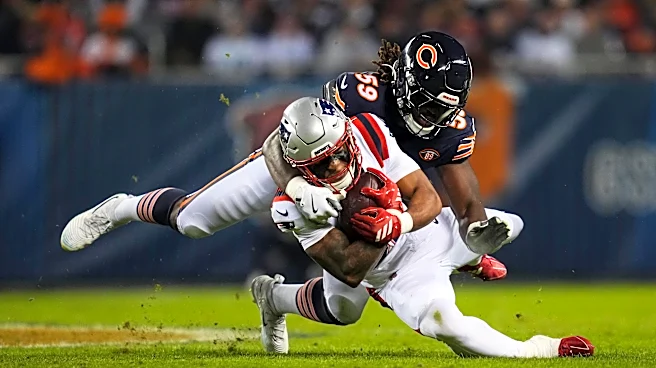

Well, I guess we can put the “checkdown merchant” conversation to bed for at least a week.
Last week, I spent quite a bit of time discussing Caleb Williams’ unusually low aDOT against Atlanta and why the context behind it mattered. The Falcons committed to keeping two safeties high, Williams consistently took what they gave him, and the result was 305 yards while completing a ridiculous 83.3% of his passes. Four days later, New England presented a completely different challenge, and Williams responded
with a completely different type of game.
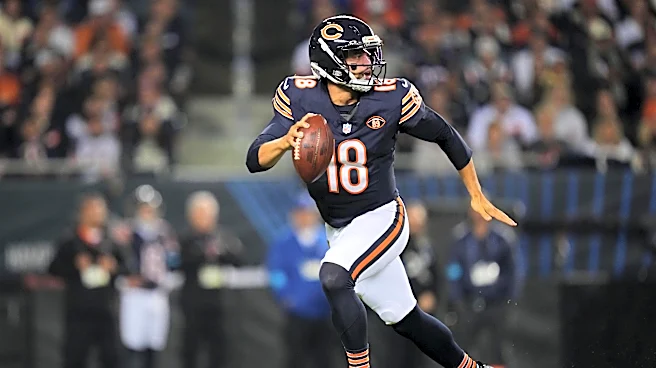
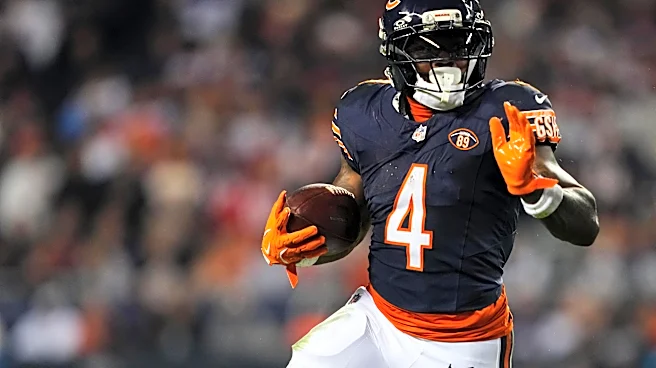
On a short week against a Patriots team that entered Soldier Field at 4-2, Williams completed 22 of 33 passes for 308 yards, two touchdowns and no interceptions, finishing with a 116.7 passer rating as Chicago held on for a 30-24 victory. It marked the first time in Williams’ career that he topped 300 passing yards in consecutive games, and he became the first Bears quarterback to accomplish that since Mitchell Trubisky did it in three straight games back in 2018.
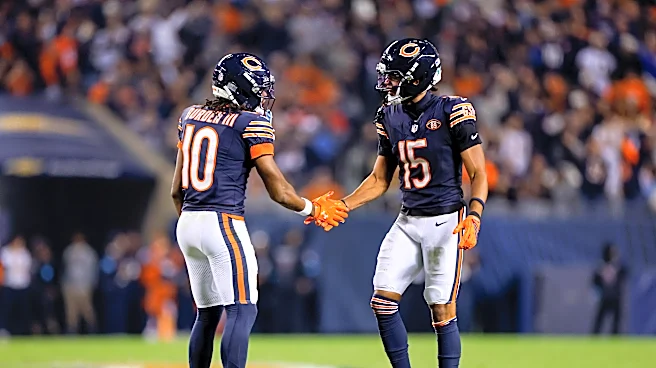
Unlike Atlanta, though, this wasn’t built around repeatedly taking the underneath completion. Williams finished with eight completions of at least 20 yards against New England. Syed Schemes highlighted just how explosive the passing game became Thursday night, with Williams connecting on four such plays to Luther Burden III, three to Rome Odunze and another to Colston Loveland.
One week after we were apparently supposed to be worried about his willingness to push the football downfield, Williams produced eight explosive completions. Funny how quickly that changed.
The biggest of those belonged to Burden, who finally received an opportunity to become a focal point of the offense and responded with four catches for 130 yards, including a 58-yard explosive catch and run and a 24-yard touchdown. All four receptions came before halftime.
That’s really what I’ve enjoyed about these last two Williams starts. Atlanta essentially challenged him to remain patient, and he did. New England challenged him to beat pressure and create explosive plays, and he did that too.
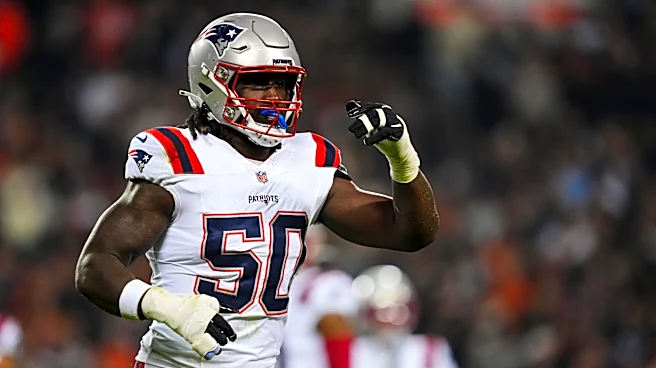
The Patriots blitzed Williams on 61.5% of his dropbacks, the third-highest rate he has faced in his career. Rather than allowing that pressure to derail the offense, Williams completed 12 of 20 passes for a career-high 205 yards and a touchdown against the blitz. There were still a few plays where the pressure got home, including three sacks, but this wasn’t a quarterback simply surviving an aggressive defensive plan, like many we’ve seen in the past wearing the navy and orange. He punished it.
The accuracy also continues to be one of the biggest stories of Williams’ season. The raw 66.7% completion percentage doesn’t jump off the page like last week’s 83.3%, but he remained incredible on target on aimed passes, hitting a 90.0% On-Target rate this week, marking all four weeks north of 80% on the season.

My own charting comparing Williams’ first four starts of 2025 to his first four starts of 2026 shows just how drastic that improvement has been, and the publicly available metrics are telling a similar story. Stathole laid out where Williams currently ranks across several accuracy measurements, with Williams sitting first in adjusted completion percentage at 86.1%, first in lowest uncatchable throw rate at 10.3%, second in CPOE and fourth in accuracy over expected through his first four starts.
For a quarterback whose biggest question entering the season was whether he could become consistently accurate enough to maximize everything else he does well, that’s a pretty significant development.
The clean-pocket numbers might be even crazier. Mike Giardi highlighted that Williams has completed 88% of his passes when not pressured through his first four starts, the highest mark by any quarterback through four starts since ESPN began tracking pressure in 2009. Last week’s perfect performance from a clean pocket obviously did some heavy lifting there, but that’s kind of the point. When the offensive line gives Williams a clean picture right now, he’s been almost automatic.
The other encouraging piece is that all of this accuracy hasn’t come at the expense of protecting the football. Williams has now gone 35 consecutive regular-season games with at least 20 pass attempts and no more than one interception, tying Aaron Rodgers for the longest streak in NFL history.
That’s an absurd statistic when you consider some of the chaos surrounding Williams during his first two seasons. The flashy throws have always been there. The bigger development has been combining those throws with increasingly efficient, mistake-free football.
That showed up when Chicago needed him most Thursday night. Leading 27-21 midway through the fourth quarter, the Bears faced 3rd-and-9 from their own 10-yard line. New England brought pressure, Williams escaped just enough to reset and ripped a 21-yard strike to Rome Odunze to keep the drive alive.
That’s the type of play where Williams’ unique ability still matters. Taking the easy completion when it’s available is important, but when the offense needs something more, he can still go be Caleb Williams.
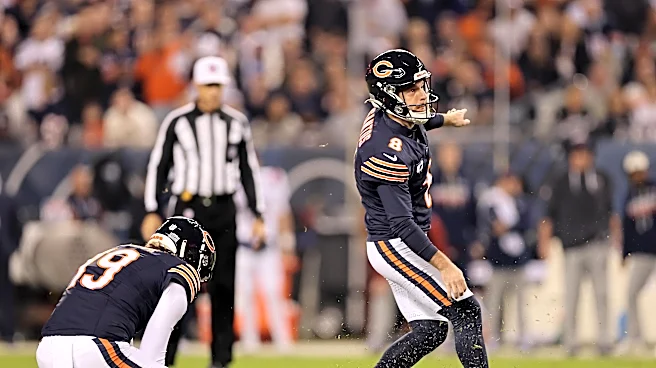
That conversion helped extend a 12-play drive that eventually ended with Cairo Santos drilling a career long 58-yard field goal to make it a two-score game with 1:39 remaining, all but putting the game away. It was another example of something that has quietly become part of this team’s identity as well: Chicago has been increasingly good at controlling games and limiting opponents’ possessions.
The Bears ran 66 offensive plays compared to New England’s 50 and possessed the football for nearly five minutes longer Thursday night. It wasn’t quite the absolute strangulation we saw against the Jets, but Chicago’s ability to control games has become a legitimate theme this season, to the tune of trailing just 5 minutes and 41 seconds TOTAL in their wins this year. Even when New England was moving the football efficiently, the Bears continued answering with sustained drives of their own.
Williams certainly wasn’t perfect against the Patriots. There are misses and sacks worth discussing, and the offense had opportunities to put the game away earlier than it ultimately did. But we’ve now seen two very different versions of successful quarterback play in consecutive starts.
Against Atlanta, Williams diced up a defense by patiently accepting the answers it gave him. Against New England, he ripped off eight explosive completions and punished one of the most aggressive blitz plans he’s seen in his career.
The common thread between them is accuracy, decision-making and command of the offense, three areas we spent a lot of time questioning whether he was ready to make the next step in after 2025.
Through Williams’ first four starts of 2026, they’re quickly becoming some of the most encouraging parts of his game.
Now let’s get into the numbers.
Benchmarks
(Season totals are underlined, Season Averages in Italics, and this week’s stats appear in regular text.)
C/A: 66/91 (72.5%) | 22/30.3 (72.5%) | 22/33 66.7%
Yards: 712 | 237.3 | 308
Touchdowns: 5 | 1.7 | 2
Turnovers: 1 | 0.3 | 0
QB at Fault Sacks: 1 | 0.3 | 1
aDOT: 6.1 | 7.9
Passer Rating: 101.5 | 116.7
True Passer Rating: 111.1 | 143.0
Time to Throw: 3.25s | 3.17s
Time to Pressure: 2.58s | 2.44s
Pressure Rate: 38.82% | 39.02%
On-Target Rate: 85.4% | 86.7%
Poor Play Rate / Big Play Rate: 3.9% PPR /7.0% BRP | 2.4% PPR / 9.5% BRP
EPA per dropback: +0.32 | +0.40
ANY/A: 7.3 | 9.1
Game Scorecard

The full grading sheet for each play can be foundhere.
Game Notes
Note: Last year, I included PFF grades in these breakdowns. With PFF continuing to expand its use of AI across its platform, and with my confidence in how accurately its grades reflect quarterback performance declining, I’ve decided to move away from them this season. In their place, I’ll be using PFN’s Impact Score, which will be notated as PFN on grading sheets moving forward.
NFL Passer Rating / True Passer Rating / PFN Impact Score: 116.7 / 143.0 / 81.6
- The NFL’s average passer rating through Week 7 sits at 91.6, putting Williams’ 116.7 comfortably into the “very good” range.
- A 143.0 TPR represents a fantastic outing, built on exactly what the model rewards: accurate aggression, pushing the ball downfield and avoiding costly mistakes.
- Three of Williams’ four starts have now produced a TPR north of 100, with the lone exception coming against Brian Flores’ defense in miserable weather conditions.
- On the PFN scale, where 75 represents an average qualifying starter and 90 is elite territory, Williams finished Week 7 with an 81.6 Impact Score, eighth among qualifying quarterbacks at the time of grading.
On-Target Throws: 2026 Average: 85.4% | Week 7: 90.0%
- Reminder: Completion percentage ≠ On-Target Percentage. I only chart aimed passes, meaning throwaways, spikes and passes deflected at the line are excluded. Drops can still be credited as on-target.
- Short-Level Passing (Behind LOS–9 yards): 19/21 | 90.5% On-Target
- Deep-Level Passing (10+ Yards Downfield): 8/9 | 88.9% On-Target
- Generally speaking, if you’re above 80% on short-level throws and north of 70% when attacking 10-plus yards downfield, you’re probably having a pretty good afternoon.
- Williams blew past both marks. His 90.0% overall On-Target rate is his best of the season, edging out the 88.9% he posted against Atlanta.
- Caleb’s improvement in accuracy has been, without question, my favorite development in his game this season.
- Generally speaking, if you’re above 80% on short-level throws and north of 70% when attacking 10-plus yards downfield, you’re probably having a pretty good afternoon.
Poor Play Rate / Big Play Rate: 2.4% PPR / 9.5% BPR
- Williams now sits at a 3.5% Poor Play Rate and 7.6% Big Play Rate on the season.
- After recording four “Great” or “Elite” plays against New England, his season BPR is back to 7.6%, matching his 2025 mark.
- Caleb found Luther Burden III early and often, with the 58-yard completion in the first half earning a “Great” grade. He later hit Colston Loveland for 22 yards on another “Great” throw.
- His two “Elite” throws both went to Rome Odunze, each converting crucial third downs deep in Chicago territory and gaining more than 20 yards. The second was an absolute laser, paired with a fantastic catch from Odunze.
- Williams recorded just one poorly graded throw on the night. It came on third-and-8 in the third quarter, targeting Loveland on an intermediate out route. The coverage was solid, but Williams sailed the throw and gave Loveland essentially no opportunity to make a play on the football.
EPA per Dropback: 2026 Average: +0.32 | Week 6: +0.40
- Williams continues to sit among the league’s best in EPA/dropback.
- His season mark of +0.32 ranks third, trailing only former MVPs Lamar Jackson (+0.38) and Josh Allen (+0.33).
- EPA isn’t the end-all, be-all of quarterback evaluation, but it remains an important piece of the overall picture. As always, the film and context matter most to me, but it’s encouraging when the underlying efficiency metrics agree with what we’re seeing on tape.
ANY/A: Not Just Any Other Metric:
- Something new I’ve added this season is tracking ANY/A, or Adjusted Net Yards per Attempt. The Michigan Football Analytics Society looked at which quarterback metrics best correlate with team success and found ANY/A to be one of the strongest single-number measurements, behind EPA and ESPN’s QBR.
- Williams’ rookie season was a disaster in this area. He finished 2024 at just 5.1 ANY/A, with the league-leading 68 sacks doing an incredible amount of damage.
- Enter Ben Johnson, a rebuilt offensive line and Williams’ own improvement in avoiding unnecessary sacks. His ANY/A climbed to 6.8 in 2025, good for 11th in the league.
- That upward trend has continued in 2026. Williams currently sits at 7.3 ANY/A, eighth among qualifying quarterbacks on PFN’s current leaderboard.
- Like several of the metrics we’re tracking, the year-to-year direction is pretty hard to ignore.
The Return of Play-Action:
- Play-action will always be a staple of a Ben Johnson offense, and this week it was at the forefront. Williams attempted a season-high 15 passes off play-action, completing 10 for 151 yards, good for 10.1 yards per attempt and a 99.6 passer rating.
- By my charting, 12 of his 14 aimed play-action passes were On-Target.
- Nearly half of Williams’ 33 attempts came off play-action Thursday night. Chicago was among the league leaders in play-action usage last season, and considering how effective Williams has been from it, I don’t expect that element of the offense to disappear anytime soon.
On Second Thought, Maybe Not the Worst Sack in the World:
- Like most people watching live, I had a bit of an overreaction when Williams took a 10-yard sack with the game winding down. I even tweeted out a little frustration, believing it had pushed Chicago out of field-goal range and potentially cost them the opportunity to put the game away.
- Cairo Santos promptly made that concern irrelevant by drilling a career-long 58-yard field goal.
- After watching the All-22, though, I don’t think the sack was quite as egregious as it initially looked. New England had the quick answers covered, while immediate pressure forced Williams off his spot. An incompletion or throwaway would have stopped the clock, while keeping the play alive gave Chicago a chance to continue draining time or force New England to spend its final timeout.
- Williams still retreated farther than you’d like, and losing 10 yards turned a manageable field goal into a career-long attempt, so I’m not going to call it a good sack. But the thought process behind protecting the clock made considerably more sense on film than it did live.
Much aDO(t) About Nothing:
- All that fuss over aDOT last week, only for Williams’ number to jump right back to 7.9 against New England.
- Williams attempted 12 passes more than 10 yards downfield. The raw line reads just 6-of-12, but three of those attempts were throwaways and another two were dropped.
- Strip those non-aimed throws away and Williams was On-Target on eight of his nine aimed attempts, with the lone miss being the previously mentioned incompletion to Loveland.
- That’s why the two-game conversation about Williams suddenly becoming a “checkdown merchant” never made much sense. His career profile already tells us he’s willing to attack downfield. The last two weeks have simply shown he’s becoming more comfortable taking whatever answer the defense gives him.
Stuck in the Middle with You:
- Middle-of-the-field passing is one of my favorite areas to watch when evaluating quarterback processing. Those windows can tighten quickly, defenders can arrive from multiple directions and the quarterback has fewer boundary throws available to bail him out.
- Against New England, Williams went 11-of-14 for 163 yards and a touchdown when attacking the middle of the field, producing a 139.0 passer rating and a 57% success rate.
- It’s another example of what we’ve seen throughout his first four starts: Williams isn’t succeeding in one specific area or through one particular style of offense. Right now, he’s showing he can attack defenses just about anywhere they leave an opening.
Play Reviews
The plays we’ll be reviewing are presented in the order they occurred in the game.
Situation: 1st Quarter, 1st and 10 CHI46 11:30
Play Grade: Above Average
Result: 26-yard completion to Luther Burden III
Notes: (+) Short-Level Accuracy/Completion, (+) Explosive Play
Analysis: The Bears pair Burden’s crossing route with a Raymond deep post to create room underneath, giving this a Yankee-style post/over relationship. Odunze threatens the deep middle with a backside dig, while Burden works across the field underneath, with a defender following closely behind him.
Caleb finds Burden as he works across into the available space and delivers a accurate ball ahead of the trailing defender. Burden secures the throw easily and does what he does best, starts grinding away on YAC, breaking a tackle in the midst of it. While the throw is into the short level of the field, the accuracy is what allows this play to become an explosive as Burden does not have to break stride, if he would have to had done some the trailing defender may be able to close the distance and shut this play down to a modest gain.
It’s simple pitch and catch but the level of accuracy involved to allow the YAC was what was often missing from Caleb’s game in 2025.
Situation: 1st Quarter, 2nd and 9 CHI38 02:32
Play Grade: Great
Result: 58-yard completion to Luther Burden III
Notes: (+) Explosive Play (+) Mid-Level Accuracy/Completion (++) Pressure/Pocket Presence
Analysis: The Bears show a levels-style combination here, sending two in-breaking routes across the field at different depths while Odunze pushes vertically on the opposite side. Burden works the deeper dig, finding space behind the underneath coverage.
Caleb’s work inside the pocket gives that route time to develop. As the rush closes around him, he moves forward into the available space, keeps his eyes downfield, and gets himself into position to deliver. The movement is controlled enough that he can continue working the passing play instead of abandoning it.
That’s where the pocket awareness and footwork benefit one another. Recognizing the space matters, but Caleb also has to move into it while maintaining his throwing posture. He does both, all the while pressure is baring down on him, then finds Burden coming across the middle.
It’s a pretty easy catch for Burden as the Patriots defense fails to account for him, this allows him to turn up field and pick up a huge chunk of YAC and put the Bears in a goal to go situation, a situation they would cash in on, when D’Andre Swift ran it in from 4 yards out a play later.
Situation: 2nd Quarter, 2nd and 11 CHI30 02:21
Play Grade: Good
Result: 22-yard completion to Luther Burden III
Notes: (+) Anticipation (+) Mid-Level Accuracy/Completion (+) Explosive Play
Analysis: This play is just another example of just how comfortable Caleb Williams has got when it comes to attacking the middle of the field.
The Bears are running another levels concept here, with Burden bending inside from the slot and Odunze working a deeper in from outside him. Raymond crosses underneath, giving the defense another route to account for while Burden works into the middle.
Like we have seen so often in the early portion of the season, Caleb gets the ball out on time as Burden enters the window between the underneath coverage and the deeper defenders. There’s space available, but the defenders are already closing toward it. The timing gives Burden a chance to secure the pass before they can squeeze him at the catch point.
The accuracy and timing of the throw once again allow Burden to get to work at picking up some YAC, which eventually leads to another 22-yards and another explosive play for this passing offense.
Situation: 3rd Quarter, 1st and 10 CHI28 12:32
Play Grade: Average
Result: 11-yard completion to D’Andre Swift
Notes: (+) Short-Level Accuracy/Completion
Analysis: I wanted to highlight this play because Caleb takes what the defense gives him instead of forcing the shot downfield, or extending the play unnecessarily. Burden and Odunze both work deep toward the middle, running a deep scissors concept but the Patriots keep defenders over the top with help inside. Neither route gives him a clean opportunity to attack, as both routes are very gummed up by defenders.
Those deeper routes still create something underneath. As the coverage retreats with them, Swift releases into the open space in front of the linebackers. Caleb comes down to him and delivers the easy completion, giving Swift room to turn upfield and finish with eleven yards and a first down, the threat of the big play opening up an easy completion underneath and an easy first down.
There’s nothing exceptional about the throw itself, which keeps this at Average, but it’s a useful example of Caleb being willing to take the checkdown and work with what the defense is presenting instead of playing “hero ball.” Calling a downfield concept doesn’t mean the ball has to go downfield. On first down, getting it to Swift in space keeps the offense moving without forcing a pass into the deeper coverage.
Situation: 3rd Quarter, 2nd and 14 NE43 11:04
Play Grade: Great
Result: 22-yard completion to Colston Loveland
Notes: (+) Anticipation (+) Explosive Play (++) Deep-Level Accuracy/Completion
Analysis: Now, how about some completions to someone not Luther Burden?? On this play, Caleb trusts Loveland to win inside here and backs it up with excellent placement. Loveland runs a deep dig from the slot, with Odunze pushing vertically outside him on a deep comback route. On the opposite side, Burden runs a corner-post double move, giving the defense another deep threat to account for.
The ball starts coming out before Loveland finishes his break. Caleb sees the opportunity developing and throws to where Colston is going, rather than waiting for him to turn and show that he’s open. With a defender running closely behind him, that timing makes all the difference in the world at this level of the field.
Caleb puts the ball ahead of Loveland’s break, giving him room to extend his hands and secure it while keeping the trailing defender from reaching through him. Colston doesn’t have to stop and wait or climb vertically to rescue the throw. He catches it as he works across, then holds on through the contact that follows.
That’s a twenty-two-yard completion on second and fourteen, taking the offense out of a difficult situation and into scoring position. The anticipation gets the ball there on time, and the accuracy gives Loveland the advantage at the catch point, all done into the deep portion of the field, where it’s hardest.
Situation: 4th Quarter, 3rd and 9 CHI10 04:59
Play Grade: Elite
Result: 21-yard completion to Rome Odunze
Notes: (+) Anticipation (+) Explosive Play (+) Game Situation (++) Deep Level Accuracy/Completion
Analysis: Finally, the absolute throw of the game, Caleb fits this one into an almost impossible window to get the Bears out from near their own goal line to convert a 3rd down late in the game. The routes have a levels structure, with Burden breaking inside underneath and Odunze running the deeper dig from outside him. Those staggered in-breakers give the underneath coverage multiple threats to account for.
Caleb starts the throw before Rome finishes his break. There’s a defender following underneath and another closing from deeper inside, so he has to trust where Rome is going and deliver before that space disappears.
He delivers this ball into the perfect pinhole of the Patriots defense to a spot where only Odunze can make a play on it, if he leads him anymore it’s an easy pass break up, from the underneath defender, if he throws it anymore outside of his catching radius it’s a harmless incompletion and punt. To that point, this play is nothing without Odunze’s adjustment and amazing hands to bring this throw in. Amazing throw equaled by an amazing catch.
On third and nine from their own ten in the waning moments of the ball game, that’s a substantial conversion. Caleb anticipates the break, places the ball between converging defenders, and produces an explosive completion that gives the offense breathing room. The Bears would continue their march down the field, ultimately leading to Cairo Santos putting the game out of reach with his career long 58-yard field goal.
Summary
Caleb Williams finishes Week 7 with final grades of 1st Half (2.70) / 2nd Half (3.60) / Game (6.30), which is a few points into a “Great” start.
That 6.30 ties his Week 1 performance against Carolina for his highest game grade of the season, but I actually like how Williams got there a little more this time around.
Against Carolina, a dominant first half did most of the heavy lifting before the offense cooled off considerably after halftime, focusing on grinding down the Panthers with time of possession and ball control. Against New England, Williams was consistently productive throughout the night and actually improved as the game went along, finishing with a 3.60 second-half grade as Chicago protected its lead and eventually put the game away.
The underlying numbers tell a similar story without needing to dive too deeply into them here. Williams finished with an 86.7% On-Target rate, produced four “Great” or “Elite” graded plays against just one poorly graded snap, which was poorly thrown ball on a 3rd down. He posted +0.40 EPA per dropback. His 9.5% Big Play Rate was also his best mark of the season.
More importantly, I think the last two games have shown us two very different paths to successful quarterback play.
Atlanta asked Williams to remain patient, work underneath and consistently take what the defense gave him. New England brought pressure and gave Chicago opportunities to attack farther downfield, so Williams responded to both games by posting 300+ yards of passing.
That’s the development I’ve been both hoping and knowing we will see.
The spectacular throws are still there, but they don’t have to be the foundation of every successful performance anymore. Williams has increasingly shown an ability to adjust how he plays based on what the defense is presenting, while the accuracy and ball security that have defined the beginning of his season continue to hold up.
Through four starts, his game grades now sit at 6.30, 1.55, 4.10 and 6.30. There is obviously still plenty of football left, but after spending so much of 2025 discussing inconsistency from snap to snap and game to game, the early returns in 2026 look considerably different.
Of the six quarterbacks I’m grading this season, Williams finished 1st in Week 7, with two quarterbacks on bye. You can see where his performance landed among the group here.
For a look at how the full group stacks up on the season, along with some quick notes on this week’s performances, you can find that here.
Two straight 300-yard games, two straight wins and another “Great” performance on the grading sheet.
Not a bad couple of weeks. But the new Legion of Boom is on the horizon for Caleb Williams and the Bears on Monday night, a team that has, through 7 weeks, sported the best passing defense in the league, and one of the best overall defensive units in the league.
I’m very excited to see how our young, ascending quarterback rises to the occasion then.
But, until then, Bear Down!
Gary Baugher Jr. is a second year contributor to WCG, bringing football insight backed by over 16 years of experience in organized football and more than 30 years as a passionate fan of the game. You can follow him on Twitter at @iamcogs.