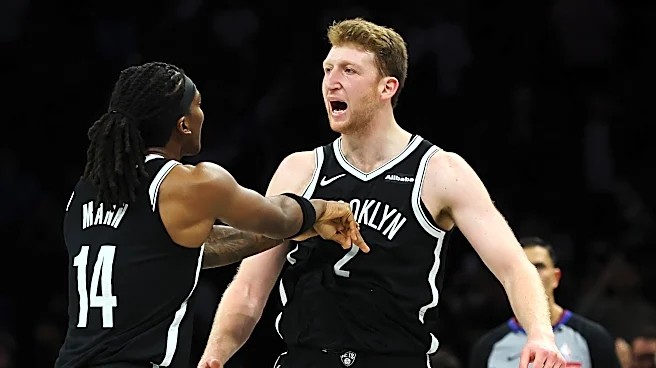


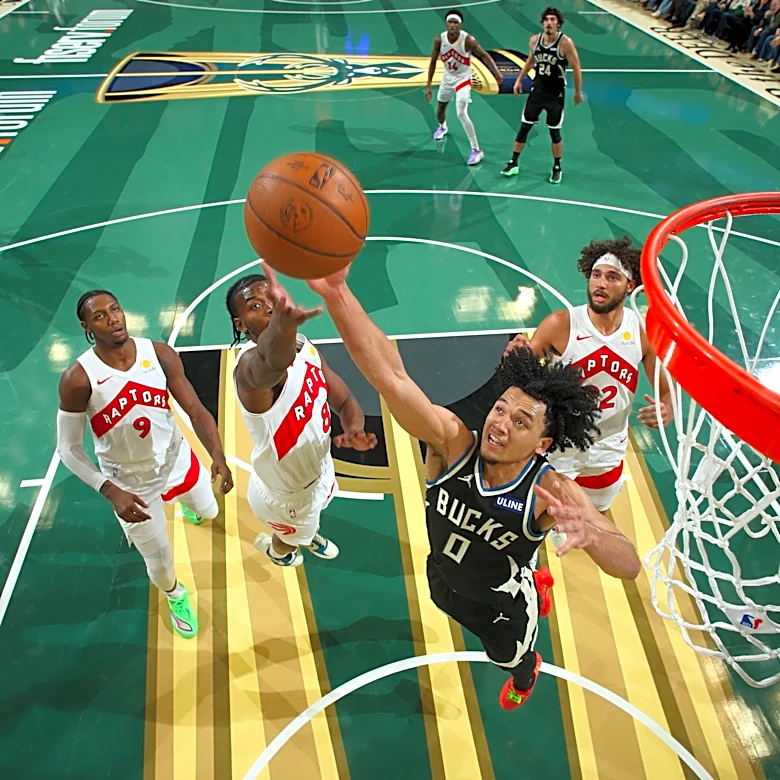


When Joe Tsai bought a 49% stake in the Brooklyn Nets in 2017, he and longtime investment partner Ollie Weisberg saw value in the NBA’s “limited” supply of teams and the growing market for live sports — starting in Brooklyn. Opportunities to buy into the league are rare, let alone to own one of two teams in the country’s largest market.
“We wanted to invest in sports because we think it’s a phenomenal financial investment,” Weisberg told Barron’s Patti Domm in a recent interview. “We believe that
live sports is extremely unique. Live sports bring people together.”
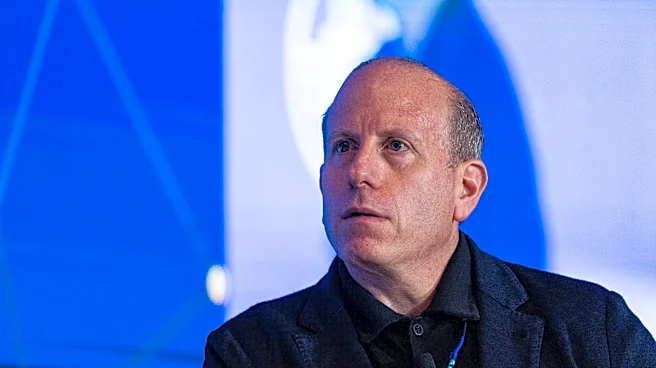
Weisberg graduated from Harvard, where he studied international development economics and Chinese before writing his thesis on Russian and Chinese privatization. He later joined Goldman Sachs where he worked on the firm’s original Series A investment in Alibaba and negotiated the term sheet with Tsai. After a decade working for Ken Griffin of investment giant Citadel, he reunited with Tsai to build Blue Pool Capital. And when Tsai bought into the Nets, Weisberg joined him as a minority owner and vice chair of Brooklyn Sports & Entertainment.
Their new partnership was rooted in the changing economics of live sports.
“We believed that we would ride along with the growth of media rights, which primarily, five, 10, 15 years ago were in cable. But as you know, we’ve had a shift to OTT (over-the-top distribution) on your phone through streaming, and so we believed that would grow. That was a long-term bet on that trend. Then you layer in the concept of buying an asset where there is fixed supply. There were only 30 [NBA] teams.
“We believed that Brooklyn is a massively growing part of New York City,” he told Domm. “The team went from Jersey to Brooklyn back in 2012. We were very focused on how we could participate long term in owning control of a team. It’s not that often that control deals are on the table. We actually bought the team from Mikhail Prokhorov in two tranches. It allowed us to wade in as a minority shareholder at 49% and then ultimately take control,” Weisberg said.
The two believed their experience building businesses could help improve the franchise.
“We felt that we could bring our expertise and history of building businesses to turn the team around, both on the court and off the court businesswise,” Weisberg said. While the partnership has yet to produce a title for the Nets, the Liberty won the WNBA championship two years ago and the value of the franchise has more than doubled, per Sportico, going from $3.3 billion in 2019 to an estimated $7.4 billion this year. In addition, the Liberty’s valuation is now seen at more than $600 million, dozens of times greater than the estimated $14 million the Tsais paid James Dolan for it in 2019.
That Brooklyn investment was never intended as a short-term play, said Weisberg. But that doesn’t mean the Tsais are opposed to bringing in outside investors. In 2024, they sold a minority stake in Brooklyn Sports & Entertainment, the parent company of the Nets, Liberty and Barclays Center, to Julia Koch and her family. Tsai remained chairman of BSE Global and governor of the Nets with Weisberg as the alternate governor.
“We view the Brooklyn Nets as a family asset, and so we capitalize in making it worth more, right? But we’re not capitalizing by looking to sell it,” he said.
Increasing a team’s value also means improving the experience for fans. Weisberg pointed to owners who have invested in the product around the game.
“There have been owners that have taken teams — and we’d like to think we’re part of this group — that have made the product better, made the experience better: the food, the wine, the venues, the club space. That drives higher revenue, more money, therefore more value. I would think of this as a circular reference. Obviously, more funds get attracted, more funds get raised, and team values go up. So, the answer to your question is, unabashedly, yes. It is an asset class that has arrived.”
The Nets and Barclays Center is investing more than $150 million in renovations over five years, part of it financed with the $688 million the Kochs paid for the minority piece. The latest phase, announced in October, includes a redesigned atrium, a 9,000-square-foot event-level club and a new American Express entrance and lounge.
Technology is another part of that effort.
In September, the Nets announced a multiyear partnership with Alibaba as their official technology and cloud partner. The deal includes 360-degree replay technology and the Nets Figure Lab.
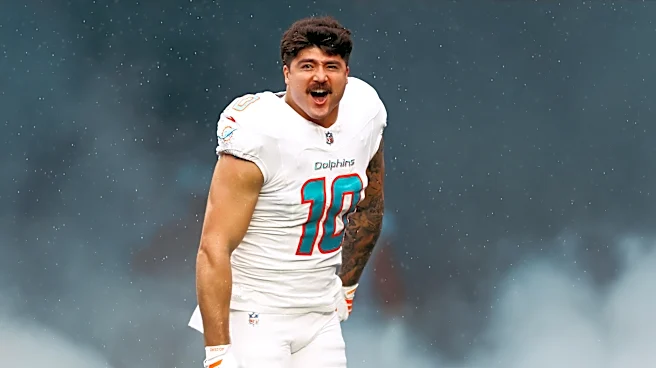
The arena and technology investments are part of a broader approach to sports ownership that extends beyond Brooklyn. Among other sports assets, Blue Pool Capital’s portfolio includes a three percent stake in the NFL’s Miami Dolphins and SailGP, an international sailing league founded by Larry Ellison, the founder of tech giant Oracle. Last year, Bloomberg estimated that Tsai’s sports investments were nearly equal to the value of his stock in Alibaba.
“We’re looking at Formula One. We have quite a lot of activity in lacrosse. I get decks (investment proposals) on new teams and leagues every day… Soccer is an area we’ll look at. It’s about understanding the league, and then understanding which team, like we did with the Brooklyn Nets,” Weisberg said.
That approach also applies to the market surrounding a team. Weisberg pointed to Blue Pool’s investment in the Miami Dolphins, where the opportunity extended beyond the football franchise itself.
“We’re really happy with Miami, and Miami’s really interesting because it owns four assets. It owns The Miami Dolphins, the Hard Rock Stadium, the Formula One race, and the Miami Open. We took a view that the economic development of Miami would also propel ticket sales across all those assets.
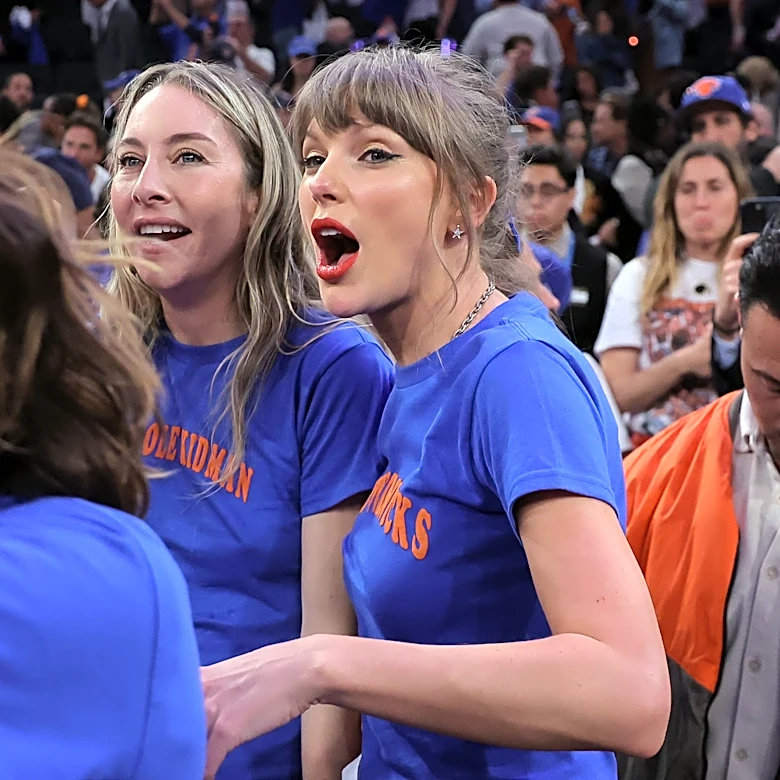
Of course, the Knicks’ success has added another dimension to the competition for basketball fans in New York, but Weisberg said the rivalry is something the organization welcomes.
“I would tell you that this fires us up. We want to compete. It’s great for New York. I’m originally a New Yorker. We’re all New Yorkers, but it is getting us fired up to compete,” Weisberg said.
He also described the relationship between NBA owners as a balance between competition and cooperation.
“One of the things that’s beautiful about the NBA is off the court, we’re business partners. On the court, we compete. A lot of the media rights are shared by the owners. So, when the Knicks won, I’m happy and thrilled for my partner, Jim Dolan, but it’s just going to make us that much more fired up to compete.”
Building the Nets’ audience is another long-term part of the investment. Weisberg said the organization is looking to attract New Yorkers who do not already have a team while developing a connection with younger generations through its community work. The process, he added, won’t be simple or short.
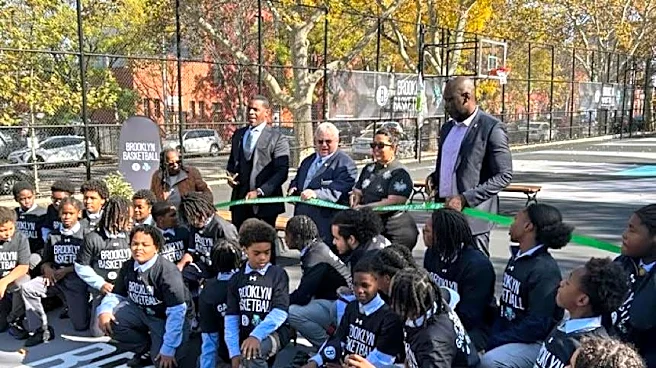
“Strategically, we’re looking at bringing over the marginal 40- or 50-year-old that doesn’t have a team. And then we’re looking through our community work, through our Brooklyn basketball community organization, which includes basketball camps, to long term build a fan base. This is a poignant nuance.
“Building a franchise takes decades. Joe and I are prepared to take the time to do that. When we view ourselves as stewards of the Brooklyn Nets, that’s the mentality you have to have. You may know, during COVID, the early days, we paid all our hourly workers before anybody else did. We’re a community asset,” Weisberg said.
The organization’s Brooklyn Basketball programming has reached more than 50,000 young people annually through free clinics and school programming. The program is also expanding into Greenpoint, Bushwick and Gowanus in 2027.
Weisberg used the word “asset” 11 times in his answers to Barron’s. He described sports as an asset class, NBA franchises as fixed-supply assets, the Nets as a family asset and the organization as a community asset.
Those ideas aren’t mutually exclusive. They see the Nets as a valuable investment, but one whose value also depends on what they build in and around it — a better fan experience, a stronger connection to Brooklyn and a fanbase that can grow over generations.