


Sunderland travelled to Villa Park on Sunday lunchtime with the race for European football firmly on following victory over a wounded Spurs side, but with Aston Villa fresh off a Europa League beatdown of Bologna in midweek, Régis Le Bris faced a tough ask to take points back to Wearside.
Even though we twice came from behind and almost snatched a last-gasp winner, Sunderland left empty-handed, so how did Unai Emery figure out Le Bris’ number and swipe all three points at Villa Park?
Sunderland lineup
Despite Le Bris
noting that one of his absentees in Dan Ballard had trained all week and was to travel, he opted to retain an unchanged starting eleven — which hasn’t been too common of an occurrence this season.
After solid performances against Spurs, both Chris Rigg and Luke O’Nien held their places in the side as Sunderland were able to add more strength in depth to their bench.
With no recognised right winger available until the return of either Nilson Angulo or Bertrand Traoré, Rigg and Enzo Le Fée manned both the wings in what’s becoming the norm for Sunderland as they look to stack the midfield with technical ball players behind Brian Brobbey.
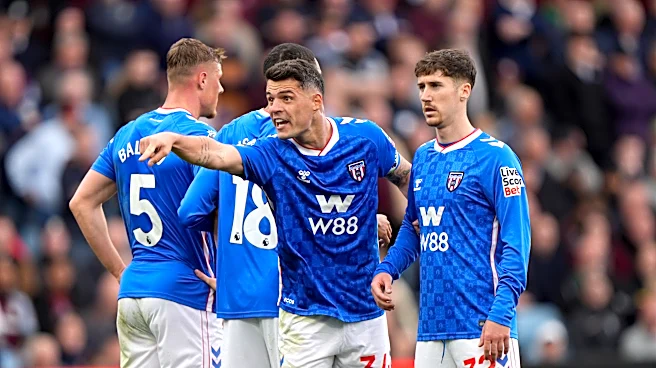
With Granit Xhaka anchored at the base of the midfield alongside Noah Sadiki, the inversions of Le Fée and Rigg almost create a diamond at times in a narrow 4-2-2-2 shape as Habib Diarra transitioned between pressing alongside Brobbey and operating within the half-spaces behind him.

Aston Villa lineup
Although the hosts played at Villa Park on Thursday night, a 6-1 aggregate score allowed many of Emery’s big hitters to be withdrawn on the hour mark and he was therefore able to field much of the same side that played on Thursday.
Three changes were made however, with Pau Torres, Lucas Digne and Emi Buendia all dropping out to be replaced by Ross Barkley, Ian Maatsen and Tyrone Mings.
Elsewhere, the ever-present John McGinn partnered Morgan Rogers whilst Ollie Watkins lead the line as he’s done so well during his tenure at Villa Park.
As in the reverse fixture, Emery likes to play a similar style whether home or away, looking to dominate the ball and play a controlled possession game which relies on consistent wing play and the willingness to be patient until the opposition dive in or make a mistake.
Adopting the 4-2-3-1 shape that’s been so successful, both wing backs play a huge role in Villa’s chance creation, looking to feed Watkins as many poachers’ chances as possible when teams adopt low blocks or look to back the box and funnel play out wide.

Sunderland make a slow and sloppy start
With just over a minute on the clock, Sunderland found themselves doing something hadn’t done yet this season: conceding within the opening five minutes.
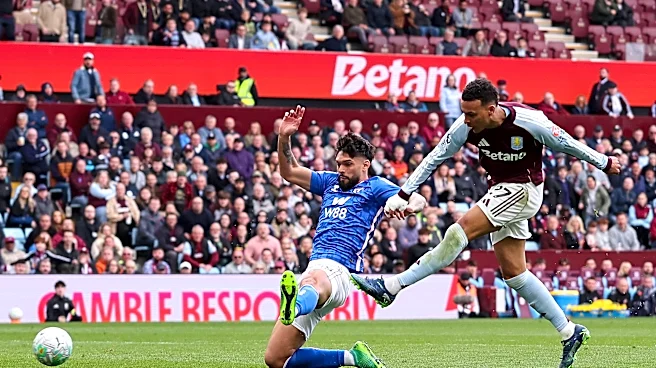
After some loose tracking and a breakdown in communication between Le Fée and Reinildo as to when to switch, McGinn was able to stroll into the Sunderland penalty area and stand up a ball to the back post for the easiest of finishes for Watkins.

Whilst there were several individual errors on display for this goal, the lapses in concentration from Sunderland’s left side paired with initial ball-watching from O’Nien leading to poor positioning for the cross were both features that repeated themselves during the afternoon and left Sunderland looking stranded at times.
With just over sixty seconds on the clock, Sunderland found themselves with a mountain to climb as a side that had only scored ten away goals all season and failed to score more than twice in a single away game up to that point. Not a great way to start!
An instant red and white response
Despite falling behind, Sunderland were quick to get back on level terms and looked to assert their dominance with a concerted amount of pressure within Aston Villa’s final third.
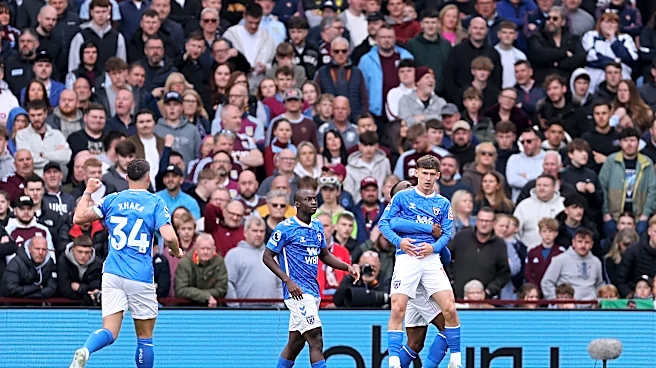
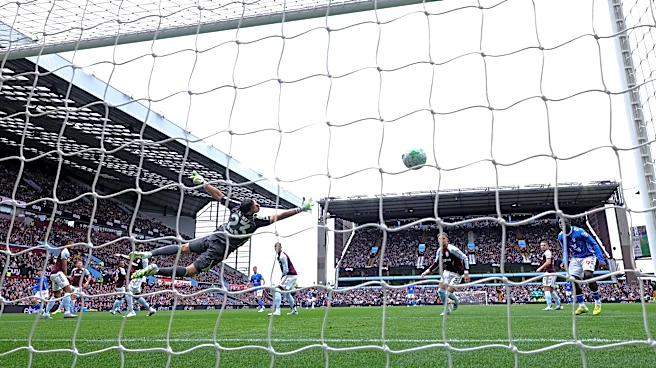
Following a great run into the channel from Diarra, his drilled cross was met by an onrushing Sadiki, who’d also arrived late with a diagonal run from the left side to lay the ball into the path of Chris Rigg, who was able to take a touch and whip the ball past an outstretched Emi Martínez to draw the Lads level.

The first goal scored in the league by an English player this season for Sunderland, Rigg’s tireless efforts over the last few weeks have really paid dividends.
His shot had an xG of just 0.05 which transpired into 0.79xG SOT as it nestled right into the corner. Rigg’s sixty three touches showed a real desire to get involved infield and with a 75% duel success rate, he also showed he was willing to get stuck in where required.

Whilst his lack of playing time and current physical stature have raised question marks this season, Le Bris has been careful to ease him in and with his 2/3 successful dribbles meaning he’s recorded two or more dribbles in each of his last three games, growing into his role well and clearly able to mix it with the best at the highest level.
Villa’s wing backs cause confusion
After settling back into the game, it wasn’t long before Aston Villa’s attacking wing backs were causing Sunderland problems again.
After a clever bit of run checking and positional rotation like we saw for the opener, a carbon copy occurred down the opposite flank this time around.
After holding off an initial attack, Nordi Mukiele was left stranded with Rogers out wide and a slip in concentration from Rigg to follow his man allowed Maatsen to invert, drill a cross into the six yard box and allow Watkins another simple finish.
Whilst O’Nien didn’t cover himself in glory for this one, it’s worth rewatching the movement of Watkins as he anticipates the cross, darts from in to out and leaves O’Nien for dead and on the wrong side of the striker, with nothing but a desperate dive from the Sunderland man in an attempt to get his head to it.
It was a stark reminder that at their best, Premier League sides are ruthless in attack and one lapse in concentration paired with the highest level of off-the-ball movement can totally change a game.

Déjà vu — or simply targeting a weakness?
After heading into the break 2-1 behind, Le Bris had a chance to regroup his side after what had otherwise been a pleasing first half from an attacking perspective. Sunderland had matched their opponents for shots on target, corners and territory control, but the hosts had simply been more clinical in their chance conversion.
With less than a minute on the clock at the start of the second half, Sunderland had tried to start brightly with a high press only to see the game taken out of reach.
A slight mix up between Le Fée and Reinildo was exposed again; a loose touch was pounced upon and Villa broke with numbers before Rogers was able to dispatch the ball past Robin Roefs — with the game all but gone.
With both Le Fée and Rigg expected to drift infield during spells of possession, Sunderland were left increasingly exposed in the wide areas on the break and could’ve easily found themselves more than a few goals down if not for several close calls throughout the second period.
Given the amount of positional rotation deployed by Le Bris in the absence of any true touchline wingers, whenever we do turn the ball over, we need to be quick to set our ‘rest defence’ in order to avoid breaks such as that which led to the third goal.

Manic final moments
The game looked to be petering out as the clock ticked to eighty five minutes with both Sunderland and Villa making several changes.
The hosts removed Watkins and McGinn — who’d been key on the day — whilst Sunderland brought on Wilson Isidor, Chemsdine Talbi, Trai Hume and Dan Ballard for some valuable minutes ahead of his full return.
A poor touch by Jadon Sancho was pounced upon by Le Fée before Hume drove to the byline, cut inside and slammed an effort into the roof of the net past Martínez for what felt like a consolation goal…or so we thought.
From kick off, Le Fée was able to pick the pocket of Sancho and play in Isidor with a wonderfully weighted pass to split the high Villa line before the striker curled the ball hard and low past a stranded Martínez and into the corner.

In what felt like a carbon copy of Le Fée’s magic at the Riverside last season, his ability to thread a deadly pass through the lines at the highest level was on display and with that assist he put himself into double figures for goal contributions this season.
As stoppage time approached, Sunderland found themselves buoyant and in the ascendency before an almost identical move saw Diarra make a sixty-yard run from inside his own half to latch onto another perfect line-splitting pass from Le Fée — only to see his chip thwarted by the onrushing Martínez.
The introduction of Talbi on the opposite flank created some additional space for the midfield to operate and therefore gave the space for both passes to be played as Talbi could stretch the Villa defensive line horizontally due to his ability to hug the touchline.

Ultimately, Tammy Abraham had the last laugh as within the next thirty seconds Villa were able to flash a cross in from deep and Abraham was able to use his raw physicality to beat O’Nien to the ball and divert it past a stranded Roefs. From feelings of despair to feeling utterly distraught in the blink of an eye.
Encouraging signs, even in defeat
Whilst it’s easy to be negative in the aftermath of defeat, Sunderland should take pride in the fact they kept Villa honest and almost made them sweat at the end of the game.
It’s the first time that we’ve scored three away from home this season and we also looked far more expansive against a formidable side that’ve built up some real dominance at home this season.
It’ll be another tough game at the Stadium of Light as the Lads take on a fighting Nottingham Forest side tomorrow evening, but Le Bris is known for bouncing back from defeat and will look to revive that glimmer of hope of a European charge as we head into the final five games of the season.