
It has been just four months since Juventus kicked off September by conceding seven goals over the span of two games against Inter Milan and Borussia Dortmund, followed by back-to-back 1-1 draws with Hellas
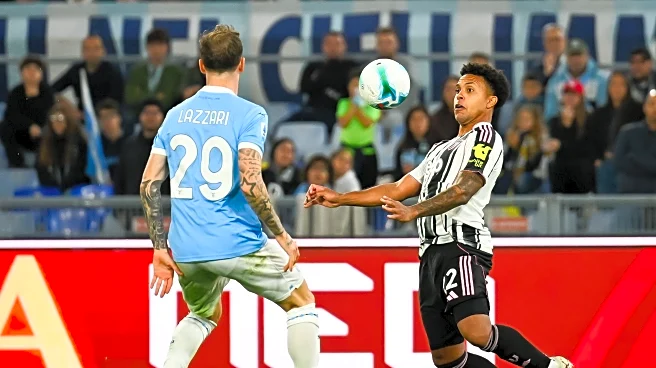
Verona and Atalanta and a 2-2 stalemate at Villarreal. Juve then played to a scoreless draw with AC Milan and lost 2-0 at Como before falling to 1-0 defeats at Real Madrid and Lazio, the latter proving to be the straw that broke the camel’s back.
Luciano Spalletti replaced Igor Tudor at the helm in the final week of October, and so far, he’s been able to breathe fresh new life into a Juventus side that was at the risk of a catastrophic campaign. After overseeing a 3-1 win at Cremonese in his opening match on Nov. 1, Spalletti’s side drew 1-1 to Sporting and 0-0 to Torino before succumbing to a 1-1 draw against Fiorentina. Juve then erased an early deficit and take the lead via Bodø/Glimt, only to equalize from the penalty spot. However, Jonathan David’s injury-time winner ensured that Juve left the Arctic Circle with all three points.
That match proved to be a wake-up call for La Vecchia Signora: there was simply no reason for them to let their opponent back into the game with schoolboy errors.
Spalletti will have no doubt let them know that they needed to improve, and it seems his message has gotten through to his players. Juve then prevailed 2-1 against Cagliari, limiting their opponents to just ome big chance and 0.54 Expected Goals. That same match saw Juve’s attacking talisman Dušan Vlahović suffer a long-term injury; as such, every single Juve player has had to focus and contribute more on and off the ball in order to compensate for one of their main sources of goals.
Juventus then took care of business in the Coppa Italia, winning 2-0 and limiting the Zebrette to zero big chances, but their undefeated start to life under Spalletti came to an end as they fell 2-1 to defending Italian champions Napoli. Nevertheless, Juve have ensured that this loss was a mere blip; since that defeat, they haven’t conceded more than one big chance in a single match.
But just how have Juve been able to shore up their previously leaky backline?
Spalletti has gone for evolution, rather than revolution, mostly sticking with the 3-4-2-1 that his Croatian predecessor utilized. What he has done, more importantly, is transmit a new vision to his players and transform their way of thinking. Similarly to other managers like Rui Duarte, Spalletti is a fervent believer that the best form of defense is attack. For him, this isn’t just some cliché mantra — it’s the lifeblood of everything that he directs his players to do.
For so long under coaches like Antonio Conte and Massimiliano Allegri, Juve have been well-drilled in the art of Catenaccio or Corto Muso, that is, grinding out results with gritty, bare-minimum performances. The kind where they would take an early lead and then deliberately choose to sit back and soak up pressure, rather than pursuing a second goal and giving their advantage some extra cushion.
That’s no longer the case with Spalletti, who has instilled in his players this mentality of possession with purpose. It isn’t merely enough to pass backwards or horizontally and do everything they can to avoiding coughing up possession; players need to move it forward and take risks on the ball, whether that’s playing into pressure, performing audacious heel flicks and bounce passes, or executing a quick give-and-go.
These players are no longer static non-entities whenever the ball isn’t at their laces; instead, they’re constantly looking to rotate positions and interpret each other’s movements in order to keep the opponent guessing. Whether they’re going for a zonal marking method, or an individual marking scheme like Gian Piero Gasperini’s Roma, Juve have been able to cause plenty of issues for the opposition with this elaborate possessional play.
After bouncing back from the Napoli defeat with a 2-0 win against Pafos and a 1-0 win against Bologna, Juventus then faced off against Roma in the first big home challenge for Spalletti’s men. Francisco Conceição opened the scoring before halftime, but rather than resting on their laurels, Juve decided to take the initiative and force Roma deeper into their own half. This proved crucial as Juve ended the match with 2.55 xG to Roma’s 1.44, 6 big chances to Roma’s 1, and crucially, 2 goals to Roma’s 1.
The Bianconeri then edged Pisa 2-0 before facing off against Lecce, a match which saw Lecce register zero big chances and just 0.26 xG to Juve’s 2.77. Ultimately, however, a miscommunication at the back and a poorly timed pass from Andrea Cambiaso would allow Lameck Banda to open the scoring in a 1-1 draw. Next up, Juve were able to demolish Sassuolo 3-0 (2.57 xG vs. 0.21) before thrashing Cremonese 5-0 (3.4 vs. 0.9).
Juve currently sit pretty in fourth place, one point behind third-place Napoli and seven behind league leaders Inter, and they’ve done so thanks to a well-executed tactical setup. When Juve have possession, they’re looking to immediately attack and give their opponent as little time as possible to react; when they don’t have possession, they’re looking to get numbers back and ensure that the opposing player will have to get through as many different Juve defenders as possible. All 11 players are defenders when they don’t have the ball, and all 11 are attackers when they have it.
It’s been said that attack wins games, but defense wins championships. Juve likely won’t be winning their first Scudetto in six years this spring, but they’re nevertheless establishing the foundations for them to return to the glory days. After watching helplessly as Inter, Milan and Napoli laid siege to the ultimate prize, Juve finally have a tactical identity that they can b