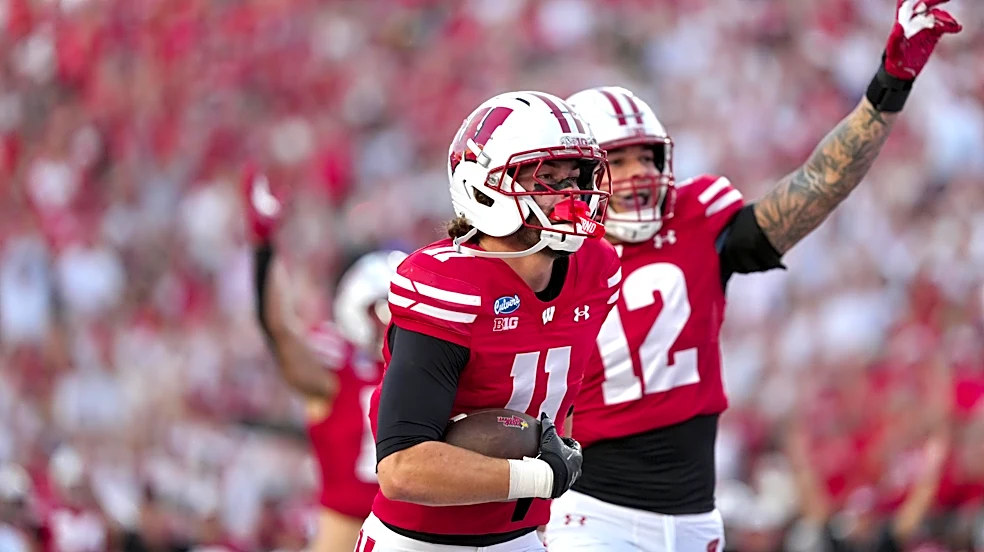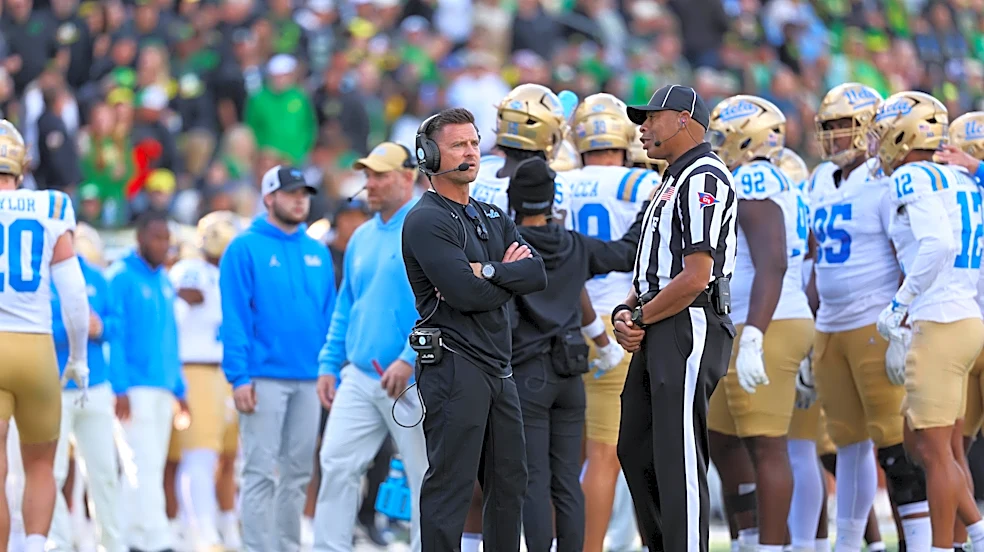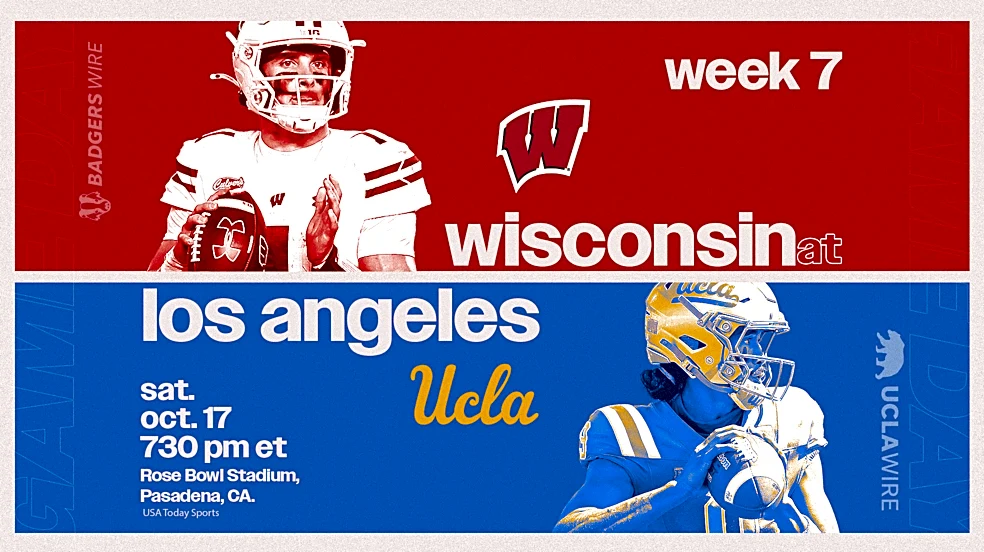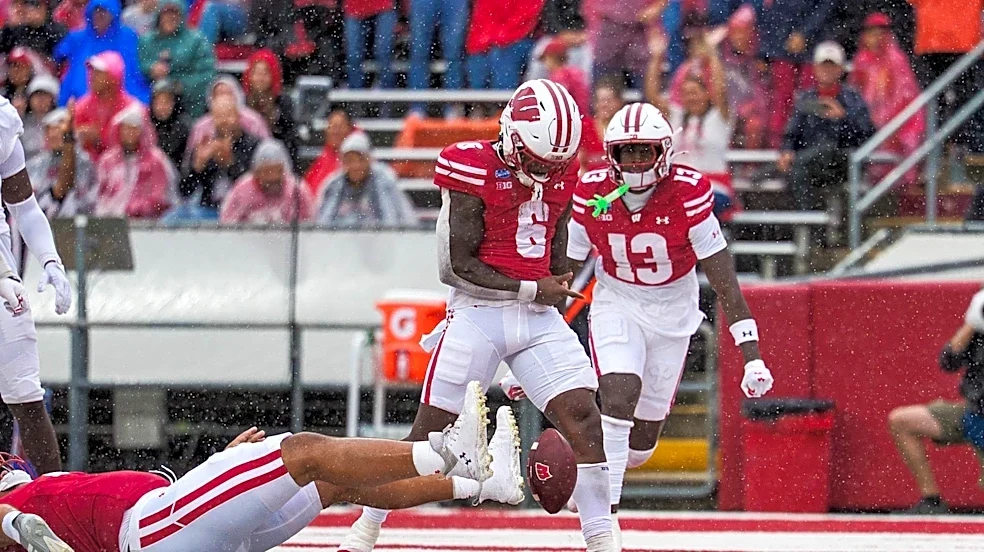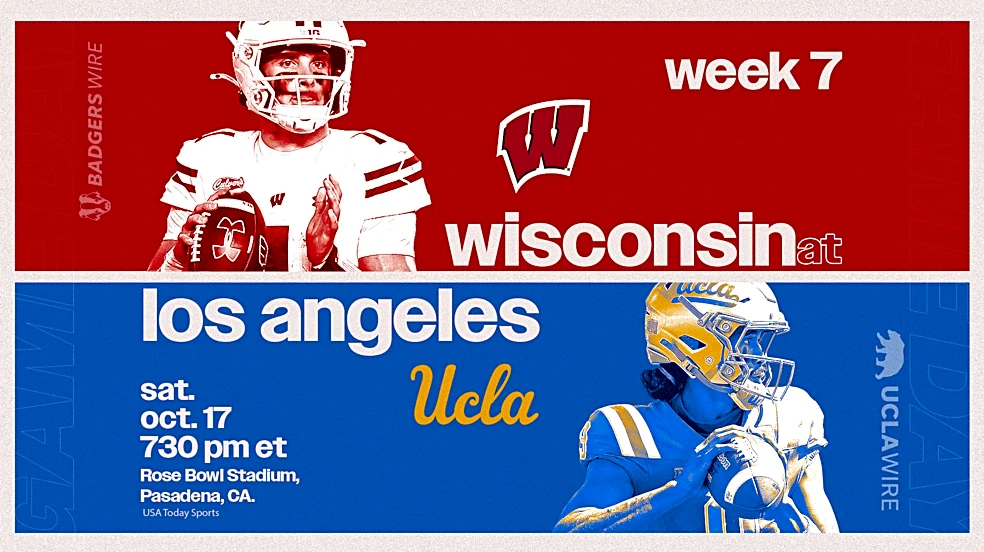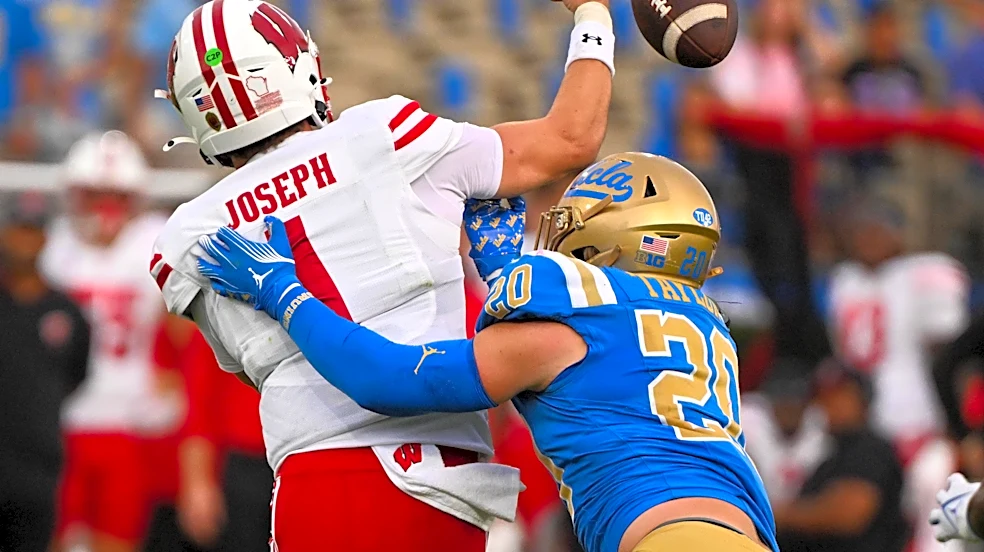


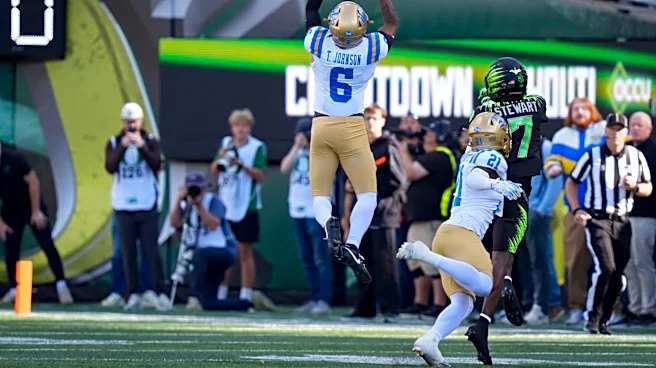

The Wisconsin Badgers dropped their second game of the season in a 17-7 loss to the No. 12 UCLA Bruins on Saturday, as they fell to 4-2 and 2-1 in conference play.
It was a very disappointing outing for the Badgers, who had plenty of opportunities on both sides of the ball, but could not score points or get off the field on third downs.
As a result, they squandered a potential chance to be in the AP Top 25 next week, and now are set to face a tough two-week slate with the No. 19 USC Trojans and the No. 17
Iowa Hawkeyes up next in season-defining games.
Here are three quick takeaways from the Badgers 17-7 loss to UCLA.
Coaching decisions
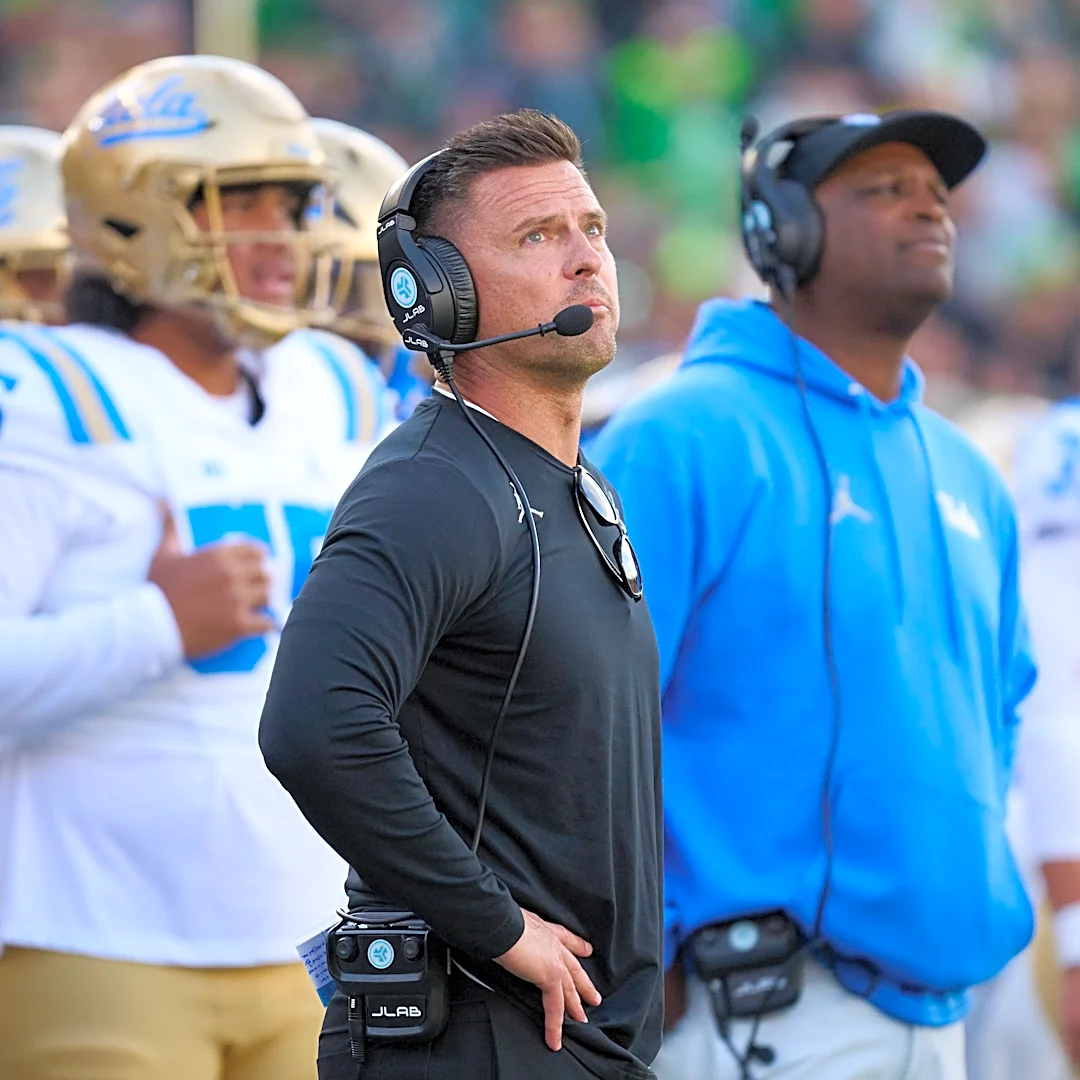
There were moments in this game where I thought both coaches made questionable decisions, with UCLA’s trick-play interception standing out for the Bruins. But, far more often than not, in a game that was there for the taking, Luke Fickell was outcoached by Bob Chesney, making a couple of headscratching field position decisions.
The first major one came on Wisconsin’s second offensive drive, as the Badgers got to a 4th & 2 at the 50-yard line following UCLA’s 16-play, 84-yard field goal drive that lasted 8:42. After a bevy of questionable penalties, the Badgers, who had initially gotten to the UCLA 43-yard line, got back to the 50-yard line for a 4th & 2 after a 23-yard catch from Jaylon Domingeaux.
Wisconsin had just seen UCLA march down the field with a long, sustained drive on its defense. Regardless, though, of their confidence in the defense, it felt like a clear go-for situation, with the chance to respond and put points on the board, or at least give their offense more plays.
Instead, the Badgers punted, and their defense allowed a 13-play, 91-yard touchdown drive, negating the field advantage.
That wasn’t the only time Wisconsin punted in neutral or plus territory. The Badgers had a huge opportunity, facing a 1st & 10 at the UCLA 39-yard line in a 10-7 game in the third quarter after a 15-yard completion on first down and a UCLA penalty. Wisconsin had just scored a touchdown on a drive that consisted of 10 rushing plays and one pass.
In a favorable situation, Jeff Grimes didn’t extend off his creativity from the previous drive in the run game, where Wisconsin was clearly clicking. Instead, Wisconsin threw an incompletion on first down, got nothing on a Colton Joseph-designed run up the middle, and had an incompletion on third down where Joseph missed an open Chris Brooks after extending the play.
There were a few questionable decisions on the drive. First was the choice not to continue riding the ground game with the different looks they threw at UCLA. At the very least, Wisconsin needed to get six yards to get into field goal range or get a potential go-for situation on second and third down. Instead, the Badgers punted in plus territory down three.
And just like the previous two times, the Bruins made Wisconsin pay, going 89 yards on six plays for their second touchdown of the game.
But the waving of the white flag came with five minutes left and the Badgers down 10 points after the defense forced a three-and-out. Once again, Wisconsin couldn’t get anything on their first three downs and faced a 4th & 9 with 4:54 left down two scores. Here, Luke Fickell elected to punt, and the Badgers never got the ball back.
After the game, Fickell said he wanted the offense to get into a better situation with six or seven yards to go, but Wisconsin was very likely not getting the ball back twice, let alone once, which is what happened on Saturday. Instead, the Badgers ended the game with their defense on the field as UCLA converted a pair of key third downs and drove down the field again.
Third downs
Third downs cost Wisconsin the game on both sides of the ball.
Wisconsin’s defense, which had been elite at getting off the field on third downs, just could not do so on Saturday. UCLA was 13 of 20 on third downs. And it wasn’t like the Bruins were really getting explosives. Instead, they slowly churned down the field on a number of drives, going 16, 13, 7, 12, 6, and 9 plays on six of their nine drives.
They dominated time of possession as a result (37:02 to 22:58), and they especially converted well on their long scoring drives. On their first drive, UCLA converted their first five third downs before failing on the sixth, leading to a field goal in a goal-to-go situation.
On their second drive, they went 4 for 4 on third downs. Wisconsin bailed out the Bruins with some penalties, but the Badgers defense could not get off the field, despite stopping the run at a very high level and forcing the Bruins to have an average of 6.1 yards to go on third downs.
Wisconsin’s offense on third downs was a worse story. The Badgers were just 3 of 11 on third downs, but the biggest issue was the average distance to go: 9.4 yards. Penalties absolutely killed Wisconsin in this one, and the Badgers constantly found themselves behind the chains on drives where they finally started to have some momentum.
It’s near impossible to win when you have to go 9.4 yards on third downs, especially when Wisconsin’s passing offense struggled as much as it did on Saturday, leading to our third takeaway…
Struggles in the pass game
In every game this season, win or loss, the Badgers have failed to be consistent for four quarters in the passing game. They’ve had their moments and hit on some explosive plays, but it’s been more struggles than successes so far.
On Saturday, they couldn’t find any consistency. Colton Joseph completed just 6 of 16 passes for 66 yards, marking the lowest output of a start in his career. Wisconsin had Jaylon Domingeaux back, but it didn’t mean much, as the Badgers got virtually nothing in the air.
Wisconsin even had solid protection at times, although UCLA made sure to send extra to force Joseph into poor decisions. The Badgers struggled on the simple concepts, be it inaccurate throws or a dropped pass on a swing pass. And Joseph’s uneven play continued.
The quarterback tried to give some of his receivers some opportunities, but he made a couple of questionable decisions once again. Joseph also held the ball too long at times, which has been a common theme this season.
Joseph’s legs are the best part of the offense currently, as it opens up the team’s run game to be creative and present different looks as it did for one drive on Saturday. But his struggles in the pass game are well-documented, and UCLA did not give any respect to the aerial attack, loading the box and teeing off with extra rushers.
His receivers did not help either. The biggest question in the offseason was whether Wisconsin’s strategy of quantity over getting a clear No. 1 wideout was the right one. Wisconsin’s wideouts have had some quality games this season, but separation, specifically against man coverage, has been an issue.
It was never more prevalent than on Saturday against UCLA’s sticky defense. The Badgers wideouts could not generate separation and get open, and the connection on 50/50 balls was not there at all. Joseph did have a nice dime to Malachi Coleman in the end zone near the end of the first half on a should-be touchdown.
But Coleman dropped the diving catch, and Wisconsin ended the drive with points after Joseph took a sack on third down and Gavin Lahm missed a 45-yard field goal. Wisconsin had a ton of opportunities on Saturday. Each of their drives, aside from their final one, got to at least their own 40-yard line, with many getting into UCLA territory.
Ending with seven points after that is a disappointment.