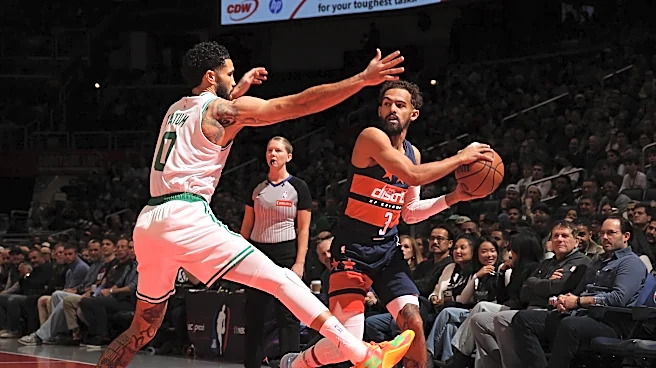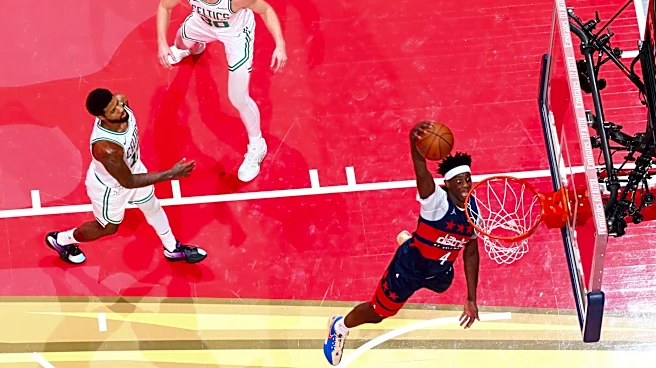

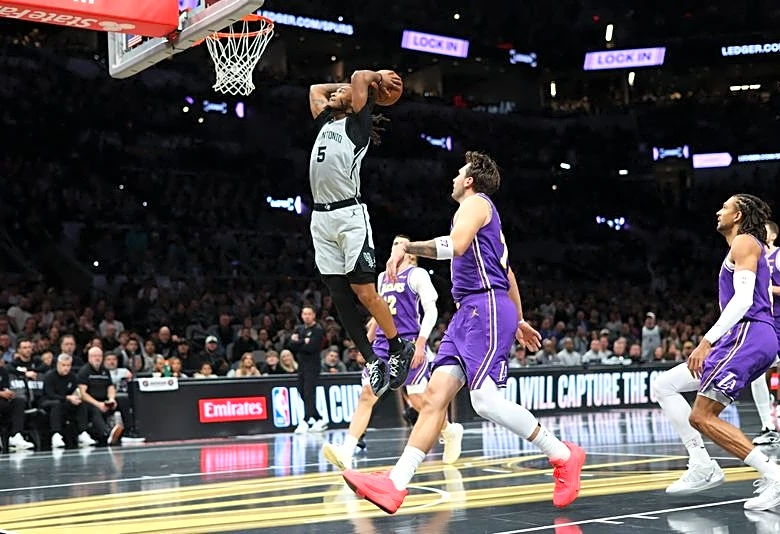

The fun thing about narratives and commentary is that they become claims, assertions, and questions that can be examined. Today’s narrative converted into a claim: Will Dawkins is bad at drafting.
Let’s take a look and see if what we find to support or refute the claim.
Dawkins had a long apprenticeship in the front office of the Oklahoma City Thunder — one of the NBA’s best-run franchises. He started as an intern, became a video coordinator, then a scouting coordinator, and director of college player
personnel. He became a vice president in 2017, at which point he was in charge of the team’s scouting department. Then he moved up again, become Vice President of Basketball Operations.

That’s a strong resume.
Dawkins’ first draft with the Wizards was 2023 — a class most analysts thought was pretty loaded at the top. It included all-time prospect Victor Wembanyama, as well as Amen and Ausur Thompson, Scoot Henderson, Brandon Miller, Bilal Coulibaly, and other impressive prospects.
The Wizards received the eighth selection (famously missing out on the top spot by a single number). On draft night, Dawkins paid a pair of second round picks to move up a spot and choose French wing Bilal Coulibaly.
Not that it matters at this point, but I loved the move. Coulibaly popped high in Ye Olde Draft Analyzer — my stat-based prospect evaluation tool — landing fifth overall. Behind Wembyanama, Henderson, and the Thompson twins, and ahead of Miller and a few other more ballyhooed prospects.
When I published YODA rankings, Coulibaly sat 14th in consensus mock drafts. By draft night, he’d moved up to 11th.

The results? It’s fair to say Coulibaly has been a bit disappointing. He’s long and athletic, and he defends well, but his offensive game has not progressed. After signs of progress last season, he’s regressed a bit, and his usage rate is 12.4%. That’s self-check territory.
Coulibaly not working out as hoped doesn’t mean he’s a bad pick, though. Of the next five off the board, two probably would have been better picks: Cason Wallace at No. 10, and Dereck Lively at 12. Even with the benefit of hindsight, I don’t think anyone would pick Jarace Walker (8), Taylor Hendricks (9), or Jett Howard (11) instead of Coulibaly at 7.
A few other in the “arguably should have picked” instead of Coulibaly (the first number is where they were actually picked, the second number is where consensus had them):
- Keyonte George | 16/16
- Jaime Jaquez Jr. | 18/19
- Brandon Podziemski | 19/22
They’re all better pros than Coulibaly at this point in their careers, and they’d likely have been better selections at seven than Coulibaly. But no one was thinking of them as top 10 picks. Not even lottery selections.
In the second round, Dawkins chose Tristan Vukcevic 42nd overall. Vukcevic has been unavailable (due to injury) and pretty meh when he’s been able to actually play. None of the players picked in the same range have turned out much better except maybe GG Jackson. Maybe.
It’s fair to say Dawkins whiffed on two guys who went in the 50s — Toumani Camara (52nd overall) and Trayce Jackson-Davis (57). Mock drafts had Camara ranked in the 50s and Jackson-Davis in the 30s. Ironically, Golden State drafted Jackson-Davis using a pick they got from Dawkins and Washington on draft night.

The 2023 verdict? Probably a C- for Dawkins. Coulibaly was a minor reach who hasn’t panned out as hoped. The Wizards could have theoretically had Wallace or George or Jaquez or Podziemski with the seventh pick. In the second round, they could have had Camara at 42.
In 2024, the Wizards got the second overall pick. Fortunately, the Atlanta Hawks front office for some reason decided that Zaccharie Risacher was the best player, and they chose him with the top pick. (For what it’s worth, YODA had Risacher with a second round grade.) That left Dawkins to select French big man Alex Sarr — the top prospect according to YODA.
While Sarr has backslid a bit this season, there’s only one player who went later who’d even arguably be a better pick: Stephon Castle, who went fourth. And while Castle is good, I still think Sarr would be the better choice, even with benefit of hindsight. I guess you could argue Donovan Clingan (7th overall), or Zach Edey (9), but Sarr’s still likely to be a better NBA player than either of them.
At 14, Dawkins chose Bub Carrington, who’s been available to play every game of his career so far and has developed a proficient three-point shot. Unfortunately, there hasn’t been a lot else to his game, he’s not blessed with outstanding physical tools, and he hasn’t had time to build the kind of “man strength” he’d need to be effective.
What’s crazy? Even though Carrington hasn’t been much good, it’s not clear he’d count as a draft miss for Dawkins. The next guys off the board:
- Kel’el Ware, who’s best NBA contribution so far was being filler when the Miami Heat traded for Giannis.
- Jared McCain — Philadelphia dumped him for a future pick, and then he became a useful contributor with the Thunder — he’s probably the one sure guy picked in the same range who should have been picked ahead of Carrington
- Dalton Knecht — keeps getting benched
- Tristan da Silva — seems to be emerging as a rotation player for Orlando this season
- Ja’Kobe Walter — limited player getting minutes because of so many injuries to teammates
I’d accept arguments for Yves Missi (21) or Jaylon Tyson (20). I’d be more amenable to Missi than Tyson in this case.
With the 24th pick, Dawkins chose Kyshawn George, who’s become a starter and is considered by most as a key part of the team’s youthful foundation. This was an excellent selection — George looks like he’s going to be good, he’s already out-performed his draft slot, and no one selected later has been as good or better.
With the benefit of hindsight, Dawkins should have taken George at 14 (consensus had him 19th — he was outside the top 50 in YODA), and then selected Ajay Mitchell, Jaylen Wells, Oso Ighodaro, or Jamal Shead at 24, But note: all those guys went in the second round, and mock drafts had them all in the 40s. Would have been a helluva draft, though.
Grade for 2024? B — Dawkins got the best prospect in the draft with the second pick, landed a starter at 24, and whiffed on Carrington at 14.
The 2025 draft was a bit frustrating because the Wizards tanked hard, won an extra game late in the season, and ended up sixth overall — the worst possible pick they could get. Dawkins chose sweet-shooting guard Tre Johnson, which hasn’t been a great pick — a quarter of the way through his second season.
The issue with Johnson in the draft was the lack of overall dimension to his game. The shooting made up for that lack of dimension at the NCAA level. In the NBA, he hasn’t shot as well, and he’s still missing the other parts of the package.
Four players chosen later (but in the same overall range) would almost certainly go ahead of Johnson in a hindsight-aided re-draft: Jeremiah Fears (7th overall), Collin Murray-Boyles (9), Cedric Coward (11), and Derik Queen (13). With the exception of Coward, they’re all arguable though, even after a full season from each.
Fears is dynamic on offense, but is tiny and a defensive weakness. Murray-Boyles is a terrific defender who doesn’t contribute a lot on offense. Queen has skills, but there are questions about his fitness and defense.
At 21, Dawkins picked Will Riley, who has had some impressive moments that he’s struggled to sustain. Picks in the 20s often fail to develop into meaningful contributors. No one chosen in the same range has shown more promise than Riley, except for maybe-maybe Asa Newell.
Later in the draft, Boston took Hugo Gonzalez (28), though Riley is still arguably the better prospect. Sion James went 33…mileage may vary. Ryan Kalkbrenner went 34, and Maxime Raynaud went 42. I was not a big fan of Riley in the draft, and was less enamored with even the “good” stretch he had last season, and I’d still take him over any of those guys.
At 43, Dawkins picked Jamir Watkins, who a) has not impressed, b) tore his ACL and will miss this season, and c) has still been as good or better than everyone chosen after him. (I’d listen to arguments for Javon Small (48) or Tyrese Proctor (49) over Watkins.)
The grade for 2025? Call it a C-. The Johnson pick was right in line with consensus, but several guys chosen in the same range are at least as good if not better, and while Riley and Watkins haven’t impressed, they aren’t clear misses either.

In 2026, the Wizards had the top pick in the draft, which Dawkins used on AJ Dybantsa, who has been excellent for a 19-year-old rookie. This year’s rookie class has been superb — Yaxel Lendeborg (11th overall) has been highly productive with the Golden State Warriors. Cam Boozer and Caleb Wilson were both excellent. And Dybantsa has been good enough that there’s no reason to think any of them should have been the pick ahead of him.
Yes, each of these guys (except maybe Lendeborg) look like they’ll be multi-time All-Stars and All-NBA types over the next dozen years. They’ll almost certainly be joining Dybantsa in those honors.
There’s little point in discussing second round selection Felix Okpara (46th overall). So far, he’s played five total NBA minutes, and no one chosen after him has done anything more significant.
Grade for 2026? Let’s got with an A — while Dybanta hasn’t clearly been the best rookie through the first quarter of the season, I’ve seen nothing to make me think he won’t be one of the league’s best players period over the next 10-15 years.
Let’s re-draft with benefit of hindsight and ignoring sliding doors. As in, we’re going to assume that picking McCain instead of Carrington at 14 wouldn’t have then caused Kyshawn George to get drafted earlier.
Could Dawkins have drafted better? Probably. He’d probably say the same thing himself. Drafting is an inexact process. Teams (and goobers like myself) can try to make it as scientific and data-driven as possible, but it’s still essentially making bets on the futures of young men in their teens and early 20s. And the futures of that age cohort are highly variable.
One other thing should be mentioned: the hindsight draft benefits from the collective player development efforts of the entire league. While I’ve long thought the most important part of player development is player selection, some franchises seem to do a better job of helping young players improve than others.
In other words, would Cason Wallace be the guy we’ve seen in Oklahoma City if he’d been drafted by the Wizards? Would Coulibaly be the same guy if he’d slipped to OKC? Why was McCain a seemingly marginal player until he got traded to the Thunder?
Bottom line, while he’s missed on a few picks, through four drafts, he’s gotten at least arguably the best player available at that draft slot about half the time. That’s okay for someone trying to guess the future. It’s probably at or better than average for NBA draft executives. Drafting is difficult — more art than science.
Has Dawkins been bad at drafting? Nah.