







There are certain nights in football history that become bigger than the result itself. Nights when a single victory captures the spirit of an entire generation, when the performances of a handful of players come to represent something far greater than the 90 minutes they spend on the pitch. For Italy, November 14, 1973, was one of those nights. For Juventus, it was something more: a glimpse of a generation that would help define the identity of the club for years to come.
Wembley Stadium was not
a place where visiting sides arrived expecting to leave with much to celebrate. England had conquered the world on that very pitch in 1966, and although their reign as world champions had ended in Mexico four years later, Wembley remained one of football’s most imposing stages. By November 1973, England were also coming to terms with the disappointment of failing to qualify for the following summer’s World Cup. Italy, meanwhile, had an opportunity to accomplish something they had never managed before: defeat England on English soil.

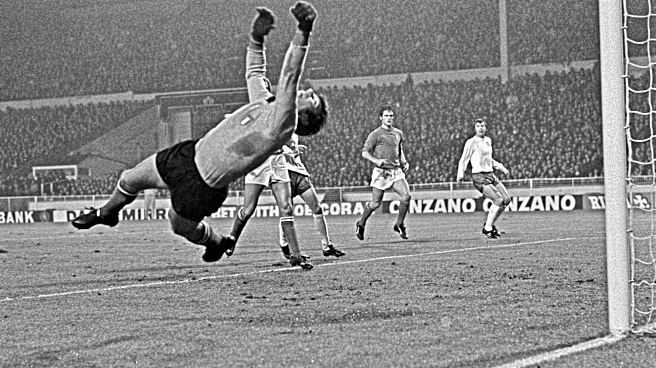
What followed was a performance built on patience, resilience and an unwavering belief in the collective. England pressed, probed, and searched for a breakthrough, but Italy refused to give way. At the heart of that resistance stood Dino Zoff, whose composure and extraordinary goalkeeping kept the English attack at bay. Zoff was already establishing himself as one of the finest goalkeepers in the world, and his performance that evening offered another reminder of why Juventus had made him such an important part of their future.
There is something fitting about Zoff being at the center of this particular story. Few players have embodied the values traditionally associated with Juventus quite like the legendary goalkeeper. There was no need for theatrics, no need for grand gestures. Zoff simply did his job, and he did it better than almost anyone. His calmness under pressure, his professionalism, and his consistency would become defining characteristics of the Juventus teams of the 1970s. He was the kind of player around whom great teams could be built, a goalkeeper who made excellence seem routine.
But Zoff was not alone in representing the Bianconeri that evening. Luciano Spinosi was another important piece of Italy’s defensive resistance, helping provide the organization and discipline necessary to withstand England’s pressure. Spinosi may not always receive the same recognition as some of the more celebrated names from that Juventus generation, but his importance should not be understated. He was part of the machinery that made those teams work, a dependable defender whose contributions helped Juventus build an era of domestic dominance.

That is, perhaps, one of the most enduring characteristics of Juventus. The club’s greatest teams have rarely been defined exclusively by their most glamorous players. They have been built on a collective understanding that every contribution matters, that every position carries responsibility, and that individual brilliance means little without a willingness to serve the team. Spinosi represented that mentality, and his place in the history of Juventus’ successful 1970s sides is well deserved.
As the minutes passed at Wembley, Italy continued to absorb the pressure, waiting for the opportunity to strike. And when that opportunity finally arrived, it was another Juventus man who would seize the moment.
With the match approaching its conclusion, Giorgio Chinaglia broke forward down the right following a pass from Gianni Rivera. His effort across goal was parried by England goalkeeper Peter Shilton, but the rebound fell invitingly into the path of Fabio Capello. The Juventus midfielder made no mistake, sending the ball into the net and giving Italy the lead in the 86th minute.
It was a moment that would live forever in Italian football history. Italy had scored at Wembley, and the significance of the goal was immediately understood. The Azzurri were on the verge of doing something no Italian side had managed before: defeating England on English soil.

For Capello, it was another defining moment in a career that had already become closely intertwined with Juventus’ success. Having arrived in Turin in 1970, he was part of the team that won three Scudetti during his playing career, establishing himself as an intelligent, disciplined, and influential midfielder. His goal at Wembley reflected many of those qualities. He was in the right place, at the right time, ready to deliver when the opportunity presented itself.
There is a particularly wonderful symmetry to Capello’s Juventus story. The midfielder who helped deliver one of Italy’s most memorable international victories would eventually return to Turin decades later, this time as the man responsible for leading Juventus from the touchline. His managerial tenure brought another period of domestic success, with the club winning the 2004-05 and 2005-06 league titles on the pitch.
And then there was Franco Causio, another member of that Juventus contingent, whose presence offered a different expression of what made the Bianconeri so special. Affectionately known as Il Barone, Causio was one of the most technically gifted Italian footballers of his generation. His ability to take on defenders, create opportunities, and bring a little artistry to the game made him an important figure in the Juventus sides that dominated Italian football throughout the decade.
If Zoff represented the reliability, Spinosi the discipline, and Capello the ambition of Juventus, Causio represented its imagination. He reminded supporters that winning and entertaining were not mutually exclusive, that a team could be organized and relentless without sacrificing the creativity that makes football beautiful. His six league titles with Juventus and his contribution to the club’s first UEFA Cup triumph in 1977 ensured that his place in the history of the institution was secure.

Together, these four men represented different pieces of a much larger puzzle. They were part of a Juventus generation that was beginning to establish the club as the standard against which Italian football measured itself. Under the leadership of Giampiero Boniperti, Juventus had entered a period of remarkable success, winning league titles in 1971-72, 1972-73, and 1974-75. The arrival of Giovanni Trapattoni in 1976 would take the club to another level, culminating in the 1977 UEFA Cup, Juventus’ first major European trophy.
It was an era that helped shape the relationship between Juventus and its supporters. The club was no longer simply a successful institution within Italian football.It was becoming a symbol of consistency, ambition, and excellence. Its influence extended beyond Turin, reaching supporters throughout Italy and increasingly across the continent. Juventus was building something that would outlast any individual player or manager, a footballing identity rooted in the expectation that greatness was not an occasional achievement but an obligation.
That identity was not created overnight, nor was it the work of a single generation. But players like Zoff, Capello, Spinosi, and Causio helped give it substance. They helped establish the standards that would be carried forward by those who followed, and their contributions were part of the foundation upon which Juventus would continue to build its legacy.
Perhaps that is what makes their presence at Wembley so meaningful more than half a century later. The four men were not simply representing Italy in a historic international. They were carrying with them the qualities that would make Juventus one of the defining clubs of European football. They demonstrated that greatness comes in different forms: in the goalkeeper who refuses to be beaten, the defender who sacrifices for his teammates, the midfielder who delivers the decisive moment, and the winger who brings joy to the game.
When Fabio Capello’s goal crossed the line, Italy made history. The final whistle confirmed the Azzurri’s first victory over England on English soil, a result that would be remembered as one of the great moments of Italian international football.
But for Juventus supporters, there was another reason to remember that evening. It was a reminder of the men who helped build the club’s golden age, of a generation that carried the black and white shirt with distinction and helped establish the expectations that would define Juventus for decades.
Zoff and Capello would eventually return to Turin as managers, adding another chapter to their relationship with the club. Causio and Spinosi would remain important members of the generation that helped make Juventus what it was. Their individual journeys were different, but their contributions formed part of the same story.
Football is constantly moving forward. Players come and go, managers arrive and depart, and the game itself changes with every passing generation. But some things remain. The expectations, the responsibility, the pursuit of excellence, and the understanding that wearing the Juventus shirt means becoming part of something much larger than yourself.
On November 14, 1973, Italy conquered Wembley. And in doing so, four men who helped define Juventus’ golden generation gave the club another moment worth remembering.
More than 50 years later, it remains a night that reminds us what it means to be a Juventino.