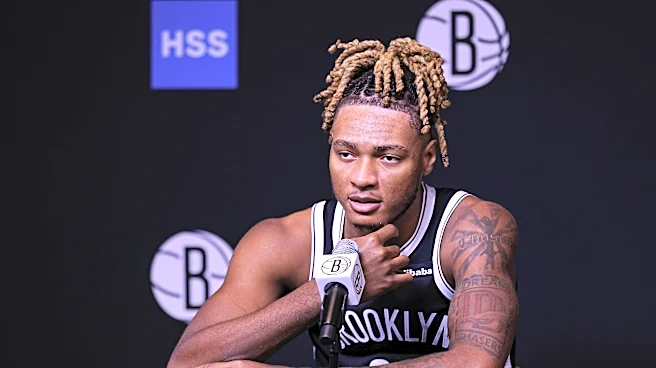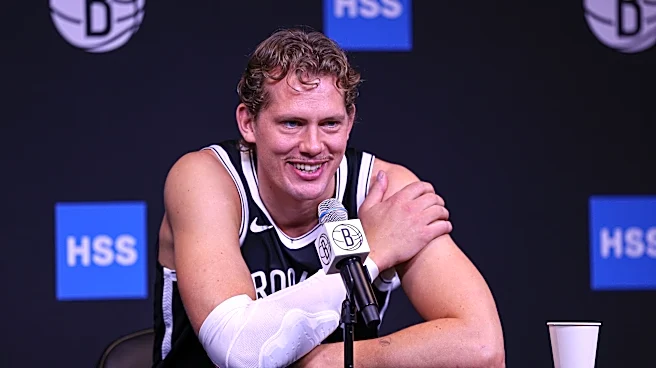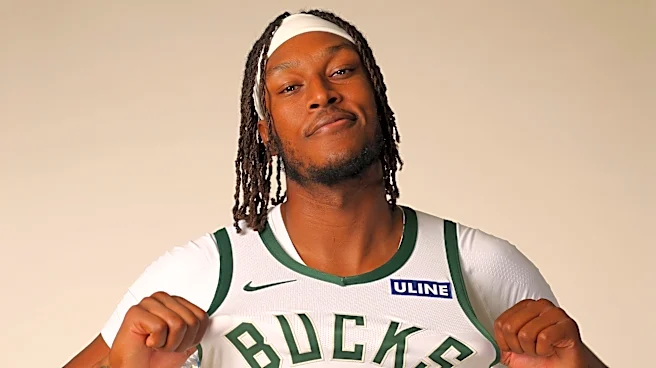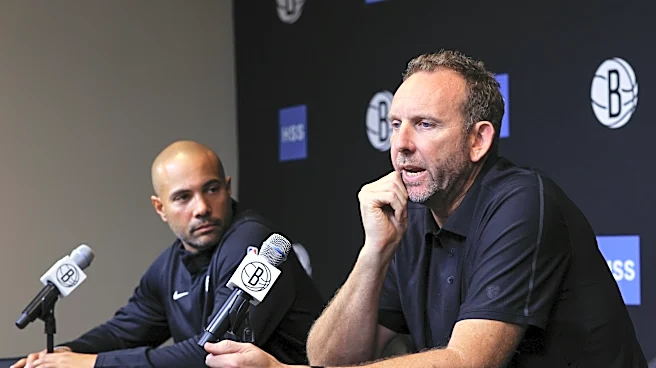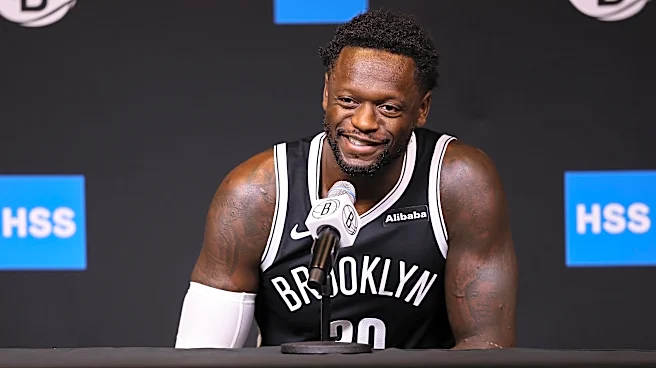


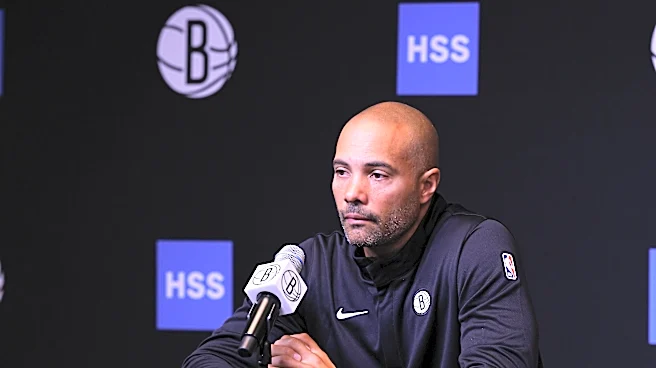
Julius Randle is saying all the right things.
On his leadership style: “I’ve always been somebody that kind of just prefers to lead by example with how I play and how I approach the game. So I don’t have to do anything different with that. But I’m, you know, 13th year in. I’m comfortable speaking up when I see something, or if something needs to be said. But I don’t have to overdo it.”
On camp thus far: “The communication has been really, really good, along with the effort and the competition. So,
you know, I’m impressed. I’m never gonna put a cap or a limit on our team. We’re gonna achieve whatever we believe we can achieve. So, that’s just how I live my life, and you know, that’s what I expect from our team.”
When I tell outsiders that Julius Randle was the star of Nets Media day, even beyond the golf anecdote, and that he’s given textbook answers to questions about his leadership capabilities and vision for himself under Jordi Fernandez, I invariably get the same response: Just you wait.
It could be the Brooklyn Nets’ first four-game losing streak of the season, after which Randle skips out on talking to the media. Or it could be the subsequent fifth loss, during which Randle doesn’t touch the ball enough and his effort on defense wanes as a result. Fans and reporters of the New York Knicks and Minnesota Timberwolves consider such situations essential to the Julius Randle Experience. It’s not that he isn’t truly a pleasant, hard-working, spirited teammate, the kind of teammate he has appeared to be at Nets camp. It’s just that, additionally, he doesn’t take losing or personal struggles very well.
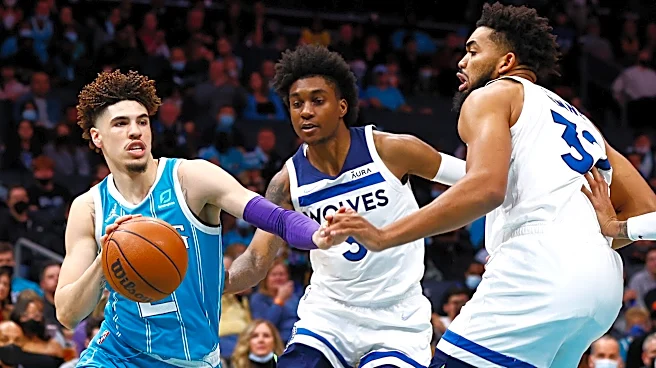
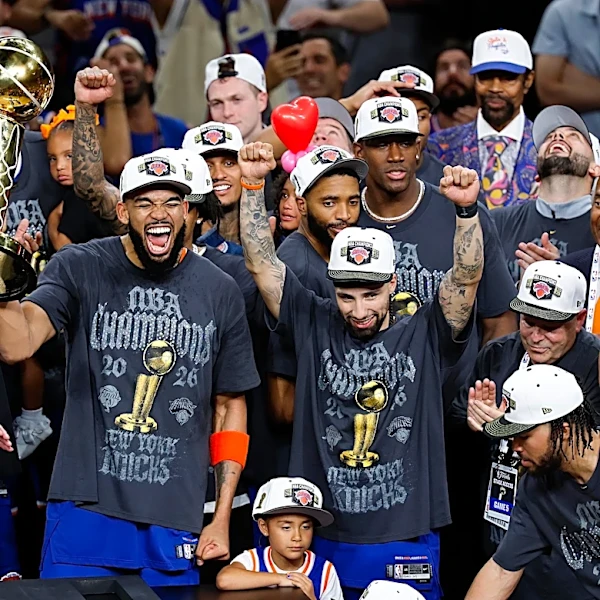
He earned the “moody” moniker over in Manhattan, famously giving a thumbs-down to fans that had booed earlier in the game. When asked what the gesture meant, the Texas native simply said, “Shut the f*** up,” which I personally think is hilarious, particularly because the Knicks won that game. Still, that tag followed him to Minnesota, and ex-teammate Naz Reid didn’t help matters when asked why the team kept falling short in the playoffs: “Probably just moodiness … I think we have more than enough guys bringing it to the table and can compete at a high level, but just being less moody. I think that’s just the name of the game for us, just being less moody and more selfless and just carrying ourselves with championship aspirations like we’ve done before.”
Reputations, eh? Easy to earn, hard to shake.
Julius Randle is now the veteran leader of a Brooklyn Nets team with both legitimate young talent and higher expectations than tanking to twenty wins. Michael Porter Jr., NBA champion, led the team in scoring last season, but he has yet to agree to a contract extension and will once again be in trade rumors this season. Randle, the 13-year veteran, is Brooklyn’s North Star in 2026-27. Not the franchise, not their long-term savior, not even guaranteed to be on the roster past the 2028 expiration of his contract, but likely the most important player in determining the success of this season’s Nets team. Should we be worried?
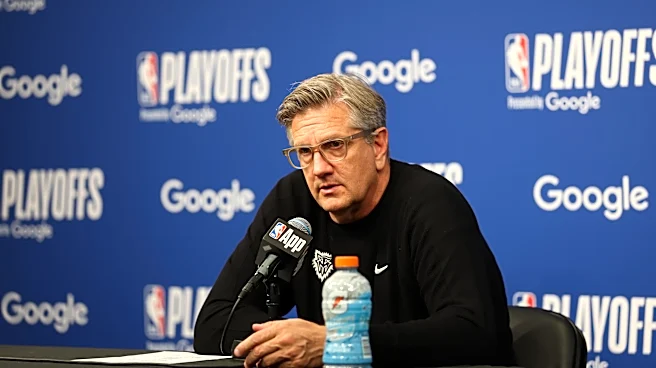
I spoke to Andrew Dukowitz, an excellent Wolves reporter, about the man of the hour. Dukowitz said, “I’m fascinated to see how it turns out. Julius comes to Minnesota, right, and they have Rudy Gobert, they have Mike Conley, they have Nickeil [Alexander-Walker], who was a big part of that locker room, Jaden [McDaniels] and Ant [Edwards] are finding their way. Joe Ingles is in that locker room. He didn’t really speak up a ton in terms of the rah-rah stuff … but what I would say is everybody in that locker room liked him. He was a liked teammate.”
Dukowitz added that “That ‘moodiness’ also existed in Ant and Jaden and Naz [Reid], really everybody but Rudy … I am interested to see how he is with young guys. He is a guy that takes a ton of pride in his work, he is a guy that is approachable, you ask him questions and he gives thoughtful answers. There were dozens of times last year where he’s sitting there with an assistant coach and Joan [Beringer], working on post-moves. I do think he’ll be a willing leader.”
Now that’s one key similarity between the Michael Porter Jr. and Julius Randle acquisitions. For whatever their (dissimilar) misgivings are, both are renowned workers. It appears Sean Marks & Co. target the same intangible qualities in their trade targets as they do in the NBA Draft, work ethic being a pillar of their ideal culture.
Randle, now in year 13, professes that he is still ready to work, particularly under a demanding, player-development-focused head coach: “I love to be coached, and I think there’s different ways [Fernández] can challenge me in parts of the game, whether it’s my rebounding or if it’s running the floor or if it’s being better on defense, stuff like that. Like, I’m not afraid to be coached, and you know, whatever he needs to do, I feel like you should coach your best players the hardest. And he’s not afraid to speak up, if he sees something or if he needs something from me, like, he’ll call me.”
There is also the question of how Randle will be used. Brooklyn was 27th in post-up frequency last season, 19th in isolation frequency. These play-types, of course, have been fundamental to Randle’s production in his career. How far in the middle will he and Fernández meet?
A play like this is encouraging:
Minnesota plays through the top of the key into a handoff, but Milwaukee switches the action. But a guard defending Julius Randle in that mid-post area is a mismatch, and even though the burly lefty takes a tough one, it’s two on the board. The Nets leaned heavy into that ‘delay’ offense —playing through the top of the key and finding handoff opportunities — so much so that Nic Claxton recorded triple-doubles last season. Randle, clearly, adds another dynamic to such offense.
The big question I have is how Julius Randle and Day’Ron Sharpe coexist offensively. Who is initiating these actions? If it’s Randle, what is Sharpe doing off the ball, spacing in the corner? Will Randle, a good screener and an obvious threat to keep these handoffs himself and drive it, lean more into ball-handling creation? It is encouraging that, unprompted, he mentioned wanting to take a career-high number of 3-pointers (particularly catch-and-shoots) at Media Day. None of this, please:
And something tells me Nets fans, if nothing else, will love the combined strength from their front court this season. Day’Ron and Julius are strong dudes; throw in MPJ and that’s a nice rebounding trio on paper.
“The main thing is physicality,” said Sharpe of his newest teammate. “He’s a strong, strong guy. When he’s playing on offense, he’s just bumping guys out of the way and getting to the rim, like it’s no problem … I feel like he’s going to be a great help for us, I feel like his physicality and the energy, leadership, it’ll be a huge part of our team.”
I suspect we’ll see Randle play some center as well, particular if/when Moe Wagner or Sharpe misses a game. Over his two seasons in Minneapolis, Randle played over 1800 minutes (excluding low leverage) without a true center next to him, most often pairing with Naz Reid. Those offensively tilted lineups had about a 118 oRTG and 117 dRTG, per PBP Stats. I wouldn’t be surprised if something like Randle-Wolf-Clowney-Minott is a bench unit the Nets explore, with willing 3-point shooters and length around Randle at the top of the key.
I think it’s gonna go well, to be honest. Julius Randle is better than you think, and the curse of high expectations is what led to his sour exits in New York and Minny. The Nets do not have such expectations. Let’s try and approach .500 first.
“Fans midway through the season are gonna be like, ‘Holy cow, why would Minnesota get rid of him?’ It’s more so the ceiling you get with him,” says Dukowitz.
As for Randle himself, he’s happy to be living back in New York City after spending five years with the Knicks. His eldest son, yes, the one who burst into rage at the sight of a Kevin Durant poster in Barclays Center, is back at his old school. He and his wife have their old friend groups back together.
Point being, Julius Randle is content: “When things are easier off the court, when they’re great at home and they’re happy and all of those things, it makes the basketball part, the work part that much easier. I don’t even consider it work, but it makes the basketball part that much easier. So I feel really balanced, really happy, at peace.”
Let’s hope it lasts.