



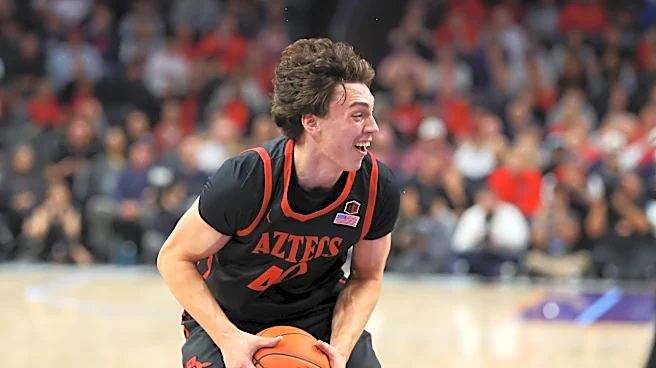
Virginia has finally added a player from the transfer portal.
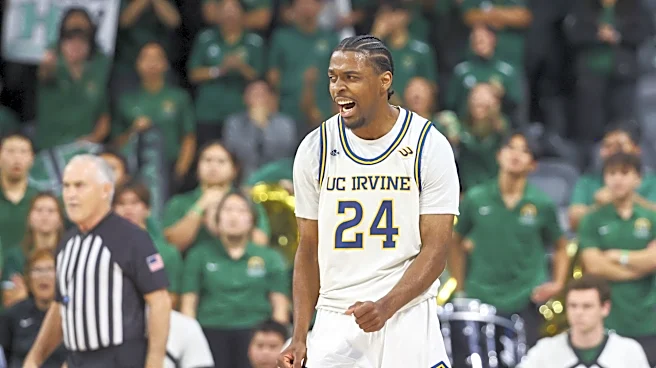
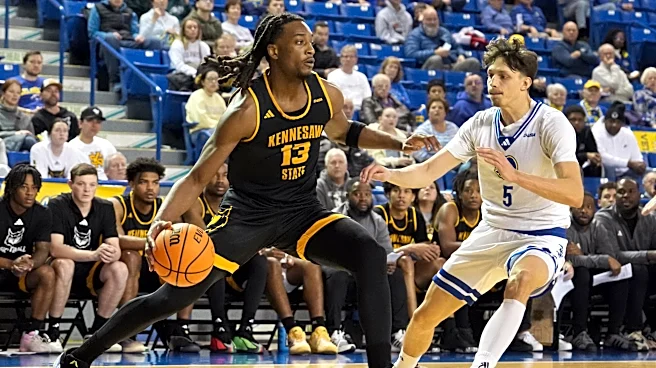
UVA spent the first weeks of the offseason defined more by retention than acquisition. However, that changed on Monday when the Cavaliers landed UC Irvine transfer guard Jurian Dixon, a 6-foot-4, 195-pound guard from San Diego who gives Ryan Odom and company their first outside addition of the offseason. Dixon averaged 15.9 points, 3.6 rebounds, 2.5 assists, and 1.1 steals last season while shooting 39 percent from three on 5.2 attempts
per game. He has two seasons of eligibility remaining.
For most programs, the transfer portal is where the offseason begins. For Virginia, it has been the opposite. The ‘Hoos spent the first few weeks of the spring doing something that has become almost unheard of in modern college basketball: keeping nearly everybody. Chance Mallory, Thijs de Ridder, and Johann Grünloh all announced their returns earlier this month, giving Virginia three projected starters back for the 2026-27 season. Sam Lewis later joined them, meaning UVA is set to return Mallory, Lewis, de Ridder, Grünloh, Elijah Gertrude, Silas Barksdale, and Martin Carrere from a team that won 30 games in Odom’s first season.
But that retention also created a strange tension. Virginia had less to replace than almost anyone else, but it also had fewer obvious starting spots to sell. So while other programs could offer immediate roles and heavy usage, the Cavaliers were trying to add to a roster that already had most of its core back in place.
That helps explain why the portal had been more complicated than many expected. UVA was involved with a number of notable names, including Cole Cloer, Jake Fiegen, Matt Able, and Jalen Shelley, all of whom ultimately went elsewhere. Virginia was never going to operate like the rebuilding team from last offseason because, frankly, it is not one. But the Cavaliers still needed to add.
Dixon is a strong first step.
The most important thing to understand about Dixon is that he is not just a catch-and-shoot guard. Virginia badly needed another high-level perimeter threat, and Dixon’s 39 percent mark from deep on significant volume is exactly the type of production that plays in Odom’s offense. But the broader appeal is that Dixon brings shooting without being a one-dimensional spacer.
At UC Irvine, he was a featured scorer. He handled late-clock possessions, attacked closeouts, got to his pull-up jumper, and created enough off the bounce to function as a legitimate offensive option. That is where his fit at Virginia gets especially interesting.
Dixon projects primarily as a shooting guard, but he has enough size and skill to slide across multiple perimeter spots. He is listed at 6-foot-4 and 195 pounds. In practical terms, that means he is probably a two at Virginia, but not a small one. He has the frame to play next to Chance Mallory without leaving the Cavaliers undersized and has enough positional flexibility to guard one-through-three.
That positional flexibility matters because UVA’s projected starting lineup already has four pretty obvious pieces: Mallory at point guard, Lewis on the wing, De Ridder at the four, and Grünloh at center. The fifth spot is where things get interesting.
If the season started tomorrow, Dixon would probably have a strong case to start at the two. While UVA has some pieces returning in Gertrude and Carrere, they are more unproven commodities due to their limited sample size. Additionally, I would still expect Virginia to target another guard to back up Mallory at the point.
Even if he does not technically start, Dixon should play starter-level minutes. A realistic early expectation is somewhere in the 22-to-28 minute range, with the upside for more if his defense translates and his shooting holds against ACC athletes. He played heavy minutes at UC Irvine, and he produced efficiently while carrying a much larger offensive burden than he will likely have in Charlottesville. That should make the transition easier. He will not have to be Virginia’s first option. He just has to be one of several reliable ones.
Offensively, the fit is obvious. Odom’s Virginia has leaned into a more modern identity: more pace, more spacing, more perimeter shooting, and more freedom than the old Bennett-era style.
He gives Virginia another player who can punish help off the ball. That is especially important with De Ridder and Grünloh returning up front. De Ridder is an All-ACC First Team player, but sometimes struggles when facing double teams. Additionally, Grünloh’s development as a rim runner, offensive rebounder, and interior presence also becomes more dangerous when defenses cannot shrink the floor. Dixon’s shooting should make both players’ lives easier.
He also helps Mallory. One of the big questions for Virginia next season is how much offensive responsibility Mallory can handle as a sophomore point guard. He is electric, and his role is going to grow. But asking him to be the only consistent advantage creator would be a lot. Dixon gives him a backcourt partner who can take pressure off the ball, initiate secondary actions, and keep defenses honest when Mallory gets two feet in the paint.
Dixon has already shown he can be that kind of player. In January, he scored a career-high 26 points against Cal State Bakersfield while shooting 8-for-13 from the field and 6-for-7 from three.
Defensively, the question is how quickly he adjusts to the level of physicality, speed, and scouting detail in the ACC. At 6-foot-4, he should be able to guard most twos and some threes. He also averaged 1.1 steals per game last season, which points to some activity and anticipation. But Virginia will need him to be more than active. Odom’s system this past season was predicated on short runs when players go all out on both sides of the floor, so the style of defense will likely be an adjustment for Dixon.
It’s also important to note the UC Irvine connection here. Devin Tillis transferred from UC Irvine to Virginia last offseason and became part of Odom’s first UVA team. Tillis’ positive experience in Charlottesville could not have hurt. At a minimum, Virginia had recent experience evaluating and integrating a productive UC Irvine transfer. And if Tillis had good things to say about the program, the staff, and the transition from the Big West to the ACC, it is easy to imagine that helping Dixon feel comfortable with the move.
Given the monetary costs and playing time realities, the Cavaliers were not just trying to find talent. They were trying to find a player who made sense with the roster, who could accept a role on a team with returning pieces, and who could still raise the ceiling. Dixon fits that description better than a lot of higher-profile portal options would have.
The roster is still probably not finished. Virginia could still use more frontcourt depth behind Grünloh and De Ridder, and adding another perimeter piece would not hurt. But Dixon is a meaningful first domino. For a team that had been waiting for its first portal win while the rest of the sport kept moving, this is exactly the kind of pickup Virginia needed.