




The Arizona Cardinals lost a franchise-record 14 games last year. Anytime a team has that many losses in one season, heads are going to roll. And it began the day after the final game. Head coach Jonathan Gannon said he would be safe
, yet he lost his job. So did his entire coaching staff.Many players were free agents and could have been offered new deals or extensions before the season was concluded, but weren’t.
RELATED: TEAMS CALLING ABOUT JOSH SWEAT

So, when Mike LaFleur was hired as the new head
coach, he retained some of the former coaches and got rid of some players, such as their starting QB, Kyler Murray.
Being an offensive-minded coach, LaFleur needed certain things to be in place as he installs the offense he came from. Things had to change on that side of the ball.
What has been altered are quite a few aspects. Here is the most improved position group so far this offseason.
Offensive line
———————————————————————————————————————
Offensive guard
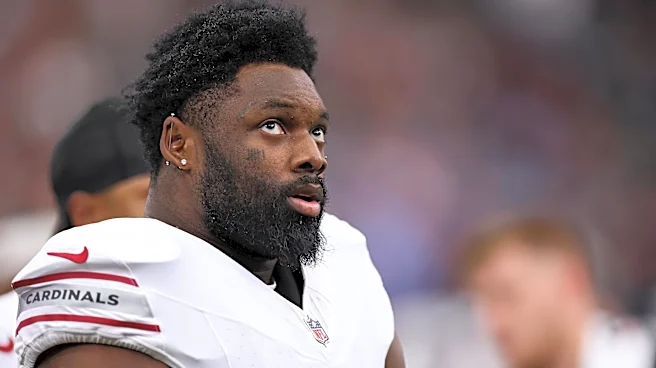
The Cardinals must have had the worst offensive guard grouping in the league. The starters in Week 1 were Isaiah Adams and Evan Brown. Adams was placed into the starting role for Will Hernandez, who became injured with a knee issue against the San Francisco 49ers during the 2024 season. He wasn’t quite ready to begin 2025.
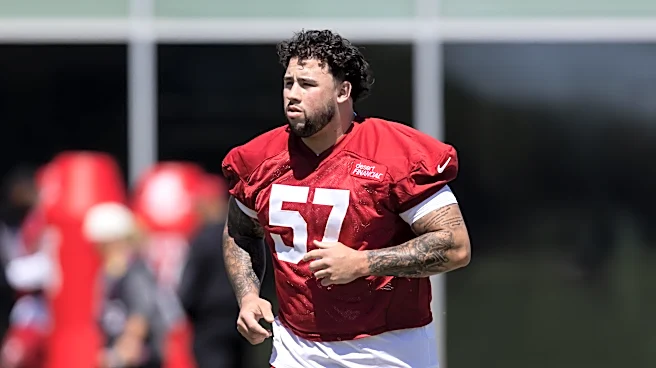
Adams (6’-4”, 315 pounds) had a great training camp and was the darling of the preseason. But everyone knows that preseason is a lot of second and third-string guys, and players who are about to be released in a few weeks, with few actual starters being inserted. Once the regular season begins, that is when the big boy football begins.
Hernandez was supposed to be the starter at right guard. He was on the PUP list for most of training camp and was activated on August 27. He made the final roster but did not return to the field until Week 5 against the Tennessee Titans. Which was good timing because Adams was having problems.

The issues with Adams were that he struggled to maintain consistency as he played hot and cold. He was drafted in Round 3 to become the starter, but when he finally got his chance, he did not play well against actual starting defenders. His pulling ability was too slow, and he could not remain engaged, so defensive players would hang on and then slip past him for the tackle. Adams ended up with a Pro Football Focus (PFF) grade of 56.7, which is not exactly what the front office had hoped for when they spent a third-round pick on him.
But Hernandez only played seven games before the Cardinals put the starting right guard on IR with hip and knee injuries. This forced Adams back into the starting lineup, and he finished out the year and had seven penalties, two sacks allowed, and 23 pressures for just 9+ games.
Brown had a horrible PFF grade of 54.3 overall, with his run blocking identified as his weak spot with a rating of 49.0. Part of Brown’s issues was not keeping his defensive counterpart out of the backfield. He allowed 34 pressures with five QB hits.
Back in 2024, Brown was considered a reliable blocker in both pass protection and the run game. But he has regressed quite a bit, and as stated, his run-blocking abilities dropped significantly. Having health issues with his wife and newborn child didn’t help him out any. He became one of the first group of players to be released. On March 12, Arizona cut him, which saved the franchise $4.91 million against the salary cap.
At season’s end, Hernandez became a free agent and so far, remains unsigned. Brown signed with the Houston Texans on a one-year agreement.
Offensive tackle
LT Kelvin Beachum. Where do you start?
The most obvious is his age, which he will turn 37 this summer. The issue with this is that his injury management is not what it used to be. He has consistently dealt with lower-body injuries with an emphasis on hamstring and, at times, his groin. This has forced him to miss games and also play with injuries. He plays a position that explodes on another body every single play, so the physical wear is apparent.
Numbers don’t lie, and his PFF run blocking grade finished at 48.9. His seven penalties and five sacks allowed aren’t so bad, but the 48 pressures are an eye-opening number. He eventually became a good swing tackle but was inserted into the starting lineup because of injuries. He wasn’t able to keep up with the weekly grind during games.
LT Jonah Williams had plenty of injury issues on his own. He had signed a two-year deal with the Cardinals, but played only six and nine games, respectively. Coming in with a 55.4 PFF grade for just nine games didn’t help matters. He missed 19 of a possible 34 games over his two-year, $30 million contract. Which means he cost Arizona $2 million per game. Ouch.
At the conclusion of the 2025 season, both Williams and Beachum remain unemployed.
New plans
The treatment plan was pretty simple for GM Monti Ossenfort. Find as many top-tier athletes to replace the lower shelf players. Middle-talent level guys can be supplied as well. The bottom feeders and always-injured dudes were weeded out.
First order of business: Sign LaFleur to a five-year deal on February 1.
Two weeks later, bring in Nathaniel Hackett as the OC. A week later, the decision was made to retain O-Line coach Justin Frye and his assistant coach Chris Cook. Another offensive coach LaFleur kept was passing game specialist Connor Senger. Then, LaFleur hired Brett Ekkens (offensive quality control), Matt Merritt (running backs), Jake Moreland (tight ends), Matt Schaub (quarterbacks), and Tony Sorrentino (wide receivers).
So, all of the decision makers and teachers are in place.
As soon as the free agency period began, OG Isaac Seumalo (6’-4”, 303 pounds) of the Pittsburgh Steelers was signed to a three-year deal. Seumalo was considered the #1 offensive guard prospect available in free agency and was graded as a huge plus.
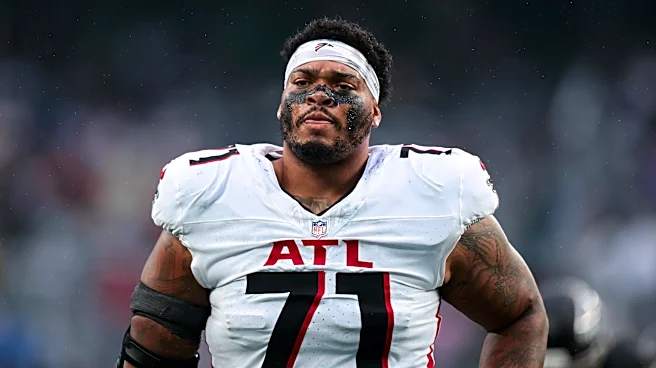
The following day, RT Elijah Wilkinson and OG/OT Matt Pryor (6’-7”, 332 pounds) were inked. Wilkinson (6’-5”, 329 pounds) started all 17 games for the Atlanta Falcons last year. Pryor made $1.36 million last year with the Philadelphia Eagles. His PFF grade for this past season was a nice 71.6. He had a single penalty, allowed three sacks, and four pressures, and played every offensive line position except for center.
LINK: GET TO KNOW NEW CARDINALS OL MATT PRYOR
Make no mistake, Pryor is a very large man. He has long arms with a massive frame. Being that big, he does need time to navigate his defenders, which is why he is best suited for guard, where he doesn’t have to worry about fast first steps.
The idea here was that Seumalo would be situated at left guard in place of Brown, Pryor could move into the RG spot where Hernandez and Adams played, while Wilkinson would become the new right tackle.
All of the weak spots for the Cardinals had been solved.
But Ossenfort wasn’t finished. On March 20, he also signed OT Oli Udoh (6’-6”, 325 pounds) to a one-year deal. His last PFF grade was 55.0 and ranked as a better run blocker than pass protector. Udoh offers quality depth.
In April’s NFL draft, Ossenfort selected OG Chase Bisontis (6’-5”, 330 pounds) out of Texas A&M in Round 2. Bisontis is an exceptional prospect, and he looked like a beast on the first day of rookie mini-camp. Yes, it will be a three-way competition for the starting right guard spot, and in the end, it could mean that Adams is either the backup or could find himself at third-string if he doesn’t ball out in training camp.
LINK: GET TO KNOW NEW CARDINALS OT JAYDEN WILLIAMS
In Round 7, Ossenfort took OT Jayden Williams (6’-4”, 307 pounds) of Ole Miss as a developmental prospect. After the draft, one undrafted rookie free agent was signed in OG/OT Ka’ena De Cambra (6’-3”, 308 pounds) from Arizona.
Going forward
Several position groups with the Cardinals have had larger overhauls. Some have major additions such as the running back room and defensive tackles.
But the offensive line room has improved the most.
Center Hjalte Froholdt and LT Paris Johnson give this group a solid foundation. There will be at least three new starters along the offensive line, which is a huge overhaul. The offensive line is made up of five players, but is considered one group that must work as one cohesive unit.
The signing of Seumalo and the draft choice of Bisontis will change the outlook of this group dramatically.
LaFleur’s offense is designed to be more of a rushing attack with a short passing game. It takes good run blockers to make this work, and it is the reason these specific players were scouted and hired.
LINK: GET TO KNOW NEW CARDINALS OG CHASE BISONTIS
Right guard will become a three-headed battle between Adams, Pryor, and the youngster Bisontis. Pryor could be in the mix to clash with Wilkinson for right tackle.
Other offensive line players under contract include offensive tackles Josh Fryar, Christian Jones, Senn Valentin, and Demontrey Jacobs, offensive guard Jon Gaines, and center Hayden Conner.
Even with the new starters, the second level of talent has already improved. Attrition affects every offensive line group every season. It’s the teams that have good talent behind the starting five that will become an important aspect of the success of this year’s offense.
Out with the old, in with the new. This would easily qualify for the most improved positional group for the 2026 Cardinals.