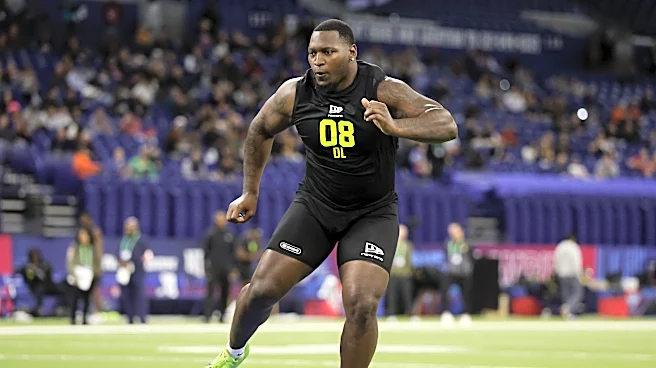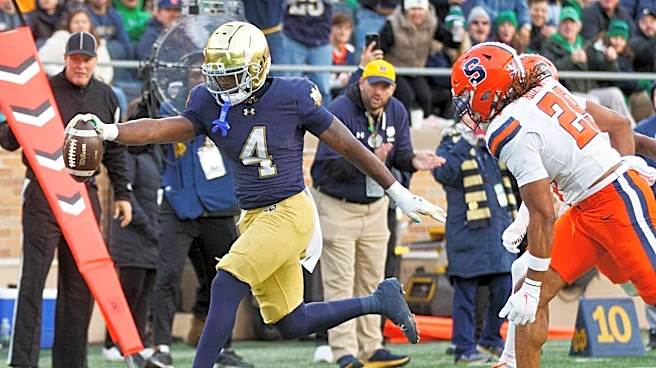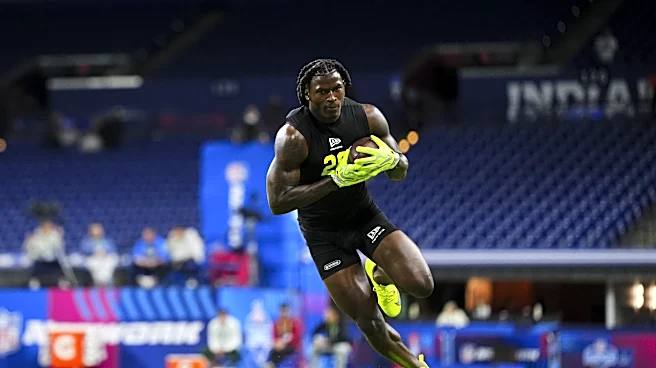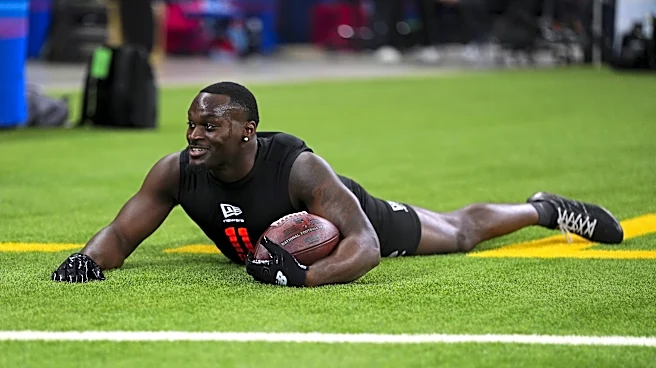



The 2026 NFL Draft offers the Atlanta Falcons an opportunity to establish a new identity under new head coach Kevin Stefanski and general manager Ian Cunningham. Both have stated their intentions to construct a physically-minded football team by building through the trenches. But actions speak louder than words, and it remains to be seen whether their first draft class actually reflects those stated goals or will be just lip service.
It becomes a bigger challenge given the team’s limited draft resources
and a plethora of needs across the roster. The Falcons have done an excellent job raising their floor in free agency with a number of bargain-bin signings across the roster, which makes them less desperate to fill obvious holes. But such moves aren’t actually solving the team’s various problem spots. Instead, they’re just giving them stopgap options until they ultimately solve them by hitting on draft picks.
This means they can go in a number of different directions with their draft plans, allowing Cunningham to lean on the best player available strategy. That strategy both provides the benefit of flexibility but the downside of choice. Every hole the team chooses to plug means another gets ignored, a problem that only gets magnified in a year when the Falcons have only five picks.
But this dichotomy can also force Cunningham and Stefanski to lean on their principles, leading them to focus on either becoming a more physical or a flashy team. It all boils down to how they see their needs and the talent available to them.
Falcons face a familiar dilemma with prioritizing wide receiver over the trenches
Arguably, the Falcons’ biggest need is at wide receiver. Coming off a season where the play opposite Drake London was abysmal, the team needs to add more playmakers at the position. Free-agent additions like Jahan Dotson and Olamide Zaccheaus should help stabilize the position group, but if the Falcons want to become a more potent offense than the 24th-ranked scoring unit from a year ago, they’ll need more juice on the outside.
Yet the Falcons are not strangers to prioritizing a skill position like wide receiver in their past. Think back to 2018, when the Falcons nabbed the best player available in wide receiver Calvin Ridley, while ignoring a pressing need at defensive tackle. Oddly enough, it mirrors their current situation, where the Falcons are expected to target both positions early in this year’s draft. The consequences of that 2018 choice led the team to have a potent passing attack for the next few years, led by Ridley and Julio Jones, while struggling to win along the line of scrimmage, contributing to the downfall of the Dan Quinn regime.
Early-round offensive line investments can secure Falcons’ future success
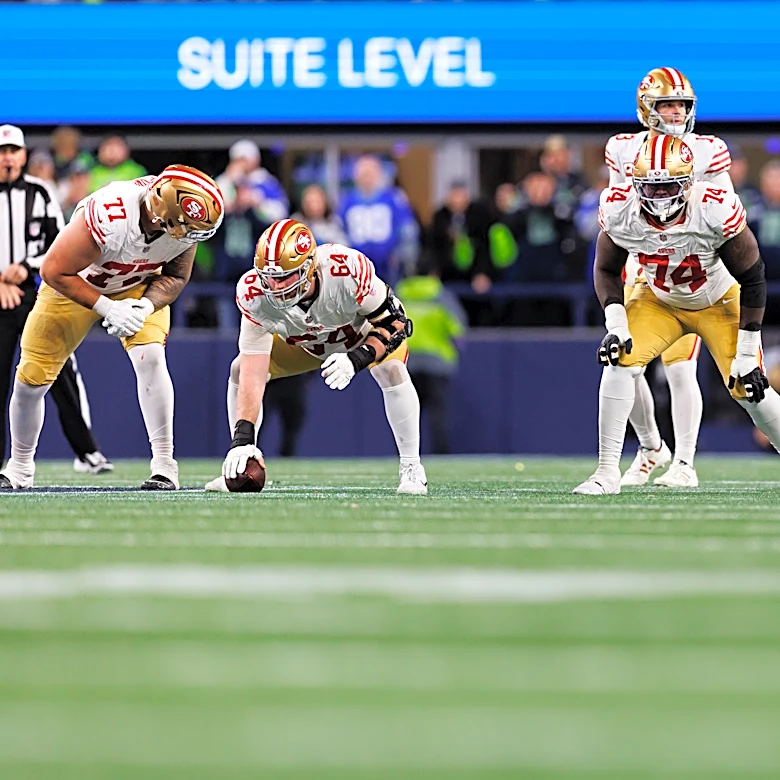
Meanwhile, the recent retirement of right tackle Kaleb McGary raises immediate concerns along the offensive line. The signing of Jawaan Taylor to a one-year deal stabilizes that spot in the short term, but the Falcons still have many questions about the long-term viability of this unit. In addition to Taylor, left guard Matthew Bergeron and center Ryan Neuzil are entering contract years. Left tackle Jake Matthews has no more guarantees left on his deal after this season, meaning that if need be, the Falcons can move on from him in 2027. However, they’ll take a significant dead money hit thanks to his recent restructuring. This leaves significant questions about the future of four of the five offensive line positions, giving the Falcons the opportunity to get ahead of those questions by addressing their line needs early in this upcoming draft.
This is relevant to the future of their run game, given the impending contract extension of running back Bijan Robinson. Whether that deal gets done later this summer or waits until after the 2026 season, it seems inevitable that the Falcons will make the fourth-year running back one of, if not the, highest-paid backs in the NFL. Yet, as capable as Robinson is, letting the offensive line go to seed will only make such an investment look worse. Everyone saw what greatness behind a bad offensive line looks like with Saquon Barkley’s inconsistent tenure with the New York Giants compared to how things looked when he played behind a top unit with the Philadelphia Eagles. Watching the Falcons waste Bijan’s prime by playing behind an aging and declining line would not only be an incredible waste of talent but also money.
With the hiring of guru Bill Callahan as the offensive line’s position coach, it may seem attractive to think that he can do more with less, given Atlanta’s limited draft resources. But his career track record says otherwise. Over the course of nearly a quarter-century coaching offensive linemen in the pros, Callahan has overseen 12 different players who have made first or second-team All-Pro under his watch. But all but one of those players were originally selected in the first or second round of the NFL draft.
The lone exception is former fifth-round guard Wyatt Teller, who was a two-time second-team All-Pro with the Cleveland Browns under Callahan in 2020 and 2021. It’s clear that when you give him premium talent, Callahan can get the most out of those players. When the Callahan-led 2020 Browns offensive line was PFF’s top-ranked unit, it featured a pair of first-round offensive tackles (Jedrick Wills and Jack Conklin), a second-round guard (Joel Bitonio), Teller, and a fourth-round center (J.C. Tretter). At the time, few units featured a higher level of draft investment across the league.
Cornerback remains unsettled as Falcons weigh pass rush priorities
One can also look at the defensive side of the ball and see a similar dynamic between a desire to build in the trenches versus targeting a significant need at the skill positions. That latter need comes at cornerback, where the Falcons have had a revolving door at the starting spot opposite A.J. Terrell since his arrival in 2020. Cunningham has a duty to stop the revolving door that his predecessor, Terry Fontenot, largely ignored over the past several offseasons.
However, as things stand today, Mike Hughes continues to sit atop the depth chart and appears poised to be the team’s starting outside cornerback for the third consecutive year. Hughes has been a serviceable stopgap over the past three seasons, but his limitations were exposed constantly last season. Opposing offenses continually picked on him, with PFF charting him as the 17th most targeted corner in the NFL in their snaps-per-target metric. Some of that is a testament to Terrell’s ability, as he ranked 108th (out of 120 cornerbacks) in that metric. Opposing quarterbacks simply chose to avoid Terrell at all costs, further evidenced by Dee Alford ranking first in that snaps-per-target metric as the NFL’s most targeted corner, while Billy Bowman was also tied for 17th with Hughes. Clearly, the Falcons need to infuse that cornerback room with more high-end talent, who could take advantage of the ample opportunities to make plays lining up across from Terrell. Yes, the team has former first-rounder C.J. Henderson and highly-touted undrafted rookie Cobee Bryant in the mix to bolster competition, but is that enough?
Yet, the Falcons have largely ignored their cornerback need so far this offseason, letting Alford walk and replacing him with journeyman Darnay Holmes. Does that signal that they are poised to find their solution in the draft, or will they just rely on the current competition to hopefully stabilize the position?
If the Falcons don’t invest premium draft capital in their cornerback position, they have the ability to offset this with investments up front along the defensive line. The recent trade of Ruke Orhorhoro signals the Falcons are likely eyeing another upgrade at defensive tackle. Coupled with the uncertainty surrounding edge rusher James Pearce’s status, the Falcons have needs up front. The old adage that a strong pass rush can mask coverage deficiencies also applies. Can the Falcons afford to push their need at cornerback off until the later rounds and offset it with early-round investments in their front?
Will the Falcons finally follow through and prioritize the trenches?
Across the roster, the Falcons are facing choices between physicality and flash. Obviously, much hinges on how the board falls. If the best player available when the Falcons are on the clock is a cornerback or wide receiver rather than a lineman, that is the most important variable informing their ultimate choice. But part of the process of building the draft board infuses it with preferences and tendencies. Scouts evaluate and grade prospects, but in the end, it’s up to the decision-makers like Cunningham and Stefanski to have the final say on which direction the team goes. Will they stack their board in favor of the physical trench players along the offensive and defensive lines, or will they favor the flash with skill positions such as wide receiver and cornerback?
It may seem obvious that the Falcons will lean towards physicality over flash, given Cunningham and Stefanski’s previous statements, but nothing is guaranteed. Former Falcons head coach Arthur Smith’s background suggested he would also veer toward physicality in shaping the roster, yet in all three drafts that he oversaw, the Falcons prioritized skill positions in the first round. This is why nothing can be taken for granted.
Ultimately, the answers will come on Friday and Saturday, and they will speak volumes about whether Cunningham and Stefanski are willing to back up their words with action. Should they commit to strengthening the trenches in this draft and build on that foundation in the years ahead, it could mark the dawn of a new era for Falcons football. One defined by physicality, where they become the team that dominates up front rather than the other way around. After all, the Falcons haven’t returned to the playoffs since passing on that defensive tackle to take Ridley back in 2018. That may be more coincidence than consequence, but the pattern is hard to ignore. They’ve cycled through the same approach year after year, only to keep coming up short. A genuine commitment to the trenches won’t guarantee a turnaround, but it would at least signal that this regime is serious about doing things differently, and that alone would be a meaningful step forward.