




Congress finally got tired of watching the rich get richer in college sports and now there’s a bill to prove it.
Predictably, the people getting the richest are not happy.
In breaking down the cross-over from government into collegiate sports, we’ll summarize its essence and meaning across the board.
A rare moment of agreement in Washington
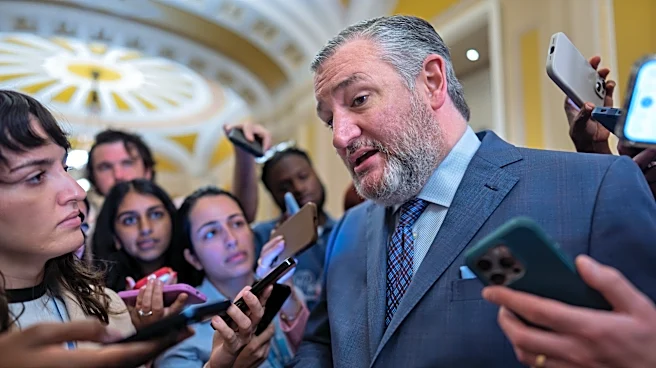
Senators Ted Cruz (R-Texas) and Maria Cantwell (D-Wash.) presented the Protect College Sports Act last week and if you root for a school in the Mountain West or the new Pac-12, you should probably pay attention.
And to note: this isn’t a left vs. right thing.
A conservative right-winger and a progressive Democrat agreed that college sports had become a rigged game and that somebody needed to do something about it. That alone is worth noting that a real bipartisan effort is doing something about something
Because buried inside this sweeping bipartisan legislation is something that could matter a great deal to mid-major programs: actual legal teeth behind the revenue-sharing cap.
How the rich got richer…by playing by different rules
Here’s the quick version of what’s been happening.
In July 2025, the House v. NCAA settlement paved the way for direct athlete compensation from schools; modeled after the NFL’s salary cap. Next year, each school has $21.3 million to spend on all of their athletes.
The problem is that many programs have been redirecting corporate sponsor money to their rosters disguised as third-party NIL; money that conveniently doesn’t count against the cap. The result? Football rosters at the richest schools, especially in the Big Ten and SEC, have quietly ballooned past $30 million.
So, yes. The cap existed, but it was more of a polite suggestion than an actual rule. That is the loophole this bill is designed to close.
Programs, particularly bluebloods with big multimedia rights partners, were essentially laundering above-cap money through shady NIL deals and the current College Sports Commission could not stop it.
S0, schools kept doing it.
What this Cantwell-Cruz bill actually does
This bill changes the math.
The bill gives the College Sports Commission real legal authority to crack down on pay-for-play schemes dressed up as NIL deals; noting that outside NIL arrangements would still be allowed; such as a local Boise car dealer or a Fresno State-area restaurant paying a player would be perfectly fine.
But for those sketchy third-party arrangements that exist solely to funnel extra cash around the cap? The legislation provides enforcement muscle to go after those specifically.
The bill also tightens up several other chaotic areas.
The law bars coaches from leaving their teams before the season ends, limits the transfer portal to one penalty-free move per player and establishes a standardized five-year eligibility window.
For mid-majors that develop talent only to watch it walk out the door to a Power Four school, this is meaningful progress.
Why it matters that the SEC & Big Ten are not happy
Here’s where this whole thing gets complicated and actually, more interesting for Mountain West and Pac-12 fans.
The Big Ten and SEC released a joint statement opposing the bill as currently written, citing “critical issues” with the legislation, while the ACC’s Jim Phillips and the Big 12’s Brett Yormark came out in support.
Read that split carefully.
The two conferences who have spent the last decade outspending everyone and circumventing the cap are against it. And the two conferences that have less financial firepower to game the system are for it. That alignment tells you almost everything about who this bill actually helps with mid-majors sitting squarely on the right side of it.
The Big Ten and SEC say the bill has too many legal gaps, ties their hands when rules need to change quickly and could actually create more lawsuits than it solves?! Fair points…maybe?
Also worth noting: the bill would make it illegal for either conference to break away and form their own exclusive super league, which is exactly the kind of move both have been inching toward for years. So yes, they have “concerns.”
So does this actually level the playing field?
At this point, it does somewhat at least. And still that is not nothing.
If enforced (a significant caveat), it means an Alabama or Ohio State cannot quietly operate on $40 million in actual roster costs while a Boise State or Colorado State or Washington State follows the rules at $21 million. This gap doesn’t disappear overnight, but it does narrow.
For conferences like the Mountain West, where programs compete for players against P4 schools with every single transfer window, that margin matters.
But in the fine print, the cap has a “floating mechanism” built into the law; meaning it is not fixed in stone forever. It can rise over time. For example, if it rises faster than mid-major revenues, which it likely will, then we’re eventually back to square one.
What are the penalties for breaking the rules?
This is the part that gives the bill some genuine credibility.
The legislation leans on the College Sports Commission as the primary enforcement arm that would now have federal backing.
Violations could mean loss of future cap space, postseason bans or financial penalties. The critical difference is that a congressional framework exists to pursue litigation if schools ignore the rulings. That’s new and it makes a big difference. As a precursor example, Nebraska and its multimedia rights partner Playfly are already at the center of a high-profile case testing these exact boundaries.
The bottom line for Mountain West & Pac-12 fans
This is not a done deal yet.
The Senate, soon heading into their summer recess, needs to hit 60 votes to ratify the bill into an actual law. In that narrow window, you can bet the SEC and Big Ten will throw their enormous lobbying weight around to stop the law.
But step back to look at the bigger picture. It’s worth mentioning again…
A Republican from Texas and a Democrat from Washington state wrote this bill together and the conferences that can benefit most are backing it, while the conferences that benefited the “old way” are fighting it. The battle lines could not be clearer. It’s so clear that it echoes all that is going on in the even bigger picture beyond sports.
For the Mountain West and Pac-12, the fact that two political adversaries agree on this says something. This game can’t be rigged forever, but it’s not fixed yet either. So, cautious optimism and awareness is good for right now.