



To say Jimmy Rogers’ departure was shocking would be an understatement. Learning that his dream job was at Iowa State? There really aren’t any words for that. The timing could not be worse for Washington State, which is currently operating without an athletic director. And while last night brought plenty of doom and gloom among Cougar Nation, I believe there is still real reason for optimism.
Perhaps we should have seen this move coming from Rogers, who immediately after his first (and only) Apple
Cup loss started complaining about his resources.
In retrospect, this is a telltale sign that he wasn’t in this for the long haul. Despite the reporting that has indicated Rogers would have stayed in Pullman had it not been Iowa State that came calling, I find that awfully hard to believe. And if his entire career arc was based on getting to Iowa State (kind of insane), that is something our previous AD should have vetted. Jimmy was a good coach, but he wasn’t for us. However, we need to take his untimely exit as a major warning sign.
President Elizabeth Cantwell’s comments a few weeks ago at the Cougs First event in Spokane seem even more prevalent now, as she challenged WSU supporters to expand their NIL participation. Cantwell estimated that the university needs to generate approximately $15–20 million per year in NIL support to remain nationally competitive. Many fans questioned whether that figure is realistic—but the broader point rings even more true today.
Cantwell has been consistent since taking office: sustained athletic success matters, not only for wins and losses but also for enrollment, visibility, donor engagement, and institutional health. Universities with winning football programs routinely experience measurable bumps in applications, merchandise sales, and media exposure. WSU is no exception, and in fact, the importance of athletic success is probably greater at our university than it is elsewhere.
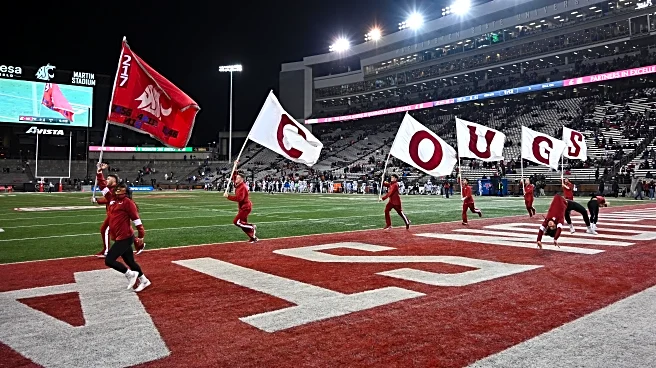
Around the same time as Cantwell’s comments, the university announced a $12 million investment in Martin Stadium—upgrades to the video board, sound system, and lighting. Enhancing the game-day experience matters. But the most proven driver of attendance and revenue is simpler:
Winning.
And in the modern era of college athletics, winning requires a level of investment that didn’t exist 10 years ago. NIL is no longer a luxury—it is the mechanism schools use to retain starters, attract transfers, and close the gap with wealthier programs.
Programs that historically have had very little success—Indiana, Virginia, Vanderbilt, and James Madison—have all put together tremendous runs over the last few seasons after significant investments into the NIL infrastructure. None of these programs suddenly “got lucky.” They increased spending, and results followed.
The same dynamic defines our friends from the old Pac-12. Oregon left Washington behind in their new conference, and a massive gap between the two programs has formed. The pattern is clear: schools that keep up financially stay in the hunt. Those that fall behind eventually fade.
You can dislike the new model, and you can question the ethics behind multimillion-dollar athlete compensation. But the reality is inarguable: athletes generate real revenue, and schools with competitive football brands reap benefits across the entire university.
Here’s what fans are overlooking: Washington State is far closer to breakthrough success than many assume.
WSU has reached a bowl game in nine of the last ten full seasons, an unprecedented run in program history. Over the last decade, WSU has had four head coaches, including three (and now a fourth) since 2021. Dickert had to take over for Rolovich mid-season, and Rogers had to build an entirely new roster this season, yet the success endured. The athletic department has consistently proven it can do more with less than everybody else.
This season, WSU lost three road games—at No. 6 Ole Miss, No. 17 Virginia, and No. 25 James Madison—by a combined nine points. JMU won its conference title. Virginia plays for its playoff bid tonight. Ole Miss finished 11–1 in the SEC. These aren’t moral victories; they’re proof that WSU is performing at a Power Five level despite a fraction of its opponents’ resources.
At home, the Cougars have been even better:
- 49–16 at Martin Stadium (.753) over the last decade
- 10–2 at home over the last two seasons (A Jake Dickert collapse against Wyoming and an Apple Cup 4th quarter away from perfection)
The culture has changed. When fans travel to Pullman, they should expect to see the Cougs emerge victorious. WSU legitimately has the opportunity to be one of our league’s premier programs.
The path to major postseason games has never been more realistic. The playoff continues to expand. No more UW spoilers at the end of the season. No more season-ending trips to Cal. No more bogus calls against USC, Oregon, or Stanford to live in our nightmares. The biggest obstacle between WSU and a conference title is Boise State. Winning the league—and reaching a marquee postseason stage—is more achievable now than ever.
Some fans feel beaten down by conference realignment or frustrated by the snakey business of modern college football. That frustration is understandable. But disengaging from WSU now only guarantees that we will tumble down the totem pole even farther. And as the godfather of Cougar football Jack Thompson pointed out last night on The Couch GM podcast, he had four head coaches during his four seasons in Pullman. This is not new for Cougs, but we have to step up, like we have before.
The reality is this:
WSU has more control over its future than at any point in the modern era.
The difference between WSU going 6-6 or winning the Pac-12 in the next few years will likely come down to retaining key contributors—players who now have competitive offers from programs with larger NIL pools. Standout defensive back Kenny Worthy has already entered the transfer portal, a player whom the Cougs could have pointed to as a mainstay for their defense next season.
At the time of this article being written, there were around 3,000 members of the Cougar Collective.
In comparison, there are approximately 10,000 WSU football season-ticket holders and 250,000 living Washington State alumni (for comparison, Boise only has around 100,000).
If even a fraction of these fans contributed at the entry-level amount of $18.90 per month, WSU would be dramatically more competitive.
Think about it:
An $18.90 a month subscription comes out to around $226.80 per year. That means that if every season ticket holder joined the club, they would raise $2,268,000, effectively quadrupling what 1890 club members were able to give last season.
Now imagine that we got just a fraction of the Cougs around the country who watch the game every Saturday to join… say 20,000 people total. That would be around 4.5 million dollars, ON TOP OF one-time donations, Ol’ Crimson sales, and people who donate more than $18.90 a month.
This past season, WSU’s football NIL budget was estimated at less than 5 million dollars. The 2,500 1890 club members would have only been able to raise $567,000 of that. Imagine if there were 10,000 members? You are already talking about a 44% increase in the NIL budget. That is only one-third of the people that fit into Martin Stadium; that seems pretty achievable.
26,000 people in Washington have WSU license plates, and yet there are only 3,000 members of the Cougar Collective; that needs to change.
This isn’t about guilting people into donating. It’s about math. If WSU wants to keep winning, the numbers have to improve.
President Cantwell has outlined a direct and achievable strategy: build a sustainable NIL base to retain and attract top talent. If we do that, we could dominate the new conference and chase major postseason opportunities. This would activate big-time donors, creating exponential growth in all areas of the program.
With a stronger NIL foundation and sustained on-field success, the larger donations will start to flow. Rogers’ salary would have ranked in the bottom half of the Mountain West last season; that is unacceptable. But the wealthier donors are not going to step up unless there is consistent commitment from Cougar Nation. Fortunately, we saw some momentum last night.
The goal of 20,000+ Cougs joining the 1890 Club is not unrealistic, and clearly a lot of diehards still care. But this time, the Cougs can’t wait for a big game to rally around WSU; they have to step up now.
If WSU fails to respond, when the next wave of conference realignment hits in four to six years, the Cougars may have little influence over their future. Frankly, no one will have a right to complain either.
But if the program demonstrates consistent investment, on-field success, and strong fan engagement, WSU will be well-positioned to take their next step. That level of success is not that far away.
The path has never been clearer. And never more attainable.
The point is simple: we cannot retain the players we need to win unless we step up. There are thousands of passionate Cougs with the means to donate and make the trip to Pullman—we need all of us to band together, now more than ever.
Amidst the holiday season, consider supporting WSU Athletics—whether that means donating to the Cougar Collective, joining the 1890 Club, or simply getting to Pullman a little more often. The future of Cougar athletics—and in many ways the future trajectory of Washington State University—depends on the choices we make right now.