
The Steelers are headed into Week 5 fresh off a frustrating loss to the Cleveland Browns in which their division rival tried everything it could to give the game away. Deshaun Watson went cold in the second half, and the Browns had 14 penalties for 88 yards, but the Steelers failed to capitalize and fell to 2-2.
This week, they face another 2-2 squad, the Indianapolis Colts. After dropping their first two games of the season to the Ravens and Chiefs, the Colts have pulled out ugly wins against the now
0-4 Texans and 1-3 Commanders.
While Indianapolis didn’t look particularly impressive in either of those wins, they aren’t a team the Steelers should expect an easy win from. If the version of the Steelers that showed up against the Bengals emerges again, Pittsburgh should have a reasonable expectation to win. However, if the version that reared its head against the Browns or Patriots takes the field again, the Colts are a team capable enough of winning an ugly game.
Let’s take a closer look at what you can expect this week when the Steelers host the Colts.
What to expect from the Colts’ offense

Rushing YPG: 109.5 (14th)
Passing YPG: 174.8 (26th)
PPG: 25.5 (14th)
RP: This past Sunday, I found myself stirring awake around 6 a.m. Pacific Time. A recent role and shift change at my day job is the primary culprit behind this — though my two dogs aren’t entirely blameless, as they get antsy at the first sign of daybreak and/or morning movement from my girlfriend or me— but I found myself unable to go back to sleep. As I sat there, bleary-eyed, I remembered there was an international game in Week 4 and turned on the game to watch.
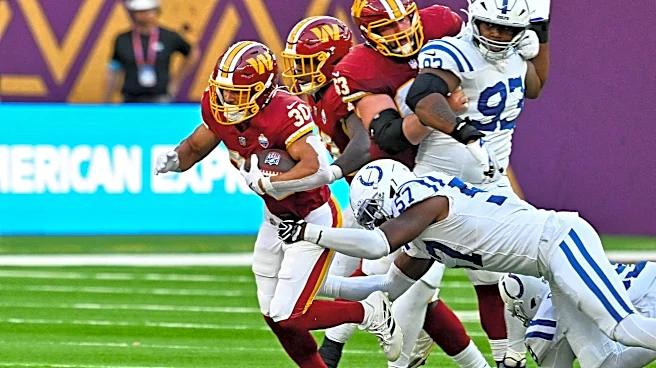
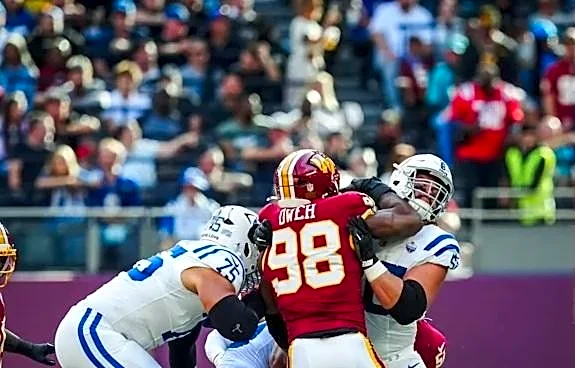
There I was met with one of the ugliest displays of offense one might experience this entire NFL season. In one corner, the 1-2 Washington Commanders, who, thanks to injuries at the position, had to shift mid-first quarter to their third-string quarterback and rookie seventh-round pick Athan Kaliakmanis.
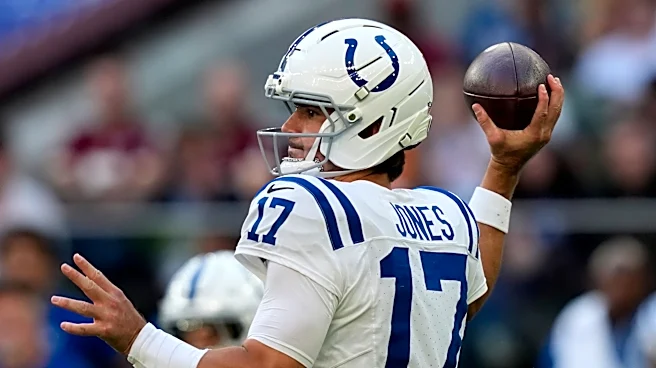
In the other corner, the 1-2 Colts and Daniel Jones, the oft-injured quarterback who was one of the most fascinating stories of the 2025 season — until he tore his Achilles. While it’s admirable that Jones is back so quickly and trying to soldier through his recovery from that injury, he hasn’t looked quite right yet this season.
Just look at how the game started for the Colts’ quarterback this past week.
Indianapolis wouldn’t put points on the board until 3:23 was left in the first half. Jones completed just 12 of 22 passes, and only two of those completions traveled more than nine air yards downfield. The second half didn’t fare much better, with Jones putting together a disgusting final stat line: 19-of-34 (55.9%) for 143 yards (average 4.2 yards per completion, no touchdowns, an interception, two sacks, and an average depth of target of just 5.2 yards.
So far this season, Jones’ ADOT is just 6.2, with only Cooper Rush (5.5) and Case Keenum (6.1) posting lower figures among quarterbacks with at least one start this year.
Watching the reel above, it’s not hard to see what the problem is. Jones is simply not as mobile as he normally is at full health. That’s detrimental to a player whose mobility was a major part of his game. Jones wasn’t ever going to be mistaken for Lamar Jackson or Josh Allen as a runner, but he’s posted 2,366 rushing yards and 21 rushing touchdowns over his 8-year career. Even when he wasn’t rushing for yards, he was at his best when his coordinators could scheme up bootlegs and other ways to get him out of the pocket. Now, that isn’t really an option, and he’s lost his ability to evade pressure.
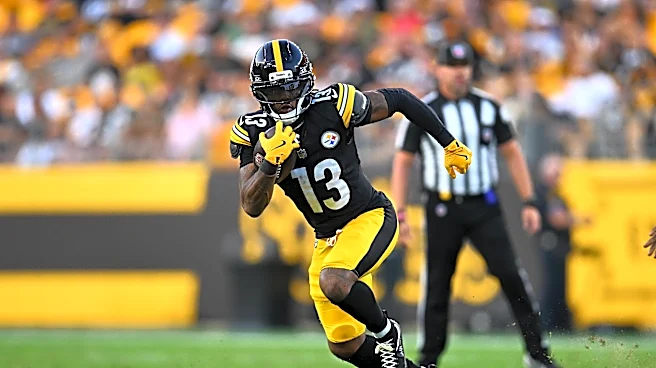
On top of that, the Colts don’t provide Jones many threatening receiving options to work with. The team paid big money to deep threat receiver Alec Pierce this offseason — which led them to trade Michael Pittman Jr. to Pittsburgh; it’s unclear if either side has come out ahead from that deal so far — but Pierce has already been placed on injured reserve and will be out until at least late October. Thus far, slot receiver Josh Downs leads the team in receiving yards (202), with only three other players eclipsing 100 yards on the season thus far: tight end Tyler Warren (130), 11th-year journeyman and former first-round pick Laquon Treadwell (123), and 14-year veteran Keenan Allen (100) who missed Week 4 with a groin injury. In Allen’s absence, the Colts gave a combined 49 offensive snaps to Ashton Dulin (23), 5’9 and seventh-round rookie Deion Burks (15), and Nick Westbrook-Ikhine (11).
While Warren is talented — he leads the team in receptions (23) and targets (27) — he’s also not impossible to contain. Penn State fans will remember the Nittany Lions built their entire offense around the star tight end and getting him yards after the catch, but he’s been relegated to more of a possession role with these Colts. Warren had two targets in the entire first half against the Commanders, and those didn’t come until late in the second quarter. He finished the day with five receptions for 41 yards, which trailed Treadwell for the team lead on the day (42). Not exactly explosive stuff.
While he hasn’t posted big numbers this season, if there is anyone in the Colts’ passing attack that I would be worried about, it’s Downs. He has some vertical passing juice in the slot, and with how poorly the Steelers linebackers and secondary have tackled this season, bringing him down in space could be a cause for concern.
But priority number one for the Steelers this week should be stopping All-Pro running back Jonathan Taylor. During his seven-year career, Taylor has totaled 7,951 yards on the ground with 75 touchdowns, and has added another 1,538 yards and seven touchdowns through the air. Taylor is a powerful runner, but his superpower is his ability to shift into another gear in the open field and create explosive plays with breakaway speed that seems unnatural for a person with his 226-pound frame.
Through four weeks, Taylor is tied with Jahmyr Gibbs for the fourth-most rushing yards (353), and trails league rushing touchdown leader Derrick Henry by just one score (6).
Taylor’s ability to find cutback lanes and/or bounce runs outside late in the play’s development should keep defensive coordinator Patrick Graham tossing and turning this week, especially after the abysmal display of tackling the team put on tape against Cleveland, whose offense doesn’t feature a runner with anywhere close to the amount of long-speed or short-area burst that an All-World runner like Taylor possesses.
Taylor is the engine that makes the Colts’ offense even remotely respectable. Consider that Indianapolis has the sixth-highest explosive rushing rate (runs of 10+ yards) in the NFL, but just the 31st-ranked explosive pass (passes of 20+ yards) rate. Taylor manages to create explosive runs frequently enough that the Colts rank 17th in total explosive play rate, despite their dismal passing numbers.
The mission couldn’t be clearer. Stop Taylor, and you stop the Colts. Fail to, and it will be a long, excruciating day for the Black and Gold faithful.
What to expect from the Colts’ defense

Rushing YPG Allowed: 131.0 (26th)
Passing YPG Allowed: 261.3 (29th)
PPG Allowed: 26.0 (22nd)
RB: As the numbers above indicate, the Colts’ defense is in even more depressing shape than its offense. And while Indianapolis has faced high-end quarterbacks in three of its four games this season (Lamar Jackson, Patrick Mahomes, C.J. Stroud), its two most recent games have been against struggling teams (Texans, Commanders) — and yet the numbers are still near the bottom of the pack overall.
As should be expected from any NFL defense, the Colts largely kept Commanders’ third-stringer Athan Kaliakmanis in check last week, allowing just 13 points. But they still gave up some big plays.
And some were in a more entertaining fashion than usual.
While the Indianapolis defense isn’t completely devoid of talent, it is awfully low on playmakers — the Colts have logged just one interception and one forced fumble over the first four games of the season, and while the sack numbers look solid on paper (nine), the pressure statistics have been abysmal.
According to Next Gen Stats, Indianapolis has the league’s worst quarterback pressure rate (25.5%) by a country mile (next-worst is 29.2%). You might think that’s because teams have been spamming short passes against the Colts defense, but Indianapolis has somehow also allowed the third-longest time to throw on average (3.05 seconds) in the NFL this year.
To be fair, under defensive coordinator Lou Anarumo the Colts have the seventh-lowest blitz percentage (21.6%) in the NFL this season. But at the risk of sounding repetitive, four-man rushes have not gotten the job done. The Colts have the second-longest time to pressure (2.88 seconds) on average in the league. Get the idea?
That’s good news for the Steelers, whose success in the passing game this year has largely correlated to reps where veteran quarterback Aaron Rodgers has felt especially comfortable in the pocket.
That said, Anarumo does like to send the house when he does blitz — he has a reputation as a creative mind, and I expect he might try to throw more of his bag at the Steelers’ young offensive line this week.
Still, the Indianapolis front seven remains one of the team’s most undermanned units. Veteran defensive end DeForest Buckner remains a dangerous player (team-best three sacks this season), but fellow starter Arden Key continues to deal with injury and 2024 first-rounder Laiatu Latu has had a slow start to the season (one sack through four games).
This week, the Colts added veteran Carl Lawson to try to add some talent to the front, but I wouldn’t expect a huge impact, especially in his first game back — Lawson’s last full season was a five-sack campaign for Dallas in 2024.
At inside linebacker, Akeem Davis-Gaither and Jaylon Carlies have seen the majority of the snaps as the Colts have been reluctant to give highly-touted second-round pick CJ Allen (just 11 defensive snaps this season) much playing time. Neither Davis-Gaither not Carlies are especially big nor rangy, and the numbers reflect that in the run and pass game.
Per Next Gen Stats, the Colts have the second-worst run stuff rate in the league (12.8%), the most yards before contact allowed per attempt (2.61), and are tied for the ninth-most 10-plus-yard gains (12) allowed this season.
Teams have seen a lot of success testing the edges of the defense, with 63.3% of opposing runs occurring outside the tackles against Indianapolis’ 26th-ranked run defense. Teams have also seen success with dump-off passes to running backs in space. All signs point to Sunday being another favorable matchup for the Steelers’ Jaylen Warren.
The Indianapolis secondary looks a lot stronger on paper despite its poor numbers this season, with a starting cornerback duo of Sauce Gardner (coming off the worst game of his career yards-wise last week per NGS) and Charvarius Ward. Justin Walley is a young, feisty nickel corner, while at safety, Camryn Bynum is a solid veteran paired with a third-round rookie in A.J. Haulcy.
The Colts favor single-high coverages, with an emphasis on cover 1 and 3. However, they’ve often failed to contain shorter passes, having allowed 531 yards after catch this season — the second-worst mark in the NFL.
Still, with Gardner and Ward being a high-quality man coverage duo, this might not be the easiest matchup for a Steelers offense that struggled last week against a similar approach from Cleveland. But if Pittsburgh can take advantage of the Colts’ struggling front seven to keep Aaron Rodgers comfortable and establish a powerful run game, this matchup has the look of a get-right game for the Steelers offense.