






ESPN’s Shams Charania recently reported that the NBA has disclosed to its 30 general managers a new anti-tanking proposal, with a final vote by the league’s board of governors set for May 28. I’m sure most people are aware of the specifics by now, but if you aren’t, here’s what you need to know:
- Expanded lottery to 16 teams (losers of each 7-8 play-in game would be added to the lottery) with the odds flattened even more.
- The bottom three teams would be panelised with fewer lottery balls for the top pick than many of the teams above them. However, the bottom three teams would have a floor of the 12th pick, while all other lottery teams would have a floor of the 16th pick.
- No team would be able to win the top pick in consecutive years or be able to win three consecutive top-five picks.
- Teams would be unable to protect picks in the 12–15 slots.
- The league would have expanded disciplinary authority to regulate tanking and have the option to reduce lottery odds and/or modify draft positions for teams.
- The proposal includes a sunset provision that would allow the board of governors to continue the system or transition to a new one after the 2029 draft.
Here is a visual of what the draft odds would look like compared to prior reforms:
Impact on the Bucks
Full disclosure, I am not a fan of this proposal. Heck, I wasn’t a fan of the last anti-tanking reform. But I’ll get to that after I’ve gone through how this latest proposal would impact Milwaukee’s situation. Ironically, if the Bucks owned their future picks, it would be bad news; but they don’t, so it is good news! Instead, it is bad news for New Orleans and Portland, the teams that traded for those picks. The Pelicans and Blazers dealt Jrue Holiday and Damian Lillard to Milwaukee for the Bucks’ future picks (or swap rights) from 2027–30, hoping the Bucks would be a bad team when they came due, increasing the likelihood those picks would land high in the lottery.
However, the Bucks would be protected under this new proposal because of the flattened odds; even in a disaster scenario in which they finish a season with, say, the fourth-worst record, the pick would only have an 8.1% chance of landing at one, compared to what would have been a 12.5% chance. In fact, it would appear to be worse for the Pelicans or Blazers if the Bucks had a bottom-three record! I must admit, this seems like a loophole the NBA would’ve had to have considered, but I haven’t seen any stipulations that address whether traded picks are treated differently, so I assume there aren’t any.
That’s about all that Milwaukee fans need to know as far as this proposal affecting the team is concerned. If they make the playoffs, there’s nothing to worry about (well, I guess if they lose the 7-8 play-in game, they would technically be a lottery team, but you get my point).
Impact on the rest of the league
As far as the rest of the league is concerned, I think this proposal is bad news. While yes, the proposal would likely make end-of-season basketball more competitive, it would also risk eviscerating competitive balance. Which is more important? I’d say it is easily the latter. It is for this reason that I am pro-tanking. It’s not that I don’t think tanking is bad for the product (I do), but more that trying to outlaw it only creates a raft of unintended consequences that are far worse than the original problem anyway. Put simply, this is a “lesser of two evils” thing for me.
But even if you are against tanking, there would have to be better alternatives than this one. For example, Van has proposed a simple framework to me wherein the draft order is voted on by the media, and honestly, I really like that idea because teams that try to win late in the year could be rewarded instead of being clowned for ruining their draft odds.
Even if Silver just instituted some minor measures to punish tanking strategies like minute manipulation and abusing the injury report with clearly illegitimate ailments. I think measures like these would strike the right balance—separating the teams that are truly the worst from those that are shamelessly diminishing themselves to get there—without messing with the overall integrity of the competition.
But back to my point, I cannot stress enough that a key pillar of the long-term health and viability of any pro sports league is that the worst teams acquire the highest draft picks, providing an avenue for them to dig themselves out of the bottom and slowly become the best teams. Conversely, the best teams should get the lowest draft picks, forcing them to fade out over time and become the worst teams. This is how the cycle should work—but under this new proposal, it almost certainly will not.
Last year, we saw Cooper Flagg—the consensus top-ranked prospect—end up on the Dallas Mavericks, who rose from the 11th-best odds to land the top pick (with just a 1.7% chance). Those scenarios are likely to become increasingly common under this proposal, given the significantly flatter odds; the lowest percentage a team would have to land pick one is 2.7%.
I ask, how does the NBA “retain” fans of teams that finish at the bottom under this proposal? Before, those fans would continue to show interest because of the carrot that they knew their team would get a top-x draft pick. But under this proposal, a team that finishes in the bottom three has the same chance at the top pick as a team that finishes with the 14th-best odds! Do you think the bottom team’s fans will remain engaged if things don’t go their way on lottery night? I wouldn’t be so sure, because at the end of the day, teams have always had the fallback of selling one of two things to their fans: wins or hope. Under this proposal, NBA teams risk being unable to sell either.
How the NBA got here…
As I said, I don’t think tanking is an issue that needs to be “solved” in the first place, so maybe this is a biased take, but I can make a solid case that the last tanking reforms actually made the issue worse! I’ll get to that in a bit, but first, a few words on team-building. The stone-cold reality of the NBA is that to win at the highest level, you need elite talent, and the easiest way to acquire elite talent is through the draft, especially for smaller markets. Therefore, bad teams will try to finish as high as possible in the draft and acquire elite talent, which requires a lot of losing. Sorry, that’s just the way it is.
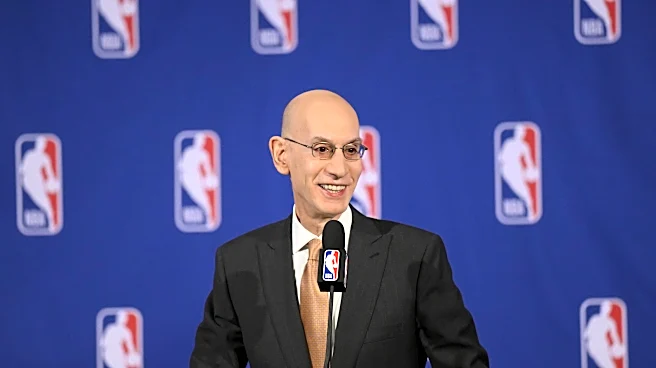
Someone should ask Adam Silver what he thinks the goal of running a team is. For most GMs and ownership groups, the goal is simple: win a title. It is not to be a perennial play-in team or first-round exit. It is to win a championship, point blank period. From setting that goal, you work backward, which inevitably leads you to realise that generally teams need a top-x player or two to win, which in turn leads to a plan to tank to acquire those players. That’s why we see GM after GM tank.
I also think it’s worth remembering that (most of) the teams that employ tanking behaviour are the worst teams in the league that deserve the best players; they’re just making doubly sure they don’t win an extra five games. To me, it’s really not that big of a deal. If the difference between getting a top prospect is winning 20 games as opposed to 25, then damn it, teams are going to find a way to lose an extra five games. Wouldn’t anyone?

To be sure, tanking is absolutely a bad look for the league, and crucially, its partners. Yes, it makes for some diabolical basketball—such as when both teams are trying to lose—that goes so far against the “spirit of the game” it’s not even funny. That said, I also think people need to realise that, while tanking is a bad look, it is also unironically one of the most important cogs in the long-term health of the league because it is the main driver of team turnover at the top.
Would the Cavaliers have ever risen from the post-LeBron era without being able to tank for Mobley? Would the Wolves have ever become good again if they hadn’t been able to tank for Ant? In the long run, you could strongly argue that tanking has actually been an unequivocal win for the league. Now, is it the only way to have success? Of course not. Teams need strong management, ownership, scouting, etc. But you simply cannot argue that tanking hasn’t brought much-needed parity into the league.
That said, it only works when the worst teams actually get the best picks, and Silver’s last attempt at draft reform in 2019—done by flattening the odds in general, along with giving the bottom-three teams the same odds—did virtually nothing to deter teams from tanking; in fact, it often encouraged them to tank for longer! Put simply, if a team finishes with the worst record and is rewarded with the fifth pick, unless it is some insanely deep draft class, they will (rightly) conclude that they don’t have the requisite talent to “hit the gas,” and decide that they must go back to the draft.
Ultimately, the quicker you give the worst teams the best picks, the quicker they will feel ready to compete (or even be “forced into it,” as the Mavs and Spurs found out with Luka and Wemby). There is no way around this, Adam. Bad teams need to be awarded the best picks, and your continued attempts at making this very simple concept more and more difficult have only exacerbated the problem. Seven years on, you cannot tell me that the 2019 reforms achieved what they were implemented to achieve, so stop digging, because these new reforms won’t either.