
With conference tournaments just weeks away, it’s time to revisit the top national championship contenders.
No. 1 UConn, No. 2 UCLA, No. 3 South Carolina, No. 4 Texas and No. 7 LSU all profile as true title contenders this season, but each team carries a specific question that could decide whether they cut down the nets in April.
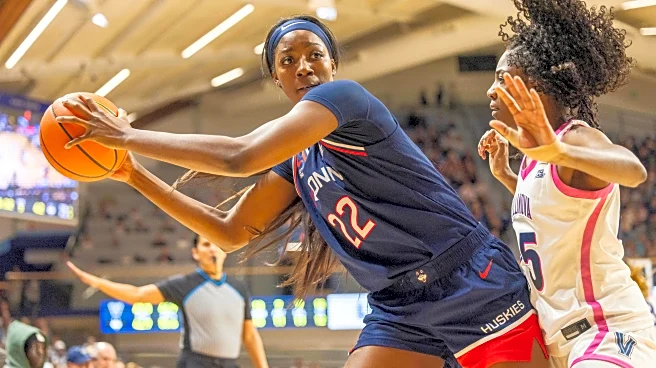
Could untimely turnovers prevent UConn from repeating as national champs?

UConn has been flawless in the win–loss column, but the ball security standard is slipping relative to their own championship baseline.
Their turnover rate sits at 17.6 percent,
which is actually good, but is high compared to some of the efficient UConn offenses that defined their past title runs, especially last year. For a team with national title expectations, even a few extra empty trips per game matter when the margins tighten.
The context is important: UConn is obliterating opponents in most other possession game categories. Their elite offensive efficiency and shot making can mask turnover issues in the regular season, especially when close games are as rare as they are for the Huskies. But against other top-10 teams, each live-ball turnover becomes a runway for transition points and foul trouble, and UConn’s offense is too valuable to be handing away counters like that.
UConn’s press has been so lethal this year, but they haven’t played enough respectable competition to see how truly effective it will be against the great teams.
The question isn’t: “Can UConn win in spite of turnovers?” Rather, the pertinent ask is: “Will turnovers show up at the worst possible time?”
A one- or two-possession Elite Eight or Final Four game is exactly where a spike in turnovers compared to previous title runs could be the difference. The bar for UConn is meeting their own historic, championship-level control of the ball, and if there’s anything to nitpick about this otherwise flawless team, it’d be that.
Will UCLA’s conservative defensive scheme be their downfall in March?

UCLA grades out as the best team in the country by adjusted efficiency, with a 133.6 adjusted offensive efficiency and a stingy defense.
But stylistically, their profile present as key question: “Can a team win six-straight in March when their defense doesn’t force turnovers?” Their defensive turnover rate is just 20.5 percent, modest for a team of their caliber and below what many recent champions have posted.
Some of this is baked into their identity. UCLA’s drop coverage philosophy is designed to wall off the paint, contest shots and dominate the glass rather than gamble in passing lanes. It’s sound, modern defense, but it means they often break even in the possession battle instead of winning it decisively against other elite teams. Against the very best competition, not generating many extra possessions puts a ton of pressure on your halfcourt offense to remain elite every single night.
In a one-game setting, that leaves less margin for an off-shooting night, foul trouble or a cold stretch from 3. Furthermore, UCLA’s defensive rebounding percentage is also on the low side for a team that commits to playing drop.
The Bruins’ scheme makes them incredibly hard to score on, but they rarely can flip games with a sudden wave of live-ball turnovers and runouts. The big question is whether their discipline and talent are enough to overcome the lack of steals when they face guards who can live comfortably in ball screens and wings who won’t be sped up.
If the possession count stays roughly even, UCLA might need to approach their offensive ceiling four times in two weeks against top-15 opponents.
Does South Carolina have enough offensive firepower to win six-straight games?

South Carolina again looks like a juggernaut by the numbers, with top-five marks in both adjusted offensive (125.5) and defensive efficiency (72.1).
But their offensive profile is far more old-school. They lean heavily on 2-pointers, own the glass and rarely shoot 3s. Their 3-point attempt rate sits at 25 percent, and that number is heavily buoyed by Tessa Johnson; without her volume, the roster is filled with mediocre, low-volume shooters.
The concern is that South Carolina doesn’t shoot enough from 3 to fully weaponize modern spacing. Over a six-game tournament run, you are almost guaranteed at least two games where you need to hit eight to 10 3s to survive. If Tessa is the only consistent, high-volume perimeter threat, that’s a lot of variance being loaded onto one player’s shoulders.
They’ve gotten big shooting games from players like Raven Johnson in key games this year, but it is also unrealistic to bank on outlier 3-point variance going your way four times in six games against high-level opponents.
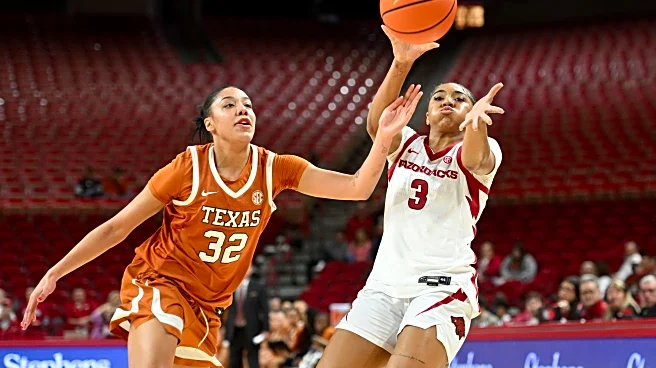
Can Texas’ old-school offense score enough in modern March games?

Texas is a fascinating contradiction: a top-four team in overall efficiency ratings with an offense that looks more 2006 than 2026.
Their effective field goal percentage is solid, but they get there with a diet heavily tilted toward midrange shots, post touches and drives, while posting a very low 3-point attempt rate of 18.3 percent. That’s well below the Division I average 3-point of 34.1 percent, and it leaves expected points on the table in the halfcourt.
The Longhorns make up for this by absolutely owning the possession battle. They have a low turnover rate (16.2 percent) and hammer the offensive glass (41.3 percent offensive rebound rate, top-10 nationally). They also force turnovers at a high rate (32.1 percent defensive turnover rate, eighth nationally), turning defense into offense and padding their shot volume. The problem is that against good teams that can protect the ball and hold their own on the glass, those advantages shrink. When the possession battle narrows, Texas is still stuck with a shot profile that doesn’t generate enough 3s to create separation.
That’s how this team constantly ends up in close games against top competition, even with their talent and toughness. In the tournament, close games often come down to which team can create cleaner, more efficient looks on offense, and Texas’ “prehistoric” process makes that hard to trust.
Can LSU establish a hierarchy, and grab enough rebounds, for a deep tournament run?

LSU’s numbers scream contender, headlined by their 127.2 adjusted offensive efficiency.
But under the hood, two issues persist.
First, the defensive glass has been surprisingly vulnerable. Despite leading the country in offensive rebound rate at 48.7 percent, their defensive rebound rate is only 26.7 percent, leaving them exposed to second-chance points against good teams who can physically match them. South Carolina’s Madina Okot destroyed them on the glass in their most recent matchup.
Second, their offensive hierarchy is still too muddled for a team with this much top-end talent. LSU spends too many possessions on post ups or touches for non-threatening scorers while not looking for their best player, Mikaylah Williams, to take 3s in volume. That means wasted trips where the ball does not find the hands of the player you want deciding your season. In high-stakes games, the combination of giving up extra shots via poor defensive rebounding and wasting your own trips on low-yield actions is a dangerous problem.
This is especially glaring because LSU can compete with anyone when locked in.
When they prioritize getting their stars the ball and shore up the defensive glass, they look like the best team in the country on certain nights. The question is whether that version of LSU is the one that shows up in March and early April. If the rebounding focus and offensive pecking order are not tightened, the Tigers are vulnerable to being punked on the boards again and dragged into games where their talent advantage is neutralized by self-inflicted issues.