

Each week, I’ll publish two film-room previews: one focusing on the offense and one on the defense. These are primarily film-based, focusing on the schemes, tendencies, and matchups that could shape Sunday’s game, with all statistics coming from the Fantasy Points Data Suite. I also record a video version for Patreon, where I break down the plays in greater detail and where you can further support my work.
The Tennessee Titans’ offense was bad in Week 1. They scored 10 points, managed only 195 total
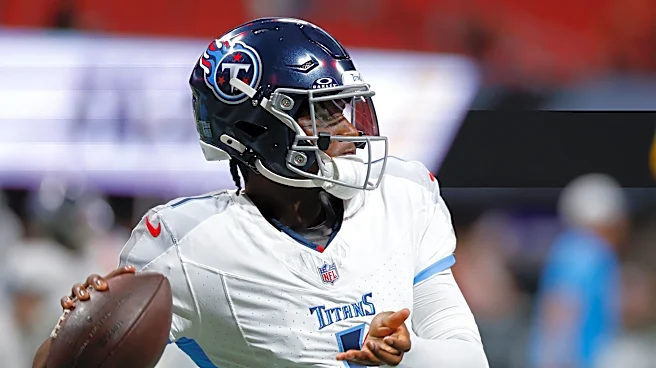
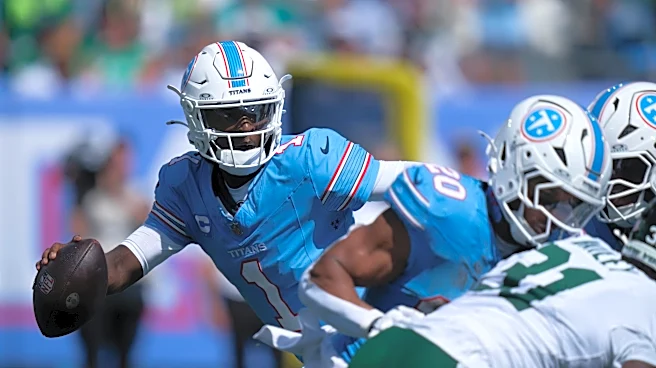
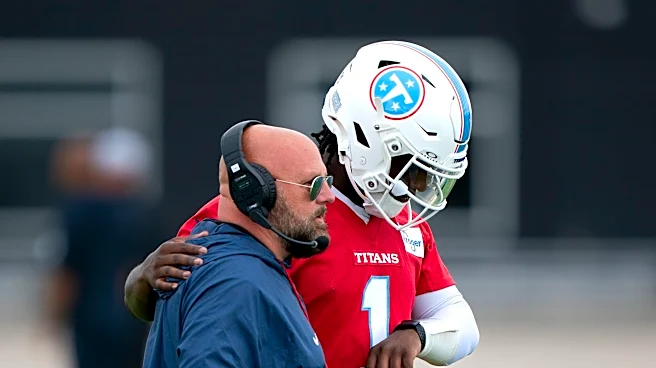
yards, and produced almost nothing explosive. However, I came away from the film thinking the structure of Brian Daboll’s offense was better than the final numbers suggest. The offense had some good designs, a surprisingly interesting run game, and enough receiving talent to create opportunities. The problem was that Cam Ward and the protection unit repeatedly failed to capitalize on those opportunities. Let’s talk about it!
Pass Game
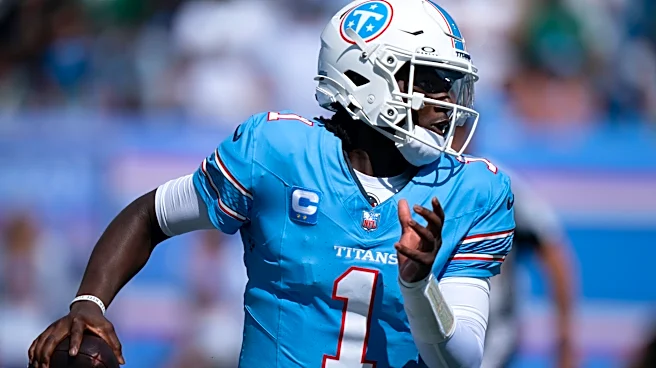
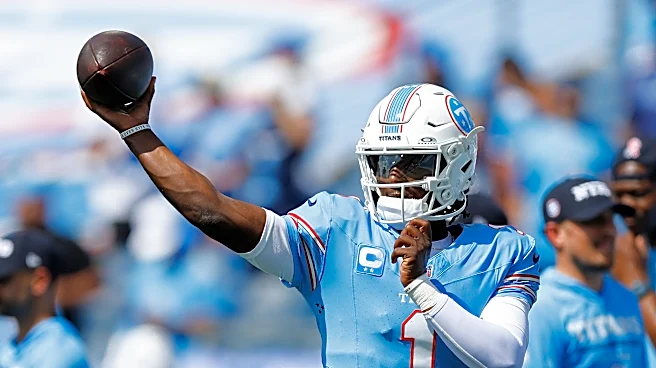
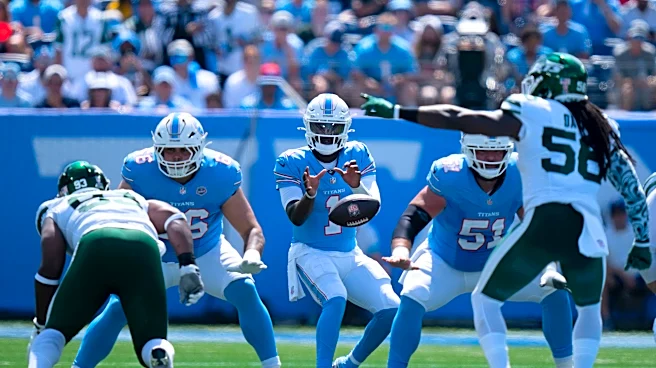
Tennessee did not hide Ward. The Titans used 11 personnel on 73.5% of their snaps and passed on 66.7% of their neutral-situation plays. They also threw on 55.6% of first-and-10s, so this was not an old-fashioned attempt to protect a young quarterback with a conservative, run-heavy game plan. Daboll put the offense in Ward’s hands. It didn’t work. He averaged roughly 5.5 air yards per attempt and never seriously threatened the Jets downfield.
I do not think Tennessee’s receivers were the main problem. Wan’Dale Robinson is a useful slot receiver who already understands Daboll’s offense, and Elic Ayomanor is a physical outside target who looks like he can play a bit. Rookie Carnell Tate, the fourth overall pick, is obviously the most interesting player of the group. Tate created separation on several intermediate and downfield routes, but Ward couldn’t get him the ball. This is not an elite group, but it is comfortably good enough for the quarterback to play better than this.
The biggest schematic concern was Tennessee’s response to pressure. The Jets repeatedly confused the offensive line with simulated pressures, overloaded one side, and brought second-level defenders. Tennessee either failed to identify the extra rusher or did not build an immediate answer into the concept.
At times, the Jets brought five and sent a cornerback from the edge, but nobody blocked him, and the routes took too long to develop. Ward had no choice except to escape. Here you can see Tennessee emptied the backfield, and two receivers ran into the same area, leaving Ward without an obvious quick throw.
Ward made the situation look considerably worse. Once he felt early pressure, his pocket presence deteriorated. He began seeing ghosts, leaving clean pockets, dropping his eyes, and moving directly into rushers. This sack was almost comical.
Ward turned away from the defense on fake-reverse play-action, lost his base, put his head down, and ran straight into the back of his own offensive lineman. Tennessee was pressured on 46.2% of its dropbacks, but the offensive line was not responsible for all of it. Ward holds the football and too often turns manageable pressure into a negative play.
On several snaps, the Titans blocked the rush, Daboll created an open receiver, and Ward did not make the throw. Tennessee ran a lovely counter play-action concept that pulled the linebackers toward the line of scrimmage and opened a crossing route behind them. Ward saw it but did not pull the trigger.
Other examples included Tate breaking open and Ward hesitating, or simple underneath options being ignored. The Titans ranked 28th in EPA from a clean pocket in Week 1, which matches the film. Their quarterback was not taking advantage when the structure worked.
Ward’s accuracy was inconsistent, too. He missed simple throws in the flat, sailed boundary passes out of bounds, and failed to give his receivers a chance on several back-shoulder or wheel routes.
The one positive is that he has generally avoided reckless turnover-worthy throws. The problem is that this has become what I would call nothing football. He is not constantly giving the ball away, but he is also creating very little. Safe quarterback play only works if you consistently hit the throws the structure provides.
The Titans’ best sequence came when they used tempo at the beginning of the second half. They ran three consecutive plays without allowing the Jets to substitute, forced the defense to simplify its calls, and finally got Ward into some rhythm. I would not be surprised if Daboll uses more tempo against the Eagles for exactly that reason. It could prevent Fangio from changing personnel, reduce the amount of disguise Ward has to process, and make the protection calls easier. Tennessee cannot live in third-and-long against this defense. Their early-down passing designs were reasonable, but once the offense fell behind the chains, the simulated pressures destroyed them.
Fangio should be very excited about this matchup. I would combine split-safety looks with simulated pressure rather than blitzing relentlessly. The individual matchup to attack is Dan Moore Jr. at left tackle.
I thought JC Latham held up better on the right side, but Moore had several poor reps and remains vulnerable on the edge. Nolan Smith Jr. and Jalyx Hunt should have opportunities there. More importantly, the Eagles should make the entire protection unit communicate. Mugging Zack Baun or Jihaad Campbell in the A-gaps before dropping one of them could be more damaging than simply asking the edge rushers to win one-on-one. The goal should be to make Ward think about pressure before the snap, then force him to confirm the coverage afterward. Based on Week 1, that is a lot to ask of him.
Run Game
The frustrating part of Tennessee’s Week 1 performance is that I quite liked the run game. The Titans rushed only 10 times for 47 yards, so the sample is tiny, but Daboll showed a varied menu from shotgun. Tennessee used inside zone, split zone, duo, pin-pill, dart (or tackle power), and several runs with RPOs attached. Unfortunately, the Titans fell behind the script so quickly that they barely gave the run game a chance.
The most interesting concept was tackle power, often called Dart, with an offensive tackle pulling into the point of attack. You don’t see it as often as traditional power with a pulling guard, but Tennessee executed it well on multiple occasions.
They also produced an excellent pin-pull rep from 12 personnel. The tight ends secured the edge, the guard wrapped outside, and Tony Pollard had a clear path into space. I am quite jealous, frankly, of tight ends that can do this! The design was excellent.
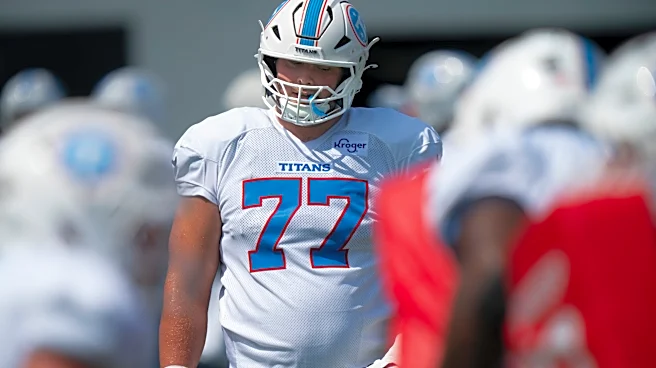
Pollard remains their most dangerous open-field runner, but he received only eight touches against the Jets. Peter Skoronski is the best interior blocker, while Latham gives them power on the right side. If Tennessee can stay out of obvious passing situations, this line can create movement, and Daboll has enough variety to test the Eagles horizontally and vertically. The run game also gives Ward easier answers through RPOs and play-action.
The Eagles’ linebackers and edge defenders will need to read their keys carefully. Dart and pin-pull can punish defenders who chase the initial flow, while the attached RPOs can keep second-level defenders out of the box. The best way to remove all of this is to win early downs and force Tennessee back into third-and-long. The Jets did that, and the Titans had no answer once the defense could concentrate on confusing the protection.
Final Thoughts
I think the Eagles should control this matchup. Tennessee has enough skill-position talent and enough creativity in the run game to cause problems, but Cam Ward was rough in Week 1. The protection unit compounded those problems by struggling to identify second-level pressure and overloaded fronts.
I would prefer the Eagles to use simulated pressures, disciplined four-man rushes, and plenty of Cover 6 and Quarters. Force Ward to stay in the pocket, take away his preferred slot and tight-end targets, and make him complete accurate throws outside the numbers, which he struggles to do. If pass rushers fly beyond him, Ward has enough movement to escape and create. Compressing the pocket while maintaining rush-lane discipline should make him far more uncomfortable.
The one concern is Tennessee finding rhythm through tempo, RPOs, and its varied run game. If Pollard gets going and Ward is consistently playing from second-and-manageable, Daboll can simplify the picture and keep the Eagles out of their disguise packages. But if the Eagles create an early negative play and put Tennessee behind the chains, this matchup strongly favors the defense. Given how badly the Titans handled simulated pressure in Week 1, it would be disappointing if Fangio’s unit didn’t make life extremely difficult for Ward.
Thank you for reading! I’d love to hear your thoughts, so feel free to comment below and ask any questions. If you would like to support me further, please check out my Patreon here!