

Last week, we talked about the wide receiver room and why it might finally be time to stop doubting it. This week, we cross the ball to the other side of the field: the side that cost the Spartans the most last season and the side that may matter most in 2026.
If the receiver corps was a story of resilience and continuity, the secondary is a story of resurrection.
The wreckage that made it necessary
It needs to be said plainly: the 2025 Spartan secondary unit was a mess. Broken coverages. Explosive plays that didn’t just hurt – they
defined games.
It wasn’t one-offs. It was a pattern. SJSU allowed 28 or more points in seven consecutive games. Third and fourth downs became open invitations.
When the opposition needed chunk plays, they found them, repeatedly, almost predictably, against a unit that showed flashes against New Mexico and Hawaii, then wilted.
That 3-9 season ended with cornerbacks coach Greg Burns and defensive coordinator Derrick Odum being let go.
What came next was an off-season of triage and intentional reconstruction. For the secondary, head coach Ken Niumatalolo went and got a craftsman.
Brian Norwood: a unique coaching philosophy unlike any other
Niumatalolo didn’t hesitate to call Norwood “one of the best in the country” and said flatly that he “knocked it out of the park” with his defensive staff additions.
Norwood worked at Navy in 2019 during one of the Midshipmen’s finest seasons and that shared philosophical DNA with Niumatalolo isn’t coincidence. It’s alignment.
Interviewing Norwood was full of football-speak, but things ended up closer to a coaching manifesto.
“I’ve been a coach motivated by love,” said Norwood when asked the experience of recruiting and coaching players over his 35-year career. “And when I say that; it’s not a flowery term. It’s a challenging term.”
Norwood traced it all back from his youth; to Little League coaches, to college coach Dick Tomey, to a childhood move from PG County, Maryland to Hawaii that rewired how he sees the game.
Norwood also talked about Radford High School in Honolulu, where he and Niumatalolo were teammates. Niumatalolo the quarterback, Norwood the defensive back and a melting pot of military and local kids; Filipino, Japanese, Black and Polynesian players all sharing a locker room and a common cause.
Norwood shared of their high school coach dying days before they faced Waianae and how the team won by that “something else” that transcended football.
“The Aloha, the Ohana — for me, that’s something that is very real,” said Norwood. “And Kenny and I both experienced that.”
Their shared history isn’t just a backstory. It’s the operational philosophy.
“Our staff and our community right now just feels a lot like home,” added Norwood.
Norwood the builder
With such a back story, Norwood isn’t coming in just being all nostalgic. From our discussion and across Norwood’s life theme, he is locked in.
“I’m not one that really looks back,” Norwood said bluntly, when asked about the 2025 secondary breakdowns. “We’ll just say there are dynamics sometimes within your control and outside of your control.”
Norwood’s mission statement was also clear and unambiguous: eliminate explosive plays, generate turnovers, dominate the details. “You want to make sure you take your alignment and always know your assignment, while always taking care of the fundamentals every time you’re on the field.”
Spring gave early returns and Norwood wasn’t shy about acknowledging them.
“We reached the goals we had from spring as far as moving in a particular direction; our takeaways, our production, our attention to detail,” Norwood said. “We were able to take a step forward. Now we just need to continue to do that.”
In seven-on-seven periods during April’s spring scrimmage, quarterbacks were routinely forced to throw the ball away. Pierce Walker and Isaiah Buxton recorded back-to-back interceptions. BYU transfer Naseri Danielson was disruptive. Veterans Runye Norton and Kejuan Bullard Jr. won their individual matchups with consistency.
After the spring game, DC Bojay Filimoeatu, who has made “dominate the details” the working mantra, summed up the culture shift succinctly: “If you can’t walk through something, you can’t do it full speed.”
“Coach Niumatalolo, Coach Bo and the coaching staff are amazing,” said Norwood. “I really am excited about working with these guys. Everybody’s pulling the rope in the same direction.”
Projecting the depth and rotation
The roster reconstruction in the defensive backfield was aggressive: Power Four transfers, proven returners and at least one wildcard conversion that may be the most talked-about player on the entire defense.
Cornerbacks – Maliki Crawford & Runye Norton
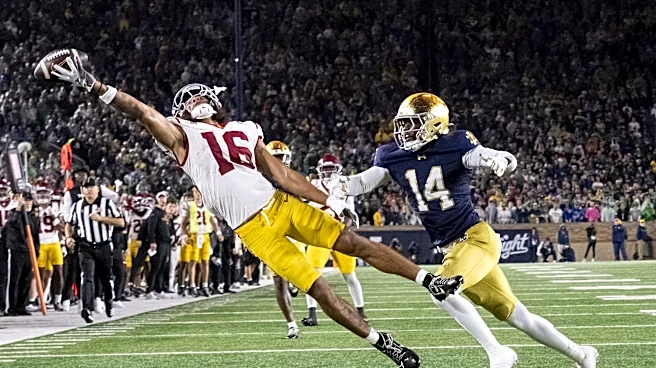
Crawford (#2) – the 6’4″ USC transfer – brings the kind of length most Mountain West receivers won’t see twice in a season. Norton (#8), a senior and returning veteran, was one of the brighter spots in an otherwise turbulent 2025 unit.
Nickel / Slot – Kejuan Bullard Jr.
Bullard (#5) is a redshirt senior who has lived through the program’s recent turbulence and kept showing up. His spring showing was that of a player who understands what Norwood is asking and buys in completely. “They all come to work literally with their lunch pails,” Norwood said of his group. “They accept the challenges.”
Safeties – Tuli Tagovailoa-Amosa & Pierce Walker
If there’s one player who’s captured the imagination of everyone, it’s Tuli Tagovailoa-Amosa (#39) – a converted wide receiver now playing safety and first cousin to NFL quarterback Tua Tagovailoa. From veteran defensive lineman Justin Stearns: “Tuli is a mini Troy Polamalu; an absolute dog.”
Alongside him, Pierce Walker (#13) – who recorded an interception in spring and projects as a steady, instinct-driven free safety with great range.
Depth & battles to watch
Isaiah Buxton (#0) picked off a pass in spring and figures to push for rotation snaps at corner. Jonathan Watts (#22) has the length to create problems on the outside. Greco Carrillo (#10) and Francois Jones (#12) add competition that keeps the room honest.
In the safety room, the picture gets deeper than people may realize. Hunter Nowell (#31), a redshirt junior who’s been in the program and Brian Dukes Jr. (#1) – a 6’3″ redshirt senior transfer from Cal Poly with size you don’t often see at the position both give Norwood real options behind Walker and Tuli. Nassir Pitters (#23) and Charles Cox III (#21), a local Bay Area senior, round out a safety group that has genuine depth for the first time in some time. At corner, Caleb Womack (#32) is also a redshirt senior returner who quietly adds veteran experience to the back end of the rotation.
The bottom line: Can you believe in this secondary?
Norwood’s philosophy isn’t complicated, but executing it requires buy-in that has to be earned, not assumed, of course.
The early signs are encouraging. The spring game tone was different. The energy was different. The details were most definitely sharper.
“I really am excited about the guys,” Norwood said. “They really do have great potential. We just gotta keep doing it, as they say, one day at a time.”
One day at a time. That’s not a cliché; it’s a lived value forged at Radford High School, carried through three-plus decades of coaching now landed in San Jose.
The secondary room is reloading. Maybe it’s soon time to stop doubting it, too.