
In one of the more persistent Wizards trends of the past few decades, the team did something fun, interesting or meaningful when I was otherwise occupied and unable to watch or respond. Over the years,
the Wizards have made signs, trades, or other major personnel moves (front office and coaching staff included) when I’ve been on airplanes, in a hospital bed, on vacation, or in important job-related meetings related to my career.
Yesterday was one of great personal significance, and naturally the Wizards go out and win their second in a row for the first time this season.

Full disclosure: I have not watched this one yet — not even highlights — so I’m going to turn this into an exercise to see what can be gleaned from the available stats. Below are some bullet-form observations drawn from the numbers:
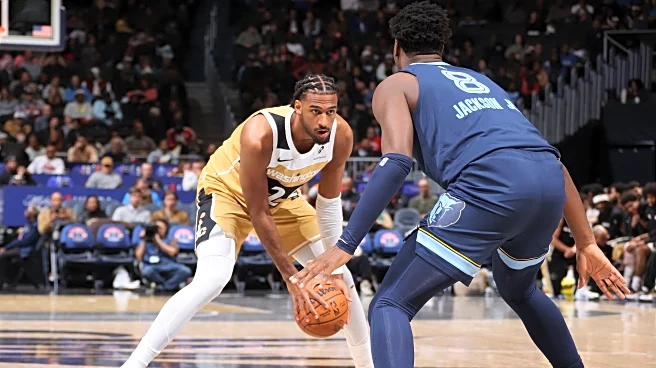
- What the Wizards and Grizzlies did last night was an affront to modern NBA basketball — at least on the offensive end. The teams combined for 35 turnovers, 48 missed threes (they collectively shot 26.2% from deep), and offensive ratings from the 1970s.
- The game was played at a breakneck pace — 114 offensive possessions each. How bad was the efficiency? According to my +PTS metric, the teams scored 36 points fewer than expected based on game pace and league average efficiency.
- The Wizards prevailed in a proverbial rock fight because they won on the boards and at the free throw line. Both teams shot poorly. Washington was +5 on the offensive glass, and they outscored Memphis 23-12 in second chance points.
- Despite committing four more fouls, the Wizards were +4 in free throw attempts, and +7 from the free throw line.
- The NBA Lead Tracker tells me this one was a roller coaster. Memphis took a lead in the first quarter, Washington came back in the second to lead by one at the half. The Wizards went up by nine in the third quarter. Over the next 5:07, the Grizzlies went on a 19-0 run to take a 10-point lead. The Wizards then went on a tear, erasing Memphis’ 10-point advantage and building a 9-point lead of their own halfway through the fourth. Whereupon the Grizzlies rallied, cutting the lead to as little as two, before Washington finally closed out the win.
- In total, there were 19 lead changes, 17 ties, and the longest run was that 19-0 Memphis binge.
- Washington’s defense had been predicated on protecting the paint, but they were outscored 62-58 inside by the Grizzlies.
That’s enough of that. Before we get to the box score, let’s look at the defensive tracking data. I hesitate to draw much meaning from single game data, especially one where both teams shot so poorly. The NBA’s hustle tracker suggests the bad shooting and turnovers were not necessarily because of stellar defense — at least not on the Wizards side of things.
Tracking says Washington contested just 38 of Memphis’ 103 field goal attempts. The Grizzlies were credited with contesting 51 of Washington’s 99 FGA.
Caveat made, the defensive data is still interesting.
- The Grizzlies appear to have targeted CJ McCollum, who appears to have held up abnormally well. Memphis was 8-19 from the floor (2-7 from deep) when McCollum was credited as the defender.
- Alex Sarr had a serious defensive impact. The Grizzlies shot 7-16 when he was credited as the defender (2-4 from three-point range). He had 6 blocks, 2 steals, forced 4 turnovers, and had 3 deflections.
- Bilal Coulibaly led the Wizards with 6 deflections in 29 minutes. The Grizzlies shot 3-10 when he was credited as the defender. Coulibaly had 3 steals, 2 blocks, and forced 3 turnovers.
- Memphis shot 1-11 when Bub Carrington was credited as the defender. When I watch, I’ll be curious to see how many of those were open shots where he was the closest defender that the Grizzlies just missed.
- Jamir Watkins played 23 seconds, committed one foul and had one deflection.
Individual Thoughts & Observations
- Another strong overall game from Sarr, despite poor offensive efficiency — 20 points, 9 rebounds, 6 blocks in just 26 minutes. His offensive rating was 100, which was slightly below Washington’s 102 for the game, slightly better than Memphis’ 98, and much worse than the 115.8 league average.
- With Kyshawn George out with a sore hip, Tre Johnson got the start and played reasonably well — 14 points, 4 assists and a 119 offensive rating in 26 minutes. One nitpicky grump: zero rebounds.
- The Wizards won the game on the glass, and their strong rebounding performance was powered by Justin Champagnie (12 boards, including 4 offensive), and Marvin Bagley III (7 and 3). Coulibaly (8/3) and Sarr (9/6) also did a good job.
- Carrington undid the value of his good shooting with a staggering 8 turnovers in 27 minutes. For those keeping score at home, that’s a 44% turnover rate.
- McCollum didn’t shoot great and committed 4 turnovers.
- While I definitely want better offensive efficiency from him, Coulibaly’s stat line was good — 14 points, 8 rebounds, 2 assists, 3 steals, 2 blocks, 1 turnover. He had 15 field goal attempts and a 20.9% usage rate in his 29 minutes.
- Khris Middleton shot poorly (2-7 from the floor), but hit 6 free throws and contributed 6 rebounds.
- The Wizards front office should get some contending team to pay a future first round pick and some salary detritus for Bagley and Corey Kispert. No one has been able to keep Bagley off the offensive glass, he finishes well inside, and he’s at least showing a grasp of the team’s defensive concept.
Four Factors
Below are the four factors that decide wins and losses in basketball — shooting (efg), rebounding (offensive rebounds), ball handling (turnovers), fouling (free throws made).
The four factors are measured by:
- eFG% (effective field goal percentage, which accounts for the three-point shot)
- OREB% (offensive rebound percentage)
- TOV% (turnover percentage — turnovers divided by possessions)
- FTM/FGA (free throws made divided by field goal attempts)
Stats & Metrics
PPA is my overall production metric, which credits players for things they do that help a team win (scoring, rebounding, playmaking, defending) and dings them for things that hurt (missed shots, turnovers, bad defense, fouls).
PPA is a per possession metric designed for larger data sets. In small sample sizes, the numbers can get weird. In PPA, 100 is average, higher is better and replacement level is 45. For a single game, replacement level isn’t much use, and I reiterate the caution about small samples sometimes producing weird results.
POSS is the number of possessions each player was on the floor in this game.
ORTG = offensive rating, which is points produced per individual possessions x 100. League average so far this season is 115.1. Points produced is not the same as points scored. It includes the value of assists and offensive rebounds, as well as sharing credit when receiving an assist.
USG = offensive usage rate. Average is 20%.
ORTG and USG are versions of stats created by former Wizards assistant coach Dean Oliver and modified by me. ORTG is an efficiency measure that accounts for the value of shooting, offensive rebounds, assists and turnovers. USG includes shooting from the floor and free throw line, offensive rebounds, assists and turnovers.
+PTS = “Plus Points” is a measure of the points gained or lost by each player based on their efficiency in this game compared to league average efficiency on the same number of possessions. A player with an offensive rating (points produced per possession x 100) of 100 who uses 20 possessions would produce 20 points. If the league average efficiency is 114, the league — on average — would produced 22.8 points in the same 20 possessions. So, the player in this hypothetical would have a +PTS score of -2.8.
Players are sorted by total production in the game.