


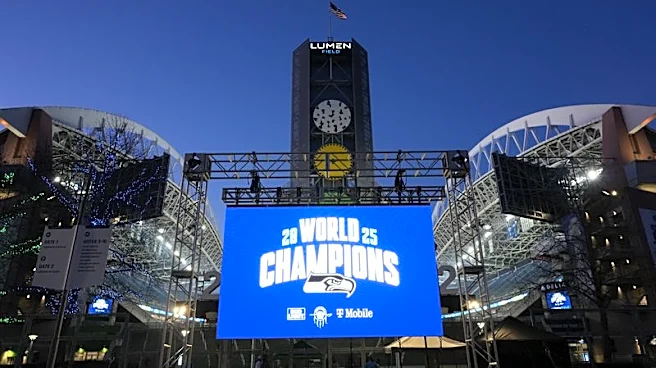



The slowest part of the offseason has arrived, with the Seattle Seahawks convinced that the 2026 season is not about defending their Super Bowl LX title, claimed in a 29-13 walloping of the New England Patriots and is instead a new season of its own. It’s a concept ripe for debate about mathematical independence, but that’s a different subject for a different day.
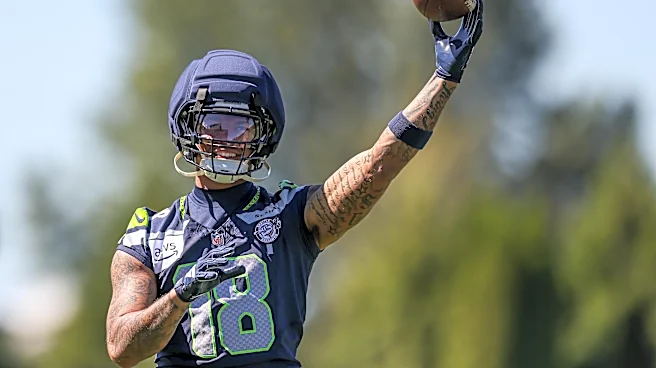
Today the topic of discussion at hand is about the depth of the team at the safety position, and how Ty Okada moved from a practice squad
player who primarily served as special teams depth to taking on a bigger role as a versatile depth piece in the secondary.
Pro Bowler Julian Love is, of course, the unquestioned veteran leader of the group, while Nick Emmanwori is the young, versatile chess piece whose freakish athleticism allows Mike Macdonald to go full mad scientist drawing up concepts for every layer of the defense. How Macdonald might put 2026 second-round pick Bud Clark and veteran free agent Rodney Thomas to use will be keys to watch during training camp and unquestionably be heavily debated by fans.
Clark recently signed his CBA dictated rookie contract that runs through 2029, while Thomas is a veteran on a one-year deal. Okada is also a veteran on a one-year deal, having spent the entirety of the 2025 season on the active roster after bouncing between the practice squad and active roster in both 2023 and 2024.
The fact that Okada was on and off the roster in each of his first two seasons with Seattle is what creates a very team friendly situation. Specifically, in each of those two years he appeared in five games, and in particular was in full pay status for exactly five games. For what makes five games so important, it is the fact that under the collective bargaining agreement there are two methods of measurement for a player to earn veteran status, credited seasons and accrued seasons. Credited seasons are used for many things, with one being what the required minimum salary is for a player and how they are earned is defined in Article 26, Section 2:
Section 2. Credited Season: For purposes of calculating Credited Seasons under this Article only, a player shall earn one Credited Season for each season during which he was on, or should have been on, full pay status for a total of three or more regular season games, but which, irrespective of the player’s pay status, shall not include games for which this player was on: (i) the Exempt Commissioner Permission List; (ii) the Reserve PUP List as a result of a nonfootball injury; (iii) a Club’s Practice or Developmental Squad; or (iv) a Club’s Injured Reserve List.
As for accrued seasons, they are used to determine a player’s free agent status upon the expiration of their contract, and the definition is laid out in Article 8, Section 1(a):
Section 1. Accrued Seasons Calculation: (a) For the purposes of calculating Accrued Seasons under this Agreement, a player shall receive one Accrued Season for each season during which he was on, or should
have been on, full pay status for a total of six or more regular season games (which shall include any games encompassed in any injury settlement, injury grievance settlement or injury grievance award), but which, irrespective of the player’s pay status, shall not include games for which the player was on: (i) the Exempt Commissioner Permission List, (ii) the Reserve PUP List as a result of a nonfootball injury, or (iii) a Club’s Practice Squad.
The difference between the two is small, but basically it comes down to the fact that players earn a credited season for being on the roster for three or more seasons, while they get an accrued season for being on the roster for six or more games.
Thus, a player in Okada’s shoes who was in full pay status for five games in each of 2023 and 2024 before spending the entire 2025 season on the 53 man roster has three credited seasons and one accrued season to his name. Astute readers have already realized exactly what this means, but for those who do not, the three credited seasons requires the minimum salary Okada may be paid under the CBA in 2026 to be $1.145M.

However, while the CBA gives Okada a minimum salary of $1.145M, the fact that he has earned just a single accrued season to this point in his career means that even if he spends the entirety of the 2026 season on the active roster, the Seahawks have two more years of team control remaining after the season. What that means is that, as noted in the screengrab from OverTheCap.com below, 2025 was effectively Okada’s rookie season when it comes to determining his free agent status, and he is slated to be an exclusive rights free agent again next offseason.

That would give the Seahawks the ability to retain his services for the 2027 season once again on yet another one-year, league minimum contract, before he would finally reach restricted free agency ahead of the 2028 season.
Putting all these pieces together, the fact that Okada could potentially provide very cost-effective depth for the Seahawks for the next several seasons while also providing the ability to fill a significant role on special teams is worth keeping in mind. In short, when it comes to roster construction and Okada’s contract status, 2025 was effectively his rookie season, meaning even though he’s on a one-year deal, it would seem there is a very high probability he’ll be around well past 2026.