


Hello Chicago Bears fans! Well, we are going to get into the calls this week in the Bears and Falcons game, but before that, let’s talk briefly about just how bad football officiating has been in 2026. First, on Saturday night, Florida State was robbed of an upset on a phantom holding call on their Hail Mary pass to the end zone. And then Notre Dame lost to BYU after their defense had an uncalled snap simulation infraction that led directly to a turnover with goal to go (not to mention I do not believe
that the recovery was at all immediate). This was topped off by the referees screwing up the final play of the game, first ignoring an absolute mauling of the wide reciever in the endzone, and then finally calling the game when it was clear from both the booth and on-field clocks that there was still one second to go.
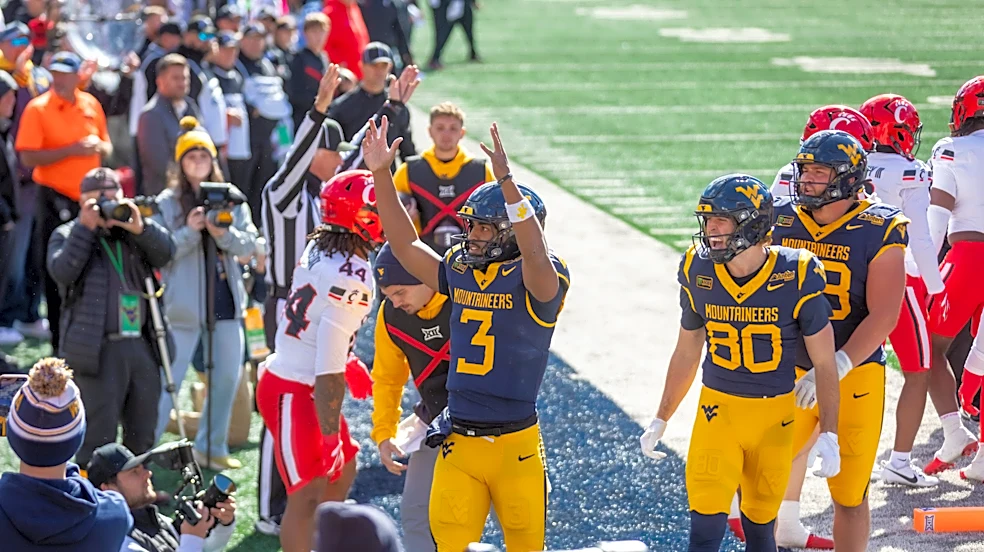
We hadn’t even gotten to the Sunday NFL games and the refs were getting bodied on X. The Big 12 admitted the officiating error after the game.
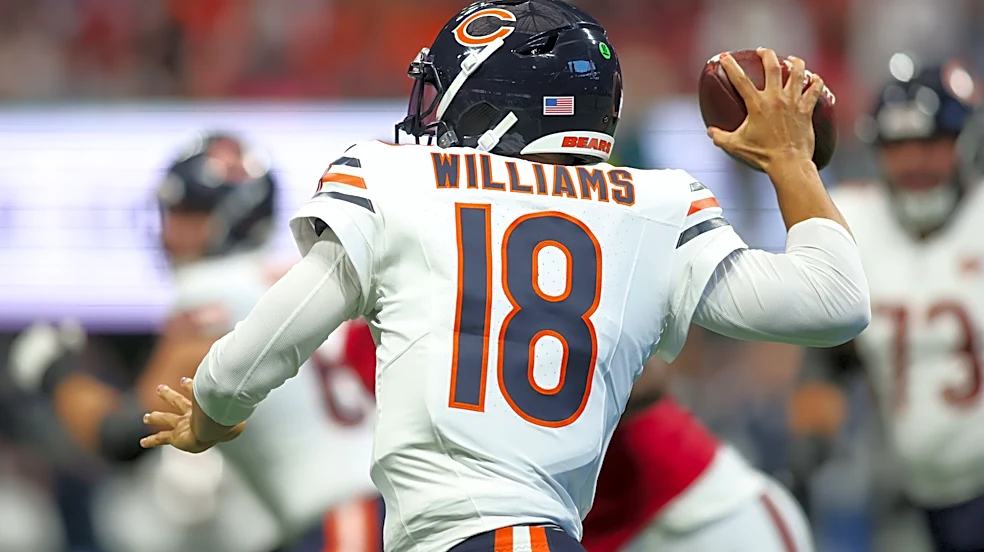
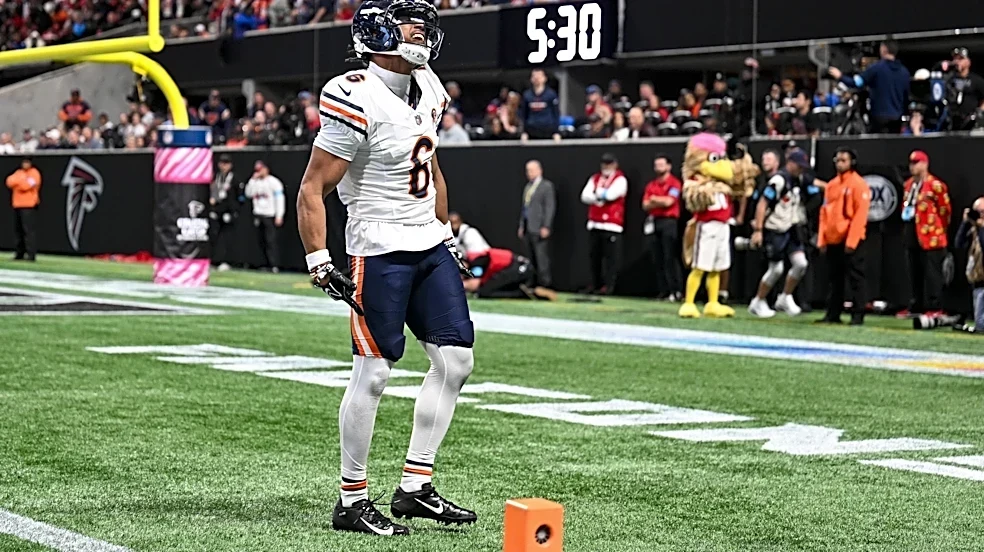
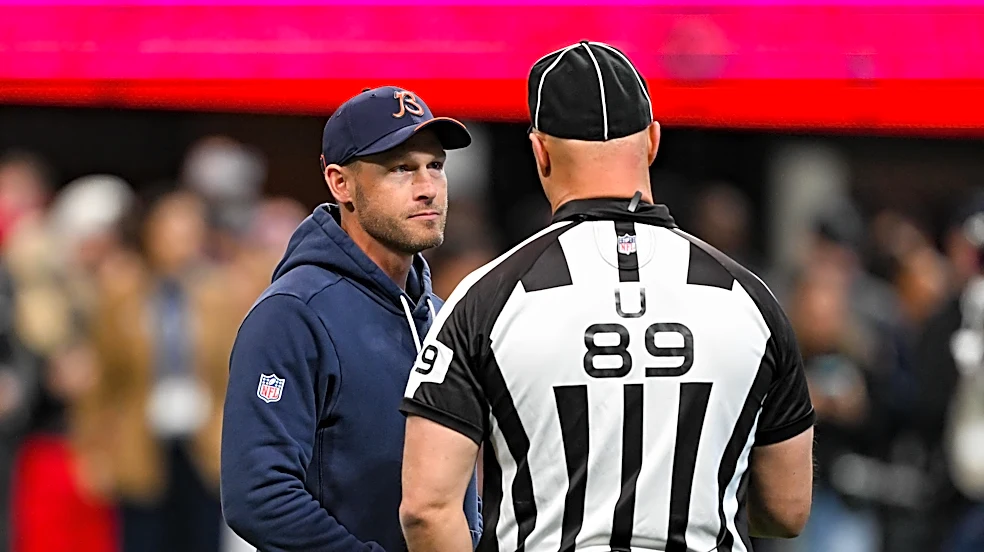
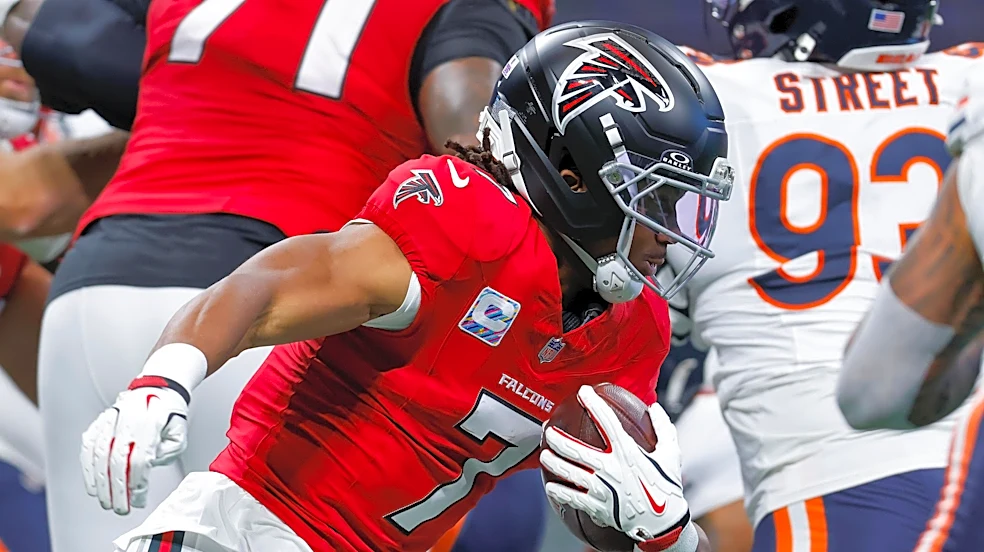
Anyway, let’s get back to the NFL and the Bears game. It. Did. Not. Get. Better. The Bears dominated most of the game against the Atlanta Falcons with Caleb Williams back in his first game since he injured his hamstring against the Vikings. This despite an extremely lopsided job of officiating by Scott Novak’s crew. Official totals: Chicago 12–133, Atlanta 4–31. That is the highest penalty yardage for the Bears in a decade. Jahdae Walker was ejected for a headbutt. The accepted tape is almost entirely on Chicago. This week the Bears Tax featured bad calls against the Bears and, perhaps more significantly, no-calls that were not made against the Falcons.
Same scale and weights. Upon Further Review grades every accepted flag and every tracked no-call in a Bears game (and the most controversial league-wide calls) using film, the rulebook, and a fixed scale.
Grading scale
- Correct — Rule and tape agree.
- Arguable — Judgment call; both sides are defensible.
- Incorrect — Tape shows the crew got it wrong.
- Horrible — Bright-line foul (or non-foul) a wing official should not miss.
Impact weight (1–4)
- 1 — Housekeeping (false start, delay that doesn’t kill a scoring chance).
- 2 — Drive disruption (down-and-distance flip, stalled series).
- 3 — Scoring situation / red zone / automatic first that feeds points.
- 4 — Wiped score or takeaway, dead drive flipped into points, or last-snap foul that would have been 1st-and-goal.
What gets reviewed
Replay reversals are graded against the clear-and-obvious standard for overturning the call on the field.
Every accepted flag against Chicago and against the opponent.
Key no-calls (especially those that create a “Bears Tax” pattern: unthrown flags on the opponent that mirror ones thrown on Chicago).
Accepted flags (Chicago-heavy)
The public box score and the postgame accounts are consistent on the big ones against Chicago:
- Multiple offensive holdings (Benedet, Wright, Trapilo, others) that wiped chunk plays, including a 24-yard Odunze catch on third-and-7. The call against Wright on his pancake block was especially irksome.
- Colston Loveland offensive pass interference that killed a would-be fourth-down conversion (this will feature in our Flag of the Game section). Horrible.
- Jahdae Walker running into the punter in the third quarter after a third-down stop, giving Atlanta a first down at the CHI 35 instead of a punt. Correct. Wt 3.
- Jahdae Walker’s unnecessary roughness/headbutt on Chris Blair on the kickoff after the Santos field goal that made it 31–7. Fifteen yards and an ejection. Correct. Wt 1 (already up 24).
- False starts, delay of game, and the usual pre-snap clutter that pushed the total to 133 yards.
Against Atlanta the accepted flags are thinner: a Drake London roughing the passer, a Bijan Robinson holding that wiped a first down on a Gordon blitz, and a couple of others that total 31 yards. Novak’s crew was willing to throw on the Falcons when the hands were obvious. They were more willing to throw on Chicago.
No-calls against Atlanta (the Tax column)
This is the part the accepted totals do not show. When one side is flagged 12 times and the other four, the first question is whether the crew is seeing the same football game. The answer on the tape, from the all-22, is that Atlanta’s interior and edge were getting away with wraps that Chicago’s line was getting flagged for.
Interior holding on Williams’ dropbacks. Multiple snaps where an Atlanta lineman or tight end is grabbing a Bears rusher by the shoulder or jersey after the rush has already beaten the hands. Same wrap that produced Benedet and Wright holds on the other side of the ball. No flag. Incorrect no-call. Wt 2 on standard downs; Wt 3 on the ones that become sacks or pressures that force the incomplete. Williams was still sacked four times. Some of those were earned. Some of them were holds that stayed in the pocket.
Edge holding on the Gordon blitzes. The one that got thrown (Bijan on Gordon) shows the standard. There were others in the same family — hands outside the frame, body blocking after the whistle window — that did not. Arguable to Incorrect. Wt 2.
Pass interference / illegal contact on the Chicago receivers. Odunze and Burden were getting contacted early on intermediate routes without the flag. London’s RTP is the one that went the other way. The secondary contact was not balanced. Arguable no-call. Wt 2.
None of these is a Weight 4. Chicago still won by eight and led by 24. The Tax on Sunday didn’t cost the Bears the game, obviously. But the Tax was imposed nonetheless. Novak’s crew threw 12 flags on the visitors and four on the home team in a game where the home team’s line was not that clean at all from film-review. The very pattern this series of articles was designed to track.
First Quarter
CHI 0, ATL 0
Theo Benedet (CHI), offensive holding, 10 yards — 12:07. 2nd-and-9 at the ATL 40. Sets up 2nd-and-19. Arguable. Wt 2.
Caleb Williams (CHI), delay of game, 5 yards — 8:47. 2nd-and-8 at the ATL 9 on the scoring drive. Process. Correct. Wt 1. Loveland’s 14-yard touchdown still stands. 7–0.
Swift scores from 4 yards later in the quarter. 14–0.
Second Quarter
CHI 14, ATL 0
Darnell Wright (CHI), offensive holding, 10 yards — ~9:16. After a Kalif Raymond catch. Enforced from the ATL 36. This is the pancake. Wright finishes the block, drives the defender to the ground with clean hands and body position, and the flag comes. A legal pancake is not a hold. The rule requires a grab, a tug, or a restriction that prevents the defender from pursuing. Wright’s hands were a bit outside, but this is a clean block. And finishing a block is football. Novak’s crew called the finish a foul. Horrible. Wt 2.
Additional holds in the same family pad the yardage. Arguable on the ones that are actual wraps. Wt 2.
LaCale London (ATL), roughing the passer, 15 yards — On an incomplete. Automatic first and yards for Chicago. Correct. Wt 3.
Third Quarter
CHI 21, ATL 7
Jahdae Walker (CHI), running into the kicker, 5/15 yards — Early third. After a third-down stop. Gives Atlanta a first down at the CHI 35 instead of a punt. Obvious. Correct. Wt 3.
Colston Loveland (CHI), offensive pass interference, 10 yards — ~7:31. 4th-and-2 at the ATL 41. Williams completes to Loveland for 10 yards to the ATL 31. First down. Flag. Enforced at the previous spot: 4th-and-12. Taylor punts. Atlanta starts at its own 6.
The contact is incidental or defender-initiated. A completed short conversion on fourth down is not offensive pass interference. The flag is late and unsupported. Horrible. Wt 3. What was a live first down in Falcons territory becomes a punt and a field-position gift. We will cover this one in the Flag of the Game feature.
Ozzy Trapilo (CHI), offensive holding, 10 yards — Negates a 24-yard Odunze catch on third-and-7. Arguable. Wt 3.
Roschon Johnson scores. 28–7.
Fourth Quarter
Santos from 50 makes it 31–7.
Jahdae Walker (CHI), unnecessary roughness (headbutt), 15 yards + ejection — On the kickoff after the field goal. Headbutt on Chris Blair after words. Bright-line. Correct. Wt 1.
Atlanta scores twice in the final quarter (Pitts touchdowns, both two-point conversions good) to make the final 31–23.
Snapshot
Against Chicago: 12 accepted. Mostly Correct on the pre-snap and the Walker personal fouls. A handful of Arguable holds. The running-into-the-punter is Correct and costly. Walker’s ejection is Correct and ugly. The holding on Wright and the OPI on Loveland were Horrible.
Against Atlanta: 4 accepted. London RTP Correct. Bijan holding Correct. The rest process or gray.
No-call column against Atlanta: At least two Incorrect (interior holds) and two Arguable (edge and secondary contact). Not game-deciding. Still the imbalance.
Crew card (accepted): Mostly correct on Chicago’s self-inflicted laundry, but very light on Atlanta. Combined with the no-calls: Novak’s crew saw the visitors more clearly than the home team. Grade: Tax present, not decisive. Williams and the run game were better than the flags.
Against Chicago
Against Atlanta
Flag of the Game: Colston Loveland, Offensive Pass Interference
Q3, ~7:31. CHI 21, ATL 7. 4th-and-2 at the ATL 41.
Grade: Horrible. Weight: 3.
Chicago is in control. Caleb Williams is in his return game, the Bears have already scored three touchdowns, and they face fourth-and-2 from the Atlanta 41. The call is a short pass to Colston Loveland on the left. He catches it and is marked at the ATL 31 for a 10-yard gain and a first down. The completion is the play until the flag arrives.
Scott Novak’s crew throws offensive pass interference on Loveland. Enforced at the previous spot: 4th-and-12 at the CHI 49. Tory Taylor punts. Atlanta starts the next drive at its own 6. A live fourth-down conversion in Falcons territory becomes a punt and a field-position gift.
The rule is not subtle. A receiver may not initiate contact that significantly hinders a defender’s ability to play the ball. Legal positioning and incidental contact are not fouls. The available angles show the defender initiating or the contact remaining incidental to a contested short catch. Kevin Fishbain called it “pretty ticky tack” in real time. Other views from the afternoon noted the defender as the initiator and the flag as late—thrown after the catch was already the story. This is not a gray push-off that required some kind of a judgment call. It is throwing yellow laundry on a great play by the tight end – the crew invented a foul that the tape does not support.
Horrible is the grade when a wing official throws a flag the rule does not allow, or fails to throw one the rule requires. Here the contact does not meet the standard for offensive pass interference. The flag should have stayed in the pocket. Instead, it wiped a first down, forced a punt, and handed Atlanta the ball at its own 6 while Chicago was already being flagged at a decade-high rate.
The weight is 3 because it kills a conversion in plus territory. The game state keeps it from being a 4—the Bears still led 21–7 and won 31–23—but the call itself is a bright-line miss. Loveland finished with six catches for 65 yards and a touchdown. This is the one that did not count, and the one that should have.
League file — Flags of the Week
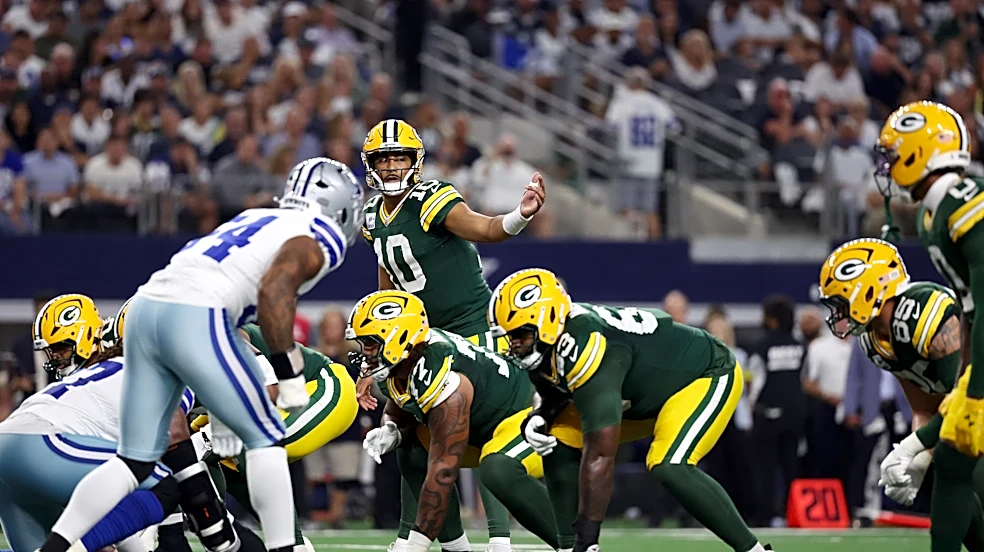
Two roughing-the-passer calls, Cowboys at Packers
Sunday Night, Oct. 18. Lambeau Field. Packers 23, Cowboys 13.
Crew: Craig Wrolstad.
I hate to say anything about the Packers getting screwed by the officials, because so often it is the other way around. But in a weekend with absolutely egregious calls all over the league, both in terms of significance and frequency, these two phantom RTPs really stood out. Green Bay led 23–7 in the fourth quarter when the flags arrived. Both were on Packers defenders against Dak Prescott. Both kept a Dallas drive alive. Neither produced points. Both, though, became part of the national conversation on the horrible, terrible, really no-good officiating of the NFL this season.
Flag 1: Lukas Van Ness, roughing the passer, 15 yards.
~7:44 remaining, fourth quarter. GB 23, DAL 7.
Grade: Incorrect. Weight: 4.
Prescott looks for Jonathan Mingo. Carrington Valentine steps in front and intercepts. It is Green Bay’s third takeaway of the night. The flag is already out. Van Ness is called for roughing. The pick comes off the board. Dallas keeps the ball, gains 15 yards, and the drive continues.
The tape shows a two-handed push after the ball is gone. It is slightly late, but there isn’t even a single step made by Van Ness before the contact. It is not high. It is not driven with force. Prescott goes to the ground, but the contact is a shove rather than a hit that lands with body weight or targets the head/neck. The rule protects the quarterback from unnecessary or excessively late contact once the ball is released. It does not turn every post-release touch into a 15-yard foul. This one is an egregious soft call where the force does not match anything close to a justified flag. Brett Kollmann called it “the most un-American roughing the passer call in history.” Charles Woodson posted that the league has to do something about these calls. Lambeau booed their hearts out. Van Ness put his hands on his head out of disbelief. The interception that should have ended the drive did not.
Dallas failed to cash it. The drive eventually stalled on downs after a later sack by Van Ness and a fourth-and-11 throw out the back of the end zone. The Weight is still 4 because a takeaway was wiped. A dead drive became a live one. That is the definition of the highest impact grade even when the points do not follow.
Flag 2: Karl Brooks, roughing the passer, 15 yards.
Same drive, later in the fourth.
Grade: Incorrect. Weight: 3.
Lambeau got the boo-birds out again. Brooks is flagged for contact that hits Prescott around the middle and drives him down. The description from the postgame accounts is a body shot after the release, not a helmet shot and not a lift-and-slam. It is another automatic first and another 15 yards on a drive that already survived one wiped interception. The crew treated it, I believe, as a “full weight” tackle, but the replay clearly shows Brooks coming down on the side of Prescott – not on top of him. The available angles do not show the force or the timing that turns a standard rush into roughing. It is the second soft RTP on the same series.
There was a third roughing call on the night (Evan Williams, contact near the helmet area on a block attempt) which was also iffy, and the Packers finished with three RTP flags total, raising their season total to a league-leading six. Matt LaFleur’s postgame line was measured: he wants the rule called both ways, and he noted Jordan Love has absorbed 39 hits without drawing one. The national tape, though, settled on the two that kept the Dallas drive alive.
Why these are the Flags of the Week
The competition was stiff this week. Beyond the two soft roughing-the-passer flags that wiped a Packers interception and extended a Dallas drive on Sunday night, Week 6 produced several other calls that drew immediate pushback. In London, Shawn Hochuli’s crew negated a Bhayshul Tuten touchdown with an offensive holding penalty on Brenton Strange that multiple angles and NFL insider Jordan Schultz showed as nothing more than incidental contact or a slip—no jersey grab—costing Jacksonville six points and contributing to a season in which the Jaguars have already had five touchdowns erased by flags. Later in the same game, Travis Hunter was called for defensive pass interference in the end zone on Nico Collins with 20 seconds left in the half; Ryan Clark and others called it non-existent contact that set up a Houston score and flipped the lead. Hours earlier in Kansas City, Ashton Gillotte was flagged for roughing Justin Herbert on a play that wiped a Chris Roland-Wallace interception; rules analyst Gene Steratore said he “just didn’t like the foul,” noting Gillotte appeared to avoid full contact. The common thread was the same one visible in Green Bay: crews throwing or withholding flags in ways that altered scoring plays or takeaways without clear support on the tape.
For our two in the Packers-Cowboys game, the rule is supposed to protect quarterbacks from unnecessary force, late hits with body weight, and contact to the head or neck. It is not supposed to turn every post-release shove or midsection drive into an automatic first down and a wiped takeaway. On Sunday night, in front of a national audience, Craig Wrolstad’s crew threw two of them on the same drive – arguably three. One erased an interception. Both were soft enough that the reaction was immediate and nearly universal. Green Bay still won. Dallas still failed to score on the drive. That does not make these calls any less egregious.
Grade on the pair: both Incorrect. The Van Ness flag is Weight 4 because it killed a takeaway. The Brooks flag is Weight 3 because it extended a scoring opportunity that had already been gifted. Together they are the clearest example this week of a rule being enforced past the point the tape supports.
And finally – while you might be tempted to wonder if this is all just anecdotal and driven by social media, consider these stats that Warren Sharp and Kirsten Tanis reported this week:
But what did you think about the flags and no-calls in the Bears vs Falcons game? Was the Bear Tax in full effect? What do you think about the increase in controversial calls and flags in general around the NFL? Tell us in the comments below!