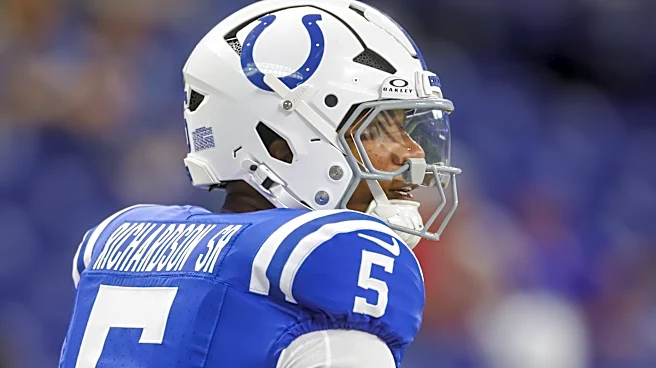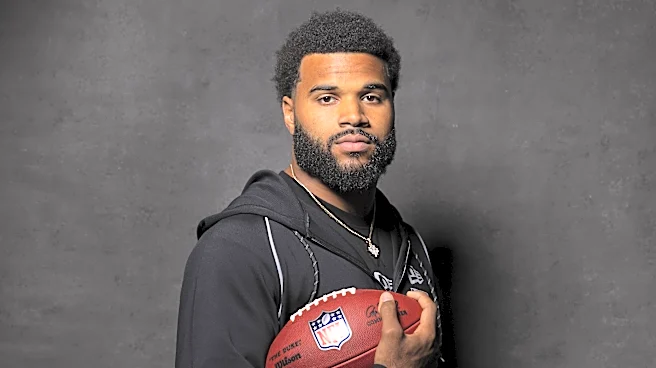






The Las Vegas Raiders signed a plethora of undrafted free agents, and also have a large number of undrafted rookie visits set. Las Vegas has seen impacts from undrafted rookies in recent seasons, and they have a noticeable availability for one, more multiple, undrafted rookies to push for the roster at wide receiver, runningback, and depth quarterback.
The Raiders showed an ability to identify undrafted talent last season with Shedrick Jackson, Greedy Vance, Jahfari Harvey, and Carter Runyon all taking
snaps for the franchise with Jackson also scoring a touchdown. A look, scouting report, and odds for each undrafted rookie to make the 53 man roster along with their longterm potential.
QB Jacob Clark, Missouri State
HT: 6’4 | WT: 230 | Games: 34
Stats: 67% completion rate (584/868), 7938 yards, 64 TD, 19 INT | 115 attempts, 544 yards, 4 TD | 13 fumbles, 5.2% big time throw rate, 3.5% turnover worthy play rate
Testing: N/A
- Clark has NFL caliber size for a QB, and he does have a variety of NFL traits, he has a ton of experience, and he also plays fairly intelligent. Clark has refined consistent mechanics, but a very average to below average arm that doesn’t generate a ton of velocity, and his total range is limited. Clark does a good job putting the ball in spots for his receivers, works well under pressure, and showed good footwork to navigate a pocket. Clark wasn’t afraid of contact, he’d consistently find receivers through contact, and he does a good job working the middle and short – intermediate range. Clark throws with good anticipation, but he’s limited with the arm strength. He’ll too often flutter the ball, get baited by zone concepts, and his lack of arm strength makes it difficult to make high situational throws. Clark is an average athlete, he can move, but not a designed runner, and there’s too often instances he doesn’t tuck the ball and run, nor does he climb the pocket as well as he should. He’s smart, and he probably will have a great career after football in coaching, he plays with instincts, IQ, and vision, and he’s limited athletically. Clark, already 24, likely has a hard time climbing the roster as a third QB but could land as a practice squad depth option.
Competition: Aidan O’Connell, Sawyer Robertson
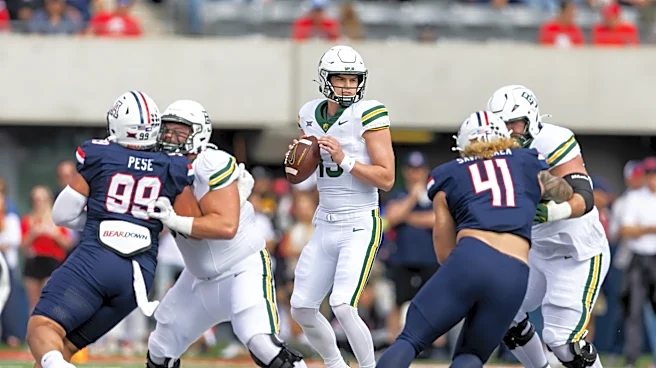
QB Sawyer Robertson, Baylor
HT: 6’3 | WT: 216 | Games: 35
Stats: 60.5% completion rate (605/1000), 7639 yards, 61 TD, 25 INT | 109 attempts, 610 yards, 8 TD | 5 fumbles, 4.4% big time throw rate, 3.7% turnover worthy play rate
Testing: 4.64 40 (1.61 10-Split), 37.5 Vert, 10’03 Broad, 4.48 Shuttle, 7.45 3-Cone | 8.65 RAS
- Robertson is the exact opposite of Clark, his mechanics aren’t consistent, he has choppy footwork, and he really struggles with some mid to advanced instincts/mental traits for a QB. Robertson doesn’t drag his toe on throws, causing the ball to sway to the outside or inside shoulder too often, but man he can rip it. Robertson generates a ton of velocity on throws, and he likely has an arm as strong, if not stronger, than Mendoza. He is able to turn and rip the ball well, fires it into tight windows, and his deep ball strength is incredible, though also incredible inaccurate. Robertson struggles to throw with anticipation, doesn’t identify closing passing lanes well, and he does trust his arm too often which leads to bad throws or bad reads. Additionally, I’d like to see Robertson do better getting through progressions, look off defenders, and he’ll need to do better getting the ball to the spot when receivers break. He doesn’t do great layering the ball, and he doesn’t put a ton of touch on the ball outside his outside the hash throws. Robertson also works well as a runner, he’s functionally mobile, climbs a pocket well, and he’ll take the hit threw contact. I like Robertson more than Clark, and he’s easier to mold into a backup with the arm talent, and pocket awareness he presents. Robertson likely has a chance on the 53 man roster, though a practice squad developmental spot makes a ton of sense as well. He’ll need to find consistency, but there’s a really legit chance Robertson ends up a top 3 QB from the 2026 class when looked back upon.
Competition: Aidan O’Connell, Jacob Clark
RB Roman Hemby, Indiana
HT: 6’0 | WT: 207 | Games: 58
Stats: 711 attempts, 3467 yards (4.9 AVG), 29 TD, 129 rec, 1086 yards, 5 TD, 2006 yards after contact, 161 forced missed tackles, 35% breakaway rate | 16 KR, 287 yards
Testing: 4.54 40 (1.61 10-Split), 35.5 Vert, 10’05 Broad, 4.52 Shuttle, 15 reps | 6.12 RAS
- Hemby has had a long career, 840 total touches coming out of college is a rough amount, but he’s shown a ton on film also. He has a tendency to have an elite play, and then one that makes you want to throw your laptop across the room the next three. He’s an aggressive downhill runner, works well in wide zone concepts, and shows good initial burst and quickness. Hemby won’t be a homerun threat, but he’ll fight for extra yards, be a capable short yardage back, and certainly can contribute to a team consistently. He shows good contact balance, vision, and while he’s not an every down back, he certainly can do well as the Raiders third runningback on the roster. Hemby works best in the open field, struggles in short yardage, and he can look stiff as well. He’s an average blocker, shows good receiving skills, and Hemby can certainly contribute on 100-150 or more snaps in a season. Hemby isn’t an everydown back, but he certainly has enough upside in a short yardage runner role, to fight for 53 man roster.
Competition: Dylan Laube, Chris Collier
WR EJ Williams, Indiana
HT: 6’3 | WT: 204 | Games: 60
Stats: 89 rec, 1050 yards, 6 TD, 3.8 YAC/reception, 7.3% drop rate, 47% contested catch rate (12/26)
Testing: 4.49 40 (1.59 10-Split), 36 Vert, 10’07 Broad, 4.31 Shuttle, 7.15 3-Cone, 11 reps | 7.44 RAS
- Williams spent 6 years in college, spending three seasons at Clemson, then three at Indiana. He saw a career best season in 2025 with 33 receptions, 404 yards, and five touchdowns with just a 2.3% drop rate. Williams returns to pair with Mendoza, which does give him a fairly decent edge on the other UDFA’s. He’s a physical tough receiver, and he is a fluid mover. Williams does well tracking the ball well, he’s a solidified route runner, and Williams has good explosion out of his cuts to create separation. He’s smart, finds a hole in the zone, and he’s also a legit YAC threat despite the average numbers. He won’t win as a burner, and is much more of a short area burst player, who can get chunk plays. Additionally, Indiana barely asked him to work short areas, and he ran a majority of corner, out, or backside digs, so refining the route tree is key. He’s a possible candidate to push for a bottom of the roster spot, but it’s hard to see him making it initially and likely ends up on the practice squad.
Competition: Chase Roberts, Corey Rucker, Shedrick Jackson, Justin Shorter, Brendan Rice, Phillip Dorsett
WR Chase Roberts, BYU
HT: 6’3 | WT: 210 | Games: 49
Stats: 157 rec, 2465 yards, 17 TD, 5.1 YAC/reception, 9.2% drop rate, 54% contested catch rate (27/50)
Testing: 4.64 40 (1.59 10-Split), 37 Vert, 10’08 Broad, 4.33 Shuttle, 6.89 3-Cone | 7.88 RAS
- Roberts will turn 26 after his rookie season, after spending his first two years (2020-2021) doing a mission trip. He’s coming off a solid 2025 with 44 receptions, 713 yards, and 5 touchdowns along with a career best 5.8 YAC/reception, however he also posted a career worst 15.4% drop rate with 8 drops on 75 targets. I’d bank on Roberts having a good shot to make the 53 man roster, he’s able to provide on special teams, and he plays a lot faster than his 40 time, which was well below expectation. Roberts does well in routes, he’s able to make plays through contact, and his release package is exceptional. Additionally, Roberts has a good second burst, he sinks his hips well, and his footwork is smooth, consistent, and crisp. Roberts is smart, he’ll work leverage and find soft spots, but he needs to do better catching outside of his frame, and he too often lets the ball come into his chest. Roberts is smart, he tracks the ball well, is able to identify it in air, and does a good job coming down with tough catches. He wont be a burner, and very much fits as a big slot, chain moving type of player who can matchup well vs LB and smaller nickel cornerbacks due to his initial burst. He has a tendency to drop the easiest catch possible, which has to change, and he’ll also put his hands up early causing defenders a chance into his frame. I can see Roberts getting a shot on the 53 man, he’ll produce on special teams, but the key will be controlling the drops.
Competition: EJ Williams, Corey Rucker, Shedrick Jackson, Justin Shorter, Brendan Rice, Phillip Dorsett
WR Corey Rucker, Arkansas State
HT: 6’0 | WT: 210 | Games: 61
Stats: 256 rec, 4121 yards, 28 TD, 6.1 YAC/reception, 11.8% drop rate, 32% contested catch rate (36/111)
Testing: 4.34 40 (1.59 10-Split), 37 Vert, 10’06 Broad, 4.48 Shuttle, 7.4 3-Cone | 7.21 RAS
- Rucker is fun, but he’s got some red flags also. He turns 24 in June, but also has 6 years of college experience. Rucker started his career at Arkansas State logging 76 receptions, 1290 yards, and 14 touchdowns in two seasons then he transferred to South Carolina. Rucker appeared in just one game for the Gamecocks with 1 reception, 52 yards, and a touchdown. He transferred back to Arkansas State where he posted 2407 yards, 163 receptions, and 8 TD in three seasons. Rucker wins with his route running, he has great awareness, understands leverage, and Rucker overall does well using his full body to find space as a receiver. He’s shown a good release package, is able to work the open field well, and he has natural long speed. His strides are effortless, he’s an elite YAC threat, and Rucker shows a ton of nuanced route running traits. He’s able to work well in screens, bubbles, and he’s a guy you want with the ball in his hands. He’ll haul in a good bit of his receptions, though he has a tendency to have focus drops, and I’d like to see him do better in contested catch situations but his strength may limit that. Rucker also will need to diversify his route tree, and he’s an adequate run blocker. Rucker could carve a role as a backup Z receiver, his athleticism, true speed, and route running is impressive, but he’s an older prospect, didn’t succeed at the SEC level, and Rucker does need to add more NFL route concepts to his game.
Competition: Chase Roberts, EJ Williams, Shedrick Jackson, Justin Shorter, Brendan Rice, Phillip Dorsett
TE Matt Lauter, Boise State
HT: 6’3 | WT: 245 | Games: 54
Stats: 97 rec, 1146 yards, 12 TD, 6.8 YAC/reception, 8% drop rate, 31% contested catch rate (4/13)
Testing: 4.66 40 (1.68 10-Split), 30.5 Vert, 9’06 Broad, 4.4 Shuttle, 7.02 3-Cone, 21 reps | 6.28 RAS
- Lauter is best in the receiving game, he’s not a true blocker, but he can provide an impact more as a H-Back, move TE instead of your true Y. He’s shown good lower body power, but his technique is poor, and he doesn’t anchor the best either. Lauter is slow out of his blocks when inline, and he’ll need to do better getting his arms up to make a play but he’s also limited by his length. Lauter fires off the ball in the receiving game, unlike the run game, and he shows good traits to be an NFL caliber receiving threat at TE. He’s a sharp route runner, explodes out of cuts, and does a lot to create separation. While he’s not a true blocker, there’s effort, and he’ll get in space as a run blocker also. Lauter works well after the catch, he’s a tough tackle with how well he’s built, and he does have subtle long speed to turn into chunk plays. Lauter also does well high pointing the ball, tracking it over his shoulder, and extending from his frame but wasn’t given a ton of chances in college. He’s got a tough uphill battle, largely in part to the Raiders having Bowers, Mayer, and Ian Thomas. Additionally, Carter Runyon shows more as a blocker, if Las Vegas carries four tight ends the path for Lauter opens up.
Competition: Albert Okwuegbunam, Carter Runyon
OL Justin Pickett, Duke
HT: 6’6 | WT: 312 | Games: 48
Stats: 2139 snaps (1223 PBLK), 4 sacks, 1 hit, 44 pressures allowed, 9 penalties
Testing: 4.99 40 (1.65 10-Split), 27.5 Vert, 8’11 Broad, 4.66 Shuttle, 7.59 3-Cone, 26 reps | 9.81 RAS | 33” Arm
Positional Splits:
- LT: 10 snaps
- LG: 200 snaps
- RG: 1829 snaps
- RT: 96 snaps
- Pickett signed for nearly 170,000 guaranteed a lot for a UDFA. He started his career at T, moved into guard and has succeeded. Pickett is a good athlete, he gets into space well, fires off the line of scrimmage, and I really like how he’s able to move in space. Pickett shows good power, has a strong base, and he’ll anchor well. He needs to do better keeping his pads low, and he doesn’t really play with a ton of leverage. Additionally, Pickett’s hand combat skills are adequate, and he’ll struggle at times with pure power rushers who show an ability to simply uplift him off his anchor and drive him backwards. Pickett has a nasty streak, he enjoys run blocking, and overall there’s a lot of upside swings with him. Pickett’s knees and hips are fluid, his footwork shows good signs but is very inconsistent, and I’d like to see him engage the core more often through the rep to try and snatch or trap defenders. The Duke G/T has a shot to make the roster, but his uphill battle is largely in part to the others on the roster and Las Vegas is deep. His upside is limited, but there’s traits to develop into a backup G.
Competition: Atonio Mafi, McClendon Curtis, Will Putnam, Layden Robinson
OL Isaiah Jatta, BYU
HT: 6’5 | WT: 293 | Games: 28
Stats: 989 snaps (517 PBLK), 1 sack, 9 hits, 26 pressures allowed, 11 penalties
Testing: 5.13 40 (1.82 10-Split), 27.5 Vert, 9’01 Broad, 4.94 Shuttle, 7.85 3-Cone | 5.87 RAS | 32 5/8” Arm
Positional Splits:
- LT: 838 snaps
- RT: 144 snaps
- Jatta, ironically, has a decent shot to make the 53 man roster given the Raiders below average depth at T outside of Miller, Grant, and Glaze. He’s consistent, could kick into guard, and does provide across the line versatility. Jatta has fluid hips, he’s able to change direction well, and he drives his full frame through the rep. Jatta does well anchoring, he has good footwork in space, and he absorbs power well. Jatta has crisp consistent footwork, he doesn’t have a ton of wasted movement, and he’ll work well when out in space. Jatta enjoys the run game, he likes to hit linebackers, and he works to the second level quickly. He’ll need to add power, his strength in the upper body and core is limited, and he’s also rather light. He can get grabby in his hands, despite having good grip strength, but he does get flagged for holding or false starts routinely. Jatta’s shown average knee flexibility, which limits how well he’s able to use leverage, and I’d also like to see him do better not over pursuing second level defenders as often as he does. Jatta needs to add more mass, especially core and upper body muscle, but he’s a very raw tackle as well. Jatta does have immense upside, he’s likely 1-2 years off making the roster, but there’s a world he can push for it year one as a depth tackle. He’s no doubt someone to keep an eye on through the cycle, and there’s a very minor chance he develops into a starter at LT or RT.
Competition: Dalton Wagner