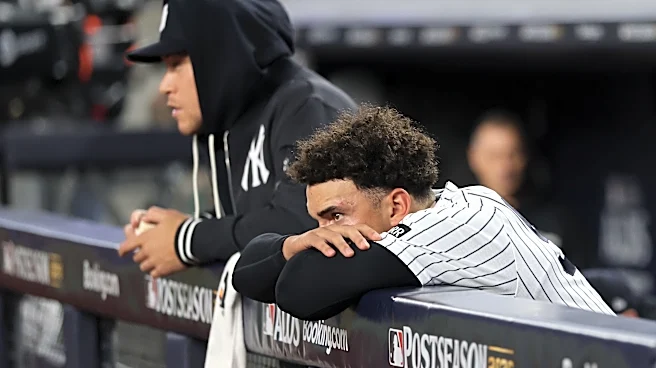





Once again, the Yankees season ended not with a bang, but a wet fart and a whimper. This current era of the Yankees under the helm of Aaron Boone just cannot seem to get out of their own way in the games that matter most. For whatever reason, be that mentality, clubhouse culture, individual makeup, what have you, these teams largely perform during the regular season but wilt when the lights are the brightest. There are no quick or simple solutions; it doesn’t feel like something you can fix with an addition
here or a managerial change there.
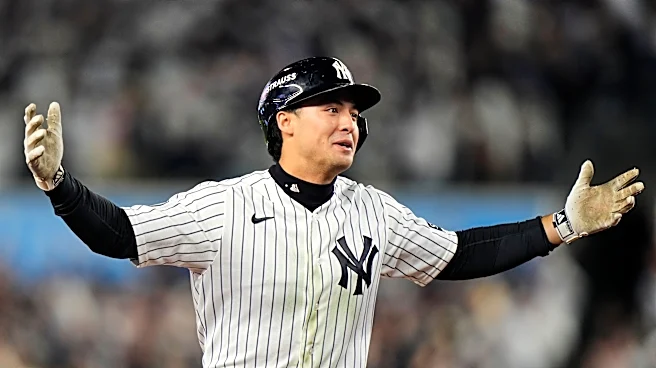
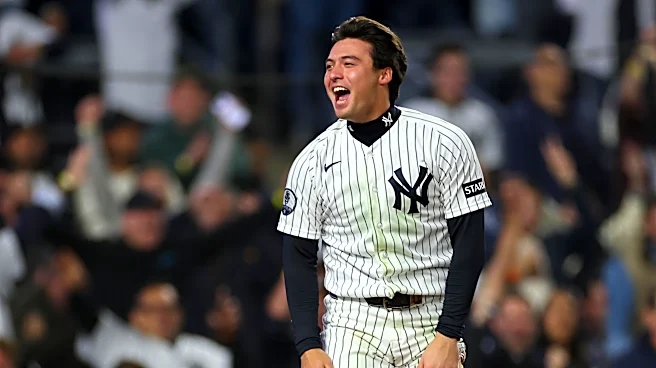
Before we attempt to solve this existential crisis of identity, perhaps we can dull the throb of our open wounds by remembering the final positive moment of what was a more painful than pleasurable Yankees’ 2026 season. Our Player of the Game from ALDS Game 3 goes to Anthony Volpe.
Volpe endured a brutal fourth season in the big leagues. He missed the first month-and-a-half while rehabbing from an offseason surgery to repair a partially torn labrum in his non-throwing shoulder. He found playing time hard to come by upon his return with José Caballero performing decently enough at short. He hit to roughly his career averages while managing to rein in the errors for three months, but with the Yankees desperately needing an injection of energy amid a late summer swoon, he found himself demoted to Triple-A for five weeks with top prospect George Lombard Jr. making an immediate impact upon his MLB debut.
A mechanical tweak in the minors seemed to unlock something, and he tore the cover off the baseball to force his way back to the majors. In his final 14 games he posted a 95 wRC+ while taking reps at second and third, creating an opportunity to be added to the postseason roster. He appeared in just two playoff games but made the most of his opportunity, going 3-for-7 with an RBI.
Following Jazz Chisholm Jr.’s mental lapses in Game 2, the Yankees had to make a change, and Volpe got the nod to start at the keystone. His first opportunity to bat came with two outs in the second of a scoreless game. Lombard stood on second following a one-out single — the Yankees’ first baserunner off Nick Martinez. To put it bluntly, the approach wasn’t great. He took a called strike one on a cutter that just nipped the top rail of the strike zone, but then chased a sinker in off the plate to quickly fall behind, 0-2. He fouled off a four-seamer off the top rail to stay alive, but then was miles early whiffing through a mistake changeup that Martinez grooved middle-middle to strand Lombard at first. To be fair to Volpe, you can understand why he was early swinging at that changeup after seeing three straight elevated fastballs. However, in the playoffs you have to punish the limited number of mistakes you get, and Volpe failed to do so here.

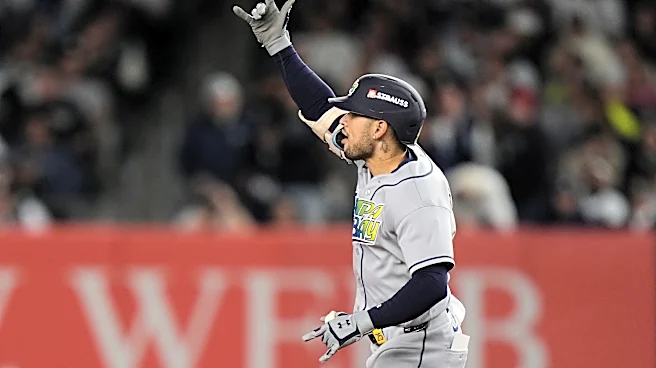
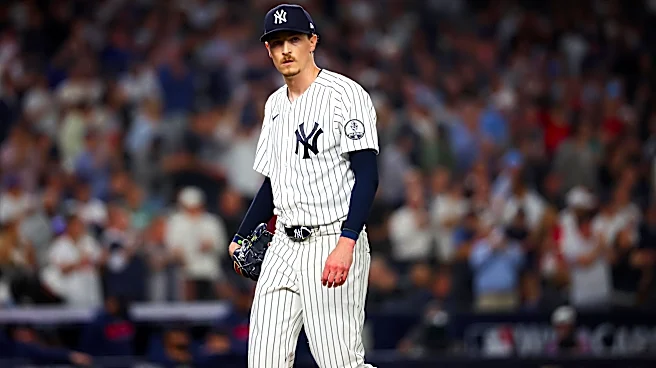
Volpe’s next opportunity arrived in fourth. Ryan Vilade reestablished the Rays’ one-run lead with a solo shot off Max Fried in the top half. Lombard led off the bottom of the frame with a single, but an Austin Wells GIDP immediately erased it. This time, Volpe was able to work a deeper count, spitting on a sinker and a changeup just off the corner low and away and fouling off a sinker on the corner just under his hands while also missing another mistake from Martinez, fouling off a center cut 2-1 sinker. Martinez attempted to climb the ladder with a four-seamer, but it was one high fastball too many. Volpe made the necessary adjustment to his swing path and lasered a line drive single off Martinez’s back to keep the inning alive and force Martinez to exit the game with the trainer. That proved to be a critical blow in more than one sense as Spencer Jones ambushed lefty reliever Ian Seymour for an opposite field double, Volpe racing home from first to score the tying run.
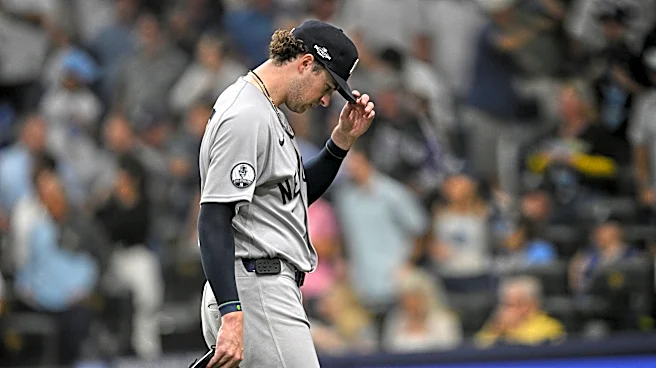
The next AB is the one that cemented Volpe as the Player of the Game. The Rays hit their second home run of the night off Fried in the sixth, this one a two-run blast from Victor Mesa Jr. to grab a two run lead with four innings to play. Lombard reached for the third time, this time on a successful ABS challenge to earn a one-out walk. That brings Volpe to the plate facing a tough matchup against hard throwing hybrid starter/reliever Griffin Jax.
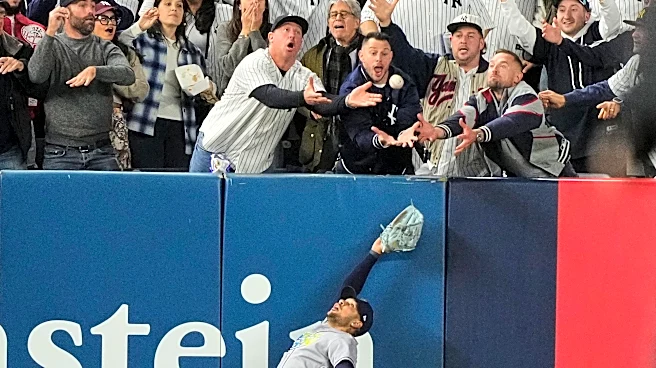
Jax attempts a get-me-over breaking ball to steal a called strike one, but the sweeper lands low for ball one. It appears Volpe completely sells out for the fastball on the next pitch, because he spins on a 96 mph sinker off the plate inside, getting the bat head out early to pull the ball with power in the air to left. The deep fly ball was initially ruled a game-tying two-run home run as it appeared to barely scrape over the wall in left just over Mesa’s leaping attempt. However, the side angle replay view definitively showed a Yankee fan in the first row reach into the field of play and deflect the ball into the crowd. The Yankees had to settle for an RBI double to cut the deficit to one.
In his final AB, Volpe struck out swinging in a seven-pitch AB against AL saves leader Bryan Baker to lead off the ninth as he once again whiffed through a pitch in the heart of the zone. It was a disappointing end to a battle of an AB as Volpe was late on the heater and got his barrel path all wrong after seeing three changeups and guessing wrong. All the same, the Yankees do not score two of their three runs if not for their much-maligned infielder.
On a personal level, I am really happy for Volpe that he was able to contribute in such a meaningful way in the Yankees’ final game of the season. There has never been any doubting that Volpe cares or the work he puts in. As a homegrown shortstop from the New York metro area, there is a subsection of the fanbase that will never be satisfied with anything less than Derek Jeter levels of production.
That is not to glaze over the undeniable shortcomings in his game. After four straight seasons posting a wRC+ between 82 and 88, we can say with more than a little confidence that we have seen Volpe’s true talent level as a below average bat. He lacks the range and arm strength to be much better than league average with the glove at short.
However, his commitment to helping the team however he is asked should be commended and opens doors for him to be a net asset in the future. Even in limited reps, he looks way more comfortable at second than at short, and if the mechanical adjustments from his demotion stick, it is not out of the question that he could approach league average production at the plate.
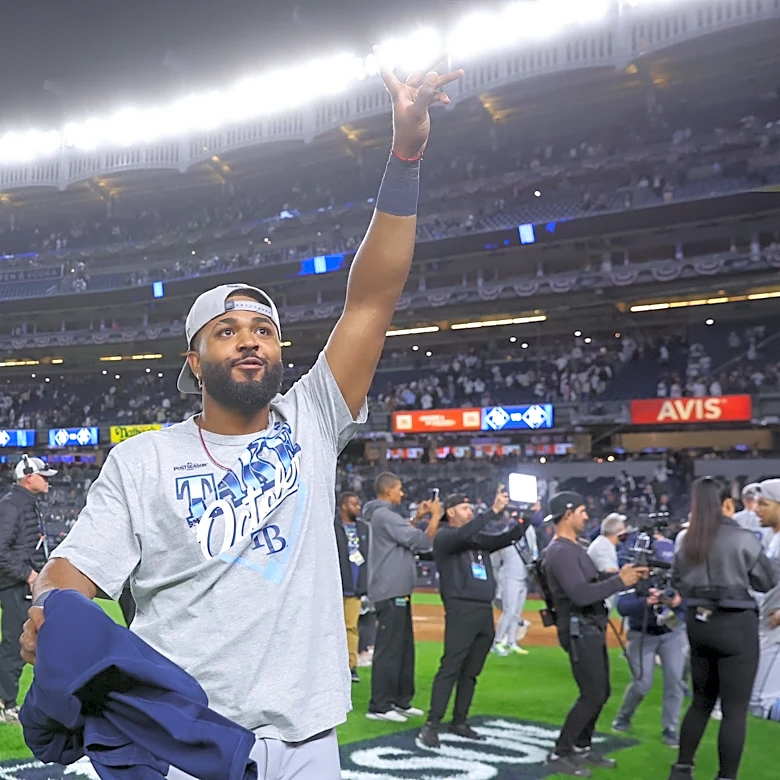
Despite the valiant fight back, the efforts to extend the season fell just short. For the third year in a row, the Yankees were forced to watch their postseason opponents celebrate on their own home field in Yankee Stadium. The question for the offseason and indeed a fundamental question for ownership and the front office is whether this is an acceptable outcome. Does simply making the playoffs qualify as a successful season? It depends who you ask.