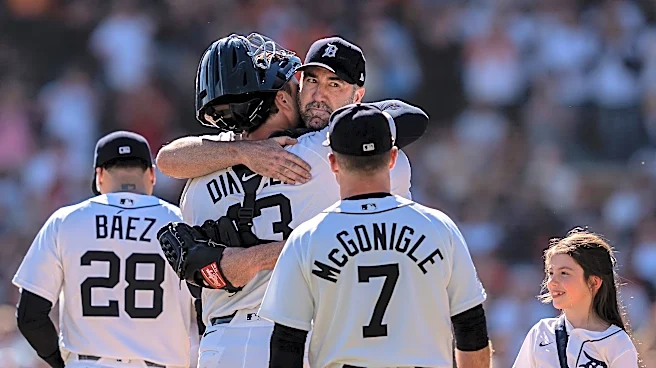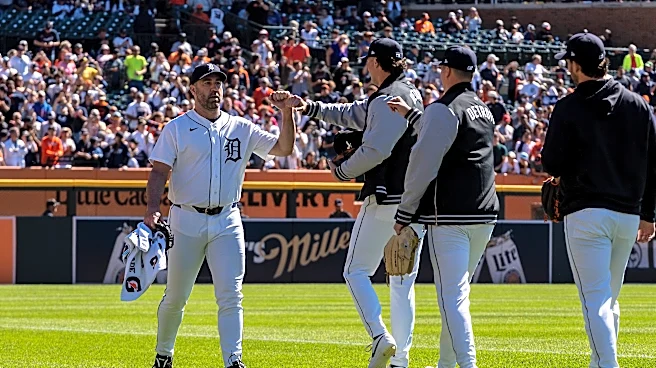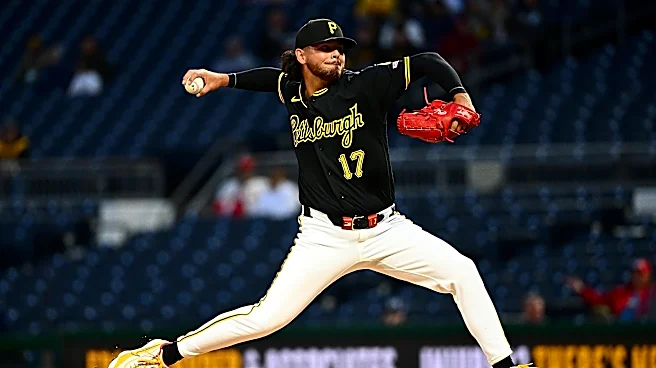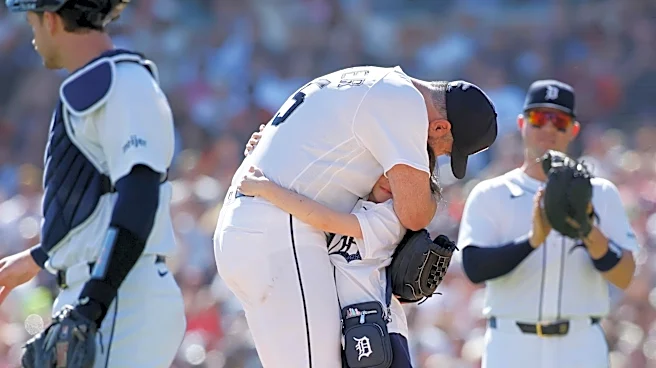



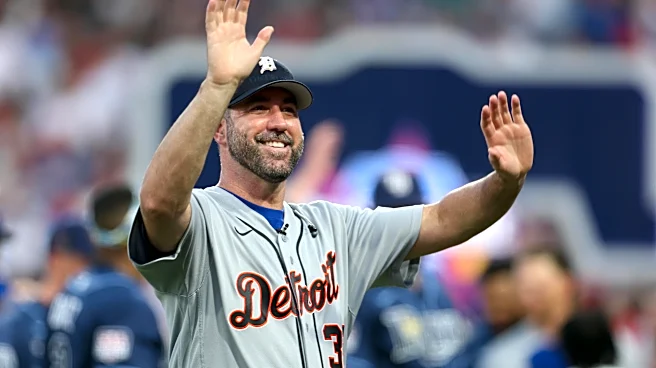
All things come to an end, and on Saturday we witnessed a really poignant ending to the career of one of the greatest pitchers and greatest Detroit Tigers of all time. Justin Verlander, with minimal preparation and no buildup, took the mound against the Pittsburgh Pirates in Comerica Park, and managed to turn back the clock one last time. It wasn’t a great outing, but it was a very solid one as Verlander tossed 5.1 innings of two-run ball with six strikeouts. There was certainly nothing left in the tank
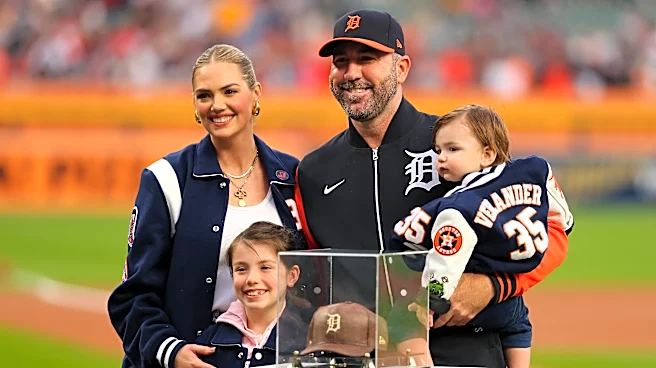
when his wife Kate Upton, and manager A.J. Hinch, sent young Genevieve Verlander to the mound to take her father home for keeps. There also wasn’t a dry eye in the house.
The game is the game, and it keeps on moving. An extremely disappointing 2026 season for the Tigers is now over, and our attention now turns entirely to assessing where things went wrong, and how the club can turn things around in 2027 as we face a very difficult and uncertain offseason.
On Sunday afternoon, something far more important to the Tigers franchise and its future was in play as River Ryan took the mound as he begins the work of getting back into form after a few injury plagued seasons. Fans can’t control anything, but even we know that you have to be about the process over the results, and you can only really look backwards for a little while. The phrase, “we’ll get them next year,” is a rueful joke as much as anything else when times are hard, but it does embody something fundamental about being a sports fan, and about life in general. In so many ways, the lessons sports teaches are intertwined with all the lessons life tries to teach to everyone.
There’s no reason to weep too much over the retirement of an extraordinarily wealthy athlete with an incredible career behind him, and a lovely family to focus his full attention on. Objectively we all know this. We’re sad to see Verlander ride off into the sunset as one of the all-time great Detroit Tigers, but in some ways these things really aren’t about the individual athlete. They have their own distinct perspective on their lives and careers. This is more about us as fans of the game.
Sports and the legacies of their greatest practitioners and teams articulate the passing of time for all of us as sports fans. We think about where we were, and maybe more precisely, who we were, when we first recognized that a Justin Verlander or a Barry Sanders was a generation defining talent. We remember the performances, the big moments, the highs and lows, but we each remember them within the context of our own lives and memories. Some of the sadness we feel in a moment like Saturday’s is much more about our own sense of the passing of time, the passing of people from our lives, the way this old world just keeps changing.
For younger fans, this can all just feel too sentimental and nostalgic as they prepare to try and conquer the world in their own ways. For all of us who’ve already fought some or most of our battles, a little nostalgia is natural and appropriate. Justin Verlander’s presence in the game frames whole eras of our lives at this point.
For myself, Justin Verlander was a major force in actually getting me back into baseball. Growing up in the 80’s, the 1984 Tigers’ World Series championship team was the defining sports team of that whole era, only giving way to the Bad Boys era Pistons at the end of the decade. I grew up pitching and playing shortstop, wanting to be Alan Trammell and Jack Morris. But owner Tom Monaghan was apparently satisfied with one World Series title, and rarely did they sniff another opportunity.
By the early 90’s my family had moved out of state at a time when Sportscenter was still new, and it was difficult to follow your favorite teams from afar. Between the Tigers slide into mediocrity, the frustrations of the first decade and a half of Mike Ilitch’s ownership, the strike, and then the steroid era, baseball pushed me away. Of course, I was in my early 20’s then with plenty of other interests to occupy me as well.
It wasn’t until 2004-2005 that I really came back to the game, partly driven by Trammell’s presence as manager, but also by the Tigers attempts to turn things around after the catastrophic 2003 season. But it was in 2006 that a young rookie starter with a ridiculous level of arm talent started making waves, and it was initially watching Justin Verlander that rapidly drew me all the way back into a full-on obsession with the game.
The next few seasons featured frustration as Verlander tried to overcome a habit of slow starts to his seasons followed by furious finishes. The first no-hitter of his career on June 12, 2007 against the Brewers served notice, but the Tigers were collectively spinning their wheels. The global financial crisis of 2007-2008 took its toll on the region as it did everywhere, and the Tigers were disappointing in the wake of the painful 2006 World Series loss to the Cardinals. There were some rough years for many in 2007-2009. The pain of Game 163 against the Minnesota Twins broke some in the fanbase for years to come.
Many feared that Dave Dombrowski would never get the roster mix right and build a consistent winner. That Jim Leyland just didn’t have enough feel for his pitching staff anymore. Even the acquisition of Miguel Cabrera didn’t seem to make enough differences. At the same time, something else happened in 2009 as Verlander put together the first of his many Cy Young award worthy seasons. While he still struggled through March and April as usual, for the first time he was pretty dominant the entire rest of the way, topping 240 innings with a 3.45 ERA and a 2.80 FIP with the highest strikeout rate of his career to date.
For myself, after moving back to the Detroit area after over a decade on the west side of the state, that was the first season I ever saw him pitch live, and must-see-JV was already a thing before it became a slogan. Over the next few seasons I made a point of catching Verlander starts whenever possible and became more and more invested in his struggles to finally put everything together for a full season.
We know what came after that, as Verlander embarked on a good season in 2010 and then ultimately leveled up into an absolute monster in his AL MVP and Cy Young winning 2011 campaign. He finally developed the slider that would become a trademark pitch for him, and he also perfected his three gears approach to pitching, realizing he could get early outs at 92-93 mph, ramp up into the mid-90’s the second time through the order, and then empty the tank from 96-101 mph the rest of the way, even far beyond 100 pitches per outing. We may never see something like that again.
No-hitters suddenly seemed like a likely enough possibility that fans went to pieces when he gave up his first knock in the fourth inning. On May 7, it became a reality as he blanked the Blue Jays for his second no-no. Another one seemed possible at any time, but instead the third wouldn’t arrive until 2019 with the Astros when he blanked the Blue Jays in the Rogers Centre for the second time. Verlander became the face of baseball on the pitching side during those years. He was on the cover of video games and doing commercials. He felt like the ultimate diva style ace, hyper competitive, cocky verging on downright surly at times, approaching every start like a prize fight with himself as the reigning and defending champ.
By now I was long since fully hooked on baseball again, and pitching specifically, watching and reading everything I could find on pitching mechanics and pitch development. The timing was great, as for three years, Verlander wasn’t just the ace of the Tigers, he was the most consistently dominant pitcher in baseball and doing things rarely seen in the game. The combination of command, velocity, breaking stuff, and durability was hard to process, with few precedents in the game before him.
Yet the Tigers still couldn’t get it done, despite an enormous amount of talent and a lot of good times and spectacular individual performances. Miguel Cabrera finally put it all together in 2012-2013 and was the best hitter in baseball. By 2012, Max Scherzer was running with Verlander neck and neck, and ultimately surpassing him while the latter’s velocity slipped in 2014 and his body barked at him all season long.
At the end of that season, Scherzer went on to a spectacular five year run with the Washington Nationals. Cabrera had peaked only to immediately start a process of physically breaking down that would only accelerate in the years ahead. Verlander too appeared to have finally passed his peak in his ninth full season in the league. He was into his early 30’s now, and by that point it’s hard not to expect a rapid decline in performance in the not too distant future.
Right about then, I started writing for Bless You Boys, and suddenly Justin Verlander was my subject. The timing was good. I was convinced he had another full act in him and in 2015. Verlander, at the urging of then girlfriend Kate Upton, spent that offseason working with Dr. Annie Gow, a physical therapist who helped him restore his flexibility, strength and mobility. He came into 2015 spring training highly optimistic and early reports indicated that his velocity was back. Then came an injury, initially reported as a triceps strain, but which was actually a lat strain instead. For the first time in his career, the Tigers horse, as Jim Leyland would refer to him, went on the injured list. Verlander had already had two full acts in his career, the early years to 2009, and his run from 2010-2014. There had to be a third. As it turned out, there was far more than that to come, but no one could’ve but Verlander himself could’ve predicted it at the time. He did always say that he wanted to pitch into his 40’s until the wheels came off. Well here we are.
Skepticism over a return to form in 2015 reached a fever pitch in May and into June as Verlander was unable to get on the mound. Finally, the rehab work began and he made a start with the Toledo Mud Hens at the beginning of June. Afew of us here at BYB, including former site manager Kurt Mensching, went down to see his second rehab start in Toledo. This will always remain a vivid memory for me.
Prior to the game, as Verlander warmed up in a Jurassic Park themed jersey down the third base line, looking quite out of place, the big board showed the Belmont Stakes, where American Pharoah won the first horse racing Triple Crown since Affirmed in 1978. Verlander took the mound sitting 94-95 mph, and carved through most of the Cleveland Triple-A squad with ease. He looked very good. The one exception was this skinny little shortstop who cranked a solo shot off one fastball and roasted a very hard hit single his second time up. Francisco Lindor would go on to become quite a player, to no surprise for anyone paying attention that day. What was key though, was that Verlander looked good, and so I was loudly opining on the site about a huge resurgence coming the rest of the season.
Betting on Justin Verlander rarely steered me wrong. I had him on a dynasty league team from 2007 until I finally and somewhat painfully dropped him last season. It’s Justin Verlander, so of course he went on to be the best pitcher in the American League and probably all of baseball again in the second half of the 2015 season. His velocity started ticking back up to the high 90’s peaks. The breaking stuff was crackling. He was back.
MLB debuted Statcast that summer, and sure enough, Verlander was up at the top in terms of spin rates and riding action, as predicted. There was plenty to write about as we tried to digest this huge inflow of new information about the game, and Verlander was an ideal outlier specimen to study, trying to understand exactly how to optimize pitches with spin.
On August 26th, we were back to old times as Verlander took a no-hitter into the ninth inning against the Angels, only for Chris Iannetta to drop a line drive on the chalk of the left field line, one of the more crushing hits I can remember by an opposing team outside of the postseason. Pablo Sandoval still has the most devastating blows against Verlander from the 2012 World Series Game 1, obviously. The point is, Justin Verlander was back, and while I was already convinced it was coming, I never could’ve imagined it would be 12 more seasons, most of them still great, until he finally hung up his spikes.
And while Verlander was back in form, one couldn’t really say the same about Miguel Cabrera and Victor Martinez. Max Scherzer had left in free agency after the 2014 season, and things were just never the same again. There’s another life lesson. You can go back in life, in all senses of the phrase, but when you get there it won’t be the same because you are no longer quite the same person either.
2016 was another real disappointment for the team as they crumbled down the stretch. On the Verlander front it was still great to watch Verlander build on 2015 and put together another Cy Young award caliber season only to be robbed by two Tampa area reporters who didn’t even cover baseball at that point. Kid Rick Porcello took home the hardware, and Kate Upton, by now engaged to Verlander, let fly with the legendary tweet that sent old Twitter into a frenzy.
Still, by 2017 it was clear that the magic was gone from the Tigers. Verlander’s magic was still running strong and his last second trade to the Houston Astros on August 31, 2017 was the final blow of that era. Many Tigers fans cheered the bittersweet sight of him winning his first ring with another club, but what gnawed at me was seeing the Astros ditch his twoseam fastball entirely and help him reach a new level of performance. I have always wondered how much greater his career could’ve been with better coaching and more information. In 2018 and 2019, he was better than ever, finally taking home another Cy Young award in 2019 and racking up 300 strikeouts in a season for the first time. By then, his future Hall of Fame credentials were long since assured.
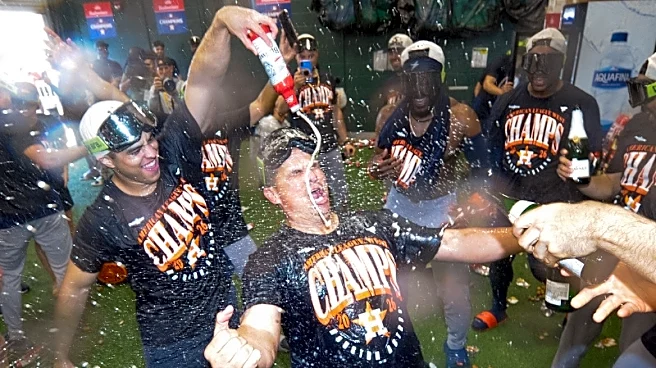
Finally, after 14 years of greatness, Verlander’s UCL gave way in 2020. The Astros cheating scandal, and the entire culture of that front office in those years, tarnished his ring. Jeff Luhnow was banned for life. AJ Hinch was fired. Verlander’s career seemed to be coming to an end in a fairly dark place and time and he took some deserved heat from hiding of most of the Astros’ conduct. You had to wonder if Verlander would ever be the same, and if he would ever get another chance. We probably should’ve known better. Reinvigorated by the birth of his daughter, he rehabbed back into peak form and stormed back in 2022 to his third AL Cy Young award. He would go on to his second World Series title with the Astros.
By this point, Verlander was rarely on the minds of most Tigers fans anymore. The Astros didn’t pursue him too hard that offseason, and instead he signed a large short-term contract with the Mets, rejoining Max Scherzer for a half season. He was traded back to Houston at the trade deadline with Steve Cohen footing some of the bill, played there in 2024, and then left for a quiet but solid season with the San Francisco Giants in 2025. There were times where it felt like Verlander might make a brief fit for the Tigers one more time, but when that didn’t happen, it felt like chances of a reunion were probably done.
Instead, we did finally get that reunion. It didn’t go the way anyone hoped, but here at the end of his career, I’m still very glad he returned to Detroit. His reaction to coming home made it pretty clear that his heart never really left the Motor City, and that despite his success in Houston, he always viewed himself as a Tiger first and foremost. His wife is from Michigan. He got his start here. He became Justin Verlander here. In his own comments about the team, the fanbase, and the city, you can see him processing everything I’m writing about here, reminiscing on both the good times and the bad, feeling older for noticing how much time has passed and how much things have changed.
Verlander will hopefully go on to a long and fruitful retirement and finally be a full-time dad. His stature in the game is unassailable, and the way things are trending, we’ll never see his like again. His words over the last week have made it all but a certainty that his preference is to go into the Hall of Fame as a Tiger. We’ll see how that turns out when he’s eligible in five years. Expect the number 35 to be retired and added to the outfield walls, and in time a statue will be added on the concourse. Detroit does not forget its legends.
It’s entirely normal too to be skeptical about all this adulation. This is a more cynical era that the days when players like Babe Ruth and Willie Mays made their legends. But if Justin Verlander isn’t a baseball legend to future generations than who will be? He was hyper-competitive, he understood what he owed to the fanbase and to the game, there was never any drama, he took relatively team friendly extensions twice and never showed the slightest inkling of leaving until the Tigers forced his hand with a deadline decision at a time where they were clearly going into teardown mode. And most importantly, Justin Verlander was one of the greatest pitchers of all-time. He was everything you could ask and more from a Detroit athlete.
Verlander wasn’t able to give us that final act this season. But he was able to dig down and provide one more beautiful performance and a memory that will stick with many of us forever. For all the young fans out there looking for their Justin Verlander, a player that will help define an era or two for them in their lives and as sports fans, I hope Kevin McGonigle and Max Clark achieve this level of stature, accomplishment, and longevity in the game for you all, and not just for the Tigers’ benefit. Even for the greats, it’s hard to have multiple great eras in a baseball career. Don’t take it for granted if we’re so fortunate. A career like Justin Verlander’s may never be seen again.
Thanks for everything, JV.