

One of the truisms as a football fan is that teams lie. It happens all the time. There’s no real incentive for teams to be honest. Everything is about leverage, and information is key in every negotiation. The result is a whole lot of nonsense put into the ether.
There are a few moments each year when that’s no longer true. One of those moments is when free agency officially kicks off. Teams can no longer lie to fans or opponents. Free agency requires a financial investment, and that commitment is an acknowledgement
of the obvious – we need this.
That acknowledgment is a rare opportunity for fans to learn the truth about what their favorite team’s front office thinks about the roster. How do the decision makers really feel about their overall team-building approach?
Follow the money to find out
This is as true of the Kansas City Chiefs as it is for anyone, especially as it pertains to the weaknesses on the roster. General manager Brett Veach has never been shy about addressing the team’s shortfalls.
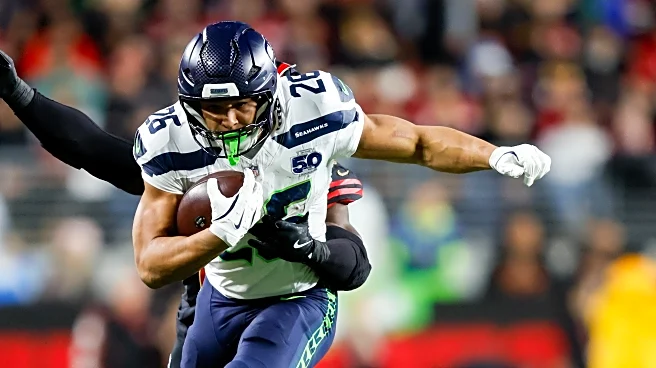
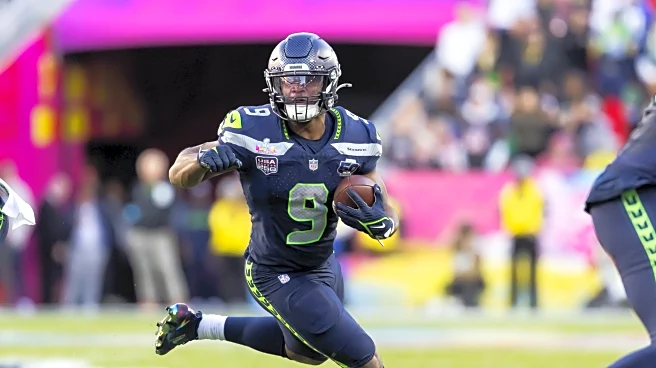
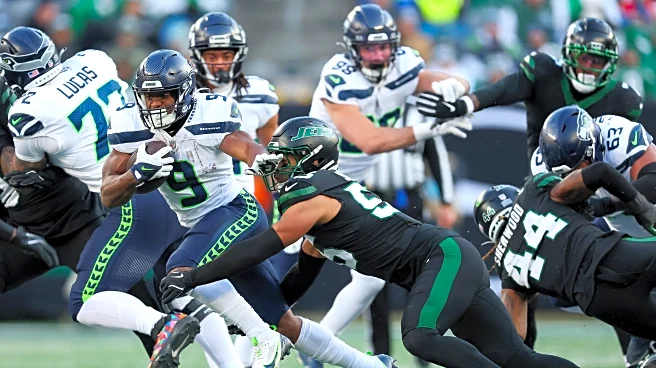
This offseason has been no exception. Veach’s first move in free agency was to take a sledgehammer to the fly and sign Kenneth Walker III to solve the team’s running back issues. It covers the single biggest weakness for the Chiefs’ running back room in recent years: the inability to generate explosive play.
The Chiefs’ running backs combined for one rush of at least 20 yards last year. Walker had 10 such runs on his own, according to Tru Media. The process is every bit as glaring as the results. Walker’s big-play ability starts with his game-breaking speed. Walker had 67 carries during the regular season last year in which he reached at least 15 miles per hour, per NFL Next Gen Stats. Kansas City’s running back room combined for 26 such carries.
The price to upgrade the room the way they did was significant. Walker is now the fourth-highest-paid running back in the NFL by average annual value and total guarantees. The Chiefs are a team that had previously never committed more than $7 million against the cap in any individual season to the entire running back position in Patrick Mahomes era, according to Over the Cap.
The organization has now committed an average of twice that amount to one player for the next three years. It’s the kind of signing Veach has avoided like the plague. Paying running backs has been considered taboo, but the league has changed, and it was time for Kansas City to respond accordingly.
Walker wasn’t the only player to cut against the grain of the Chiefs’ typical decision-making. This is a team that has not prioritized the nose tackle position in recent years. In fact, it might be the one position on the roster that’s been more neglected than the running back room.
Derrick Nnadi has led the team in nose tackle snaps for seven of the past eight seasons, with the lone exception coming in 2024 when Mike Pennel did so. Nnadi has never earned more than $2.75 million in any individual season. The Chiefs like to have a cheap option at the nose tackle position, in part, because of how much Chris Jones is being paid to dominate as a three-technique. It’s a philosophy that served the team well for years.
It was time for a change
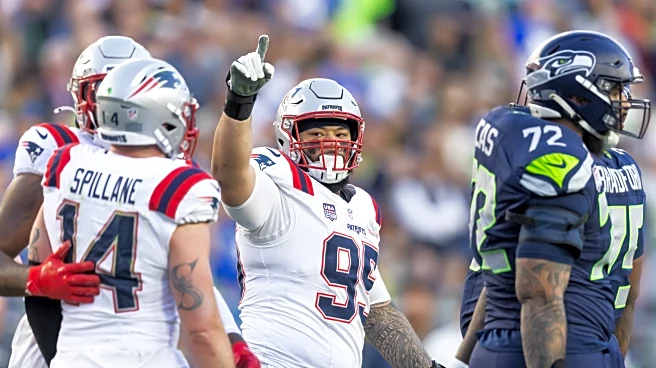
Kansas City’s second significant signing of free agency was Khyiris Tonga, a nose tackle who experienced a breakout campaign this past season with the New England Patriots. He’s a late bloomer, entering his age-30 season, but the Chiefs deemed him worthy of a three-year deal with $14 million guaranteed at signing. Nnadi – the Chiefs’ starting defensive tackle for the majority of the past eight years – made a combined $12.7 million over that span, per Spotrac.
With just half a sack and five tackles for loss on his career resume, it feels like a hefty price to pay for Tonga. Doing so is an outright acknowledgement from the front office that the running game is something the Chiefs need to account for, both offensively and defensively. The team has done exactly that with the signings of Walker and Tonga.
This is a significant change in the team’s overall roster-building philosophy. The Chiefs went into last season hoping to simply get by with cheap options at running back and nose tackle. The plan failed spectacularly. It was time for a change.
Veach isn’t one for half-measures. His solution was to sign the top running back on the market and arguably the top true nose tackle available, as well.
It remains to be seen how this will impact the team’s search for another option at wide receiver and defensive end. The remaining options are slim at both positions.
The top remaining wide receivers that fit the Chiefs are probably:
- Jauan Jennings
- Tyreek Hill
- …Darnell Mooney?
Defensive end is only slightly better:
- Cam Jordan
- A.J. Epenesa
- Rumored trade option: Jonathan Greenard from the Minnesota Vikings
- Rumored trade option: Kayvon Thibodeaux from the New York Giants
The first moves the Chiefs made in free agency told us plenty about what the organization believes led to the failures that became the theme of the 2025 season, and how those issues can be fixed for 2026. The moves (or lack thereof) at defensive end and wide receiver over the coming days and weeks will help to inform fans what they should expect with the Chiefs’ ninth and 29th overall picks, respectively.