





There’s basketball. And then there’s WNBA basketball.
While talent is a prerequisite to thriving in the W, it’s not enough. Talent must thrive in context, as part of a team and, more specifically, as part of a lineup. Context, or fit, delineates the good from the great, where a group of talented, individual players become greater than the sum of their parts.
So, through the first half (and a bit more) of the 2026 WNBA season, which teams are accessing this kind of shared excellence? A look at the best
five-player lineups in the league, while not definitive, provides a perspective.
Based on data collected and aggregated by databallr, these are the best five-player lineups in the W. (The offensive, defensive and net ratings cited are “padded,” meaning adjusted relative to league average in order to guard against the outlier data that can result from small sample sizes.)
Do the stats back up your instincts? And, do you think these trusted groups of five give their teams a better shot at playoff glory? Share your reactions in the comments.
1. Atlanta Dream: Canada-Gray-Hillmon-Howard-Reese

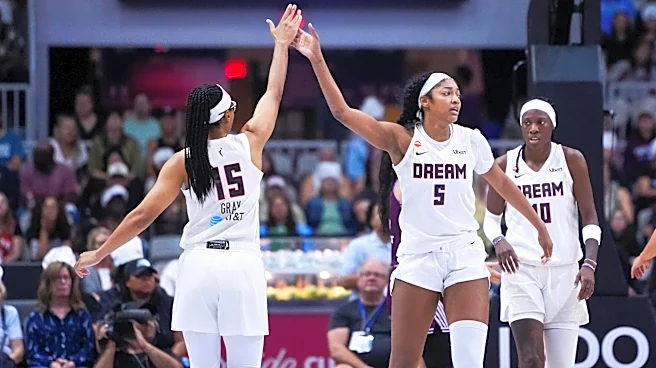
Until the recent return of Brionna Jones, no Dream bench player was playing more than 12.5 minutes per game. Considering how great Atlanta’s starting group is, can anyone really blame head coach Karl Smesko for relying on his best five of Jordin Canada, Allisha Gray, Naz Hillmon, Rhyne Howard and Angel Reese?
The Dream starters, who have shared the court for 358 minutes, the second-most among any fivesome, lead the WNBA with an adjusted net rating of +9.4, with their defense driving their overall excellence. The group, led by steals mavens Howard and Canada, who rank first and second in steals per game, are top-tier at turnover generation.
Offensively, the group’s profile reflects the impact of Reese, with an offensive rebounding percentage of 39.1 percent helping the group post an adjusted offensive rating of 113.9, despite below average shooting. As none of the five are shooting better than Howard’s 35.4 percent from 3, there’s still untapped offensive upside, suggesting the Dream’s five can become even better.
2. Minnesota Lynx: Coffey-Howard-McBride-Miles-Williams

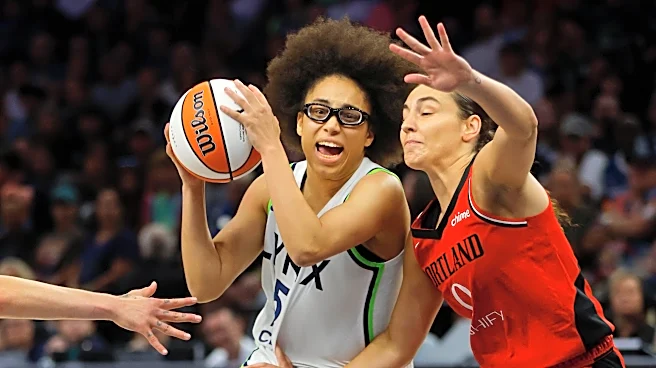
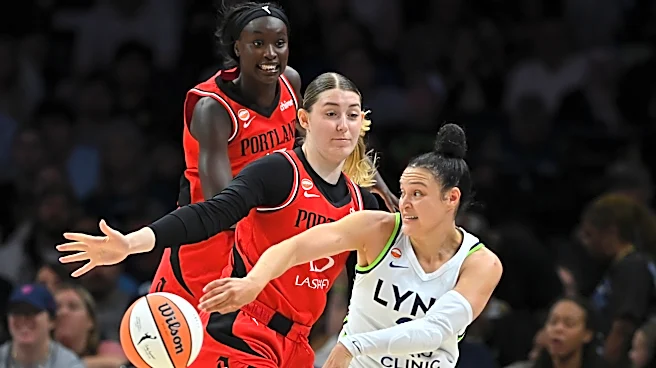
The WNBA’s most frequent five, with over 400 minutes played together, belongs to the league-leading Minnesota Lynx. The quintet of Nia Coffey, Natasha Howard, Kayla McBride, Olivia Miles and Courtney Williams has compiled a +9.2 net rating.
Minnesota finds their magic by making their shots at an elite rate, while preventing opponents from doing the same. Compare their 57.8 true shooting percentage to the 51.5 true shooting percentage they allow. Another electric night from deep from McBride, who had six triples and 33 points in the Lynx’s sixth-straight win, only amplifies the Lynx’s offensive strength.
The complementarity of this group does provoke further pause about the fast-approaching return of Napheesa Collier.
Yes, it seems silly to worry that a former MVP candidate will make her team worse. But, the Lynx have established a special sauce, where the flavors of offensive and defensive strengths offered by the group enhance each other, allowing head coach Cheryl Reeve to cook up another overachieving team.
Interestingly, the very best four-player lineup in the league belongs to the Lynx: Coffey, McBride, Miles and Howard. That group has a +10.5 net rating. The top two-three player lineups again are Minnesota variants, with Howard, McBride and Miles at +10.8 and Coffey, Howard and Miles at +10.7.
That data suggests that Williams is the “most replaceable” of the Lynx starters and that inserting Collier in her stead could, potentially, take Minnesota to another level. Positionally, a Collier-Williams swap makes little sense, as it seems likely that she’ll be inserted for the very underrated Coffey.
3. Las Vegas Aces: Gray-Loyd-Smith-Wilson-Young

The Las Vegas Aces present an example that can ease Lynx’s fans anxieties about Phee’s return.
Sometimes, it’s not about fit, but it’s just about talent.
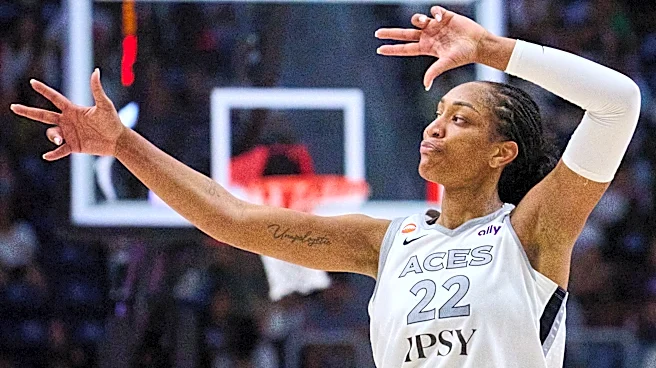
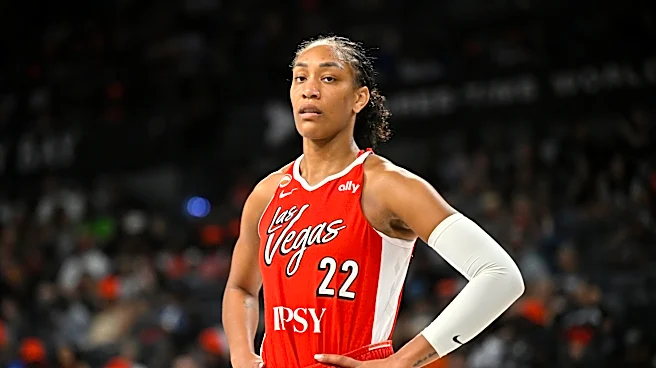
Five five-player Aces lineups rank in the top 15. All of them feature at least two of Chelsea Gray, A’ja Wilson and Jackie Young. Wilson is in four of those lineups, flanked by Young in all four of the combinations. Gray is alongside Wilson and Young in Vegas’ top three lineups, while she and Young anchor the Aces’ fifth-best lineup.
The limitations of the Aces’ ancillary players and the organization’s continual struggle to establish quality depth aren’t irrelevant, but they can be, have been, overcome by the power of their Big 3. It produced a title last season, and another one could be in order.
The Aces’ very best group, with a net rating of +6.4 across 160 minutes, features Jewell Loyd and NaLyssa Smith with A’ja, Chelsea and Jackie. The five are average on the defensive end, but the offense is just too good, as they take care of the ball, hit their shots and when they don’t, have a good chance of recovering the miss.
Vegas’ typical starters, with Stephanie Talbot replacing Loyd, registers a +5.3 net rating across 236 minutes. Although not as strong offensively, this is the Aces’ best defensive unit, likely explaining why head coach Becky Hammon has established them as her first five; they have a defensive rating of 105.5.
4. Indiana Fever: Billings-Boston-Harris-Hull-Mitchell

The Indiana Fever’s best five might be a surprising one. It also might be an unsustainable one.
The Fever fivesome of Monique Billings, Aliyah Boston, Ty Harris, Lexie Hull and Kelsey Mitchell has played just 39 minutes together. But in those minutes, the shooting has been insane, with a 66.2 true shooting percentage. Over 40 percent of this group’s shot attempts have come from 3, and they’ve hit over 58 percent of them.
Such lights out shooting, combined with grabbing 37.1 percent of offensive rebounds, gives the group a 113.0 offensive rating. Defensively, this five also has benefitted from poor opponent shooting.
So, the stats, while stellar with a +5.5 net rating, don’t suggest that head coach Stephanie White should lean all the way into a combination. The sample is too small, and their shooting variance is too wild. However, Harris might be deserving of more than 15.1 minutes per game, despite the fact that she’s experiencing a down shooting season.
5. Golden State Valkyries: Burton-Salaün-Thornton-Williams-Zandalasini

If asked to guess which group of five Golden State Valkyries performed the best together, would you have answered Veronica Burton, Janelle Salaün, Kayla Thornton, Gabby Williams and Cecilia Zandalasini?
Among all the Valkyries’ depth, versatility and adaptability, this fivesome, at least according to the stats, has established the best chemistry, albeit in just 22 minutes. They have a +4.3 net rating, with an offensive rating of 111.1 founded on a high 3-point attempt rate and ball security and a 106.8 defensive rating that is a product of opponent misses and turnovers.
Golden State’s staring five of Burton, Charles, Thornton, Williams and Kiah Stokes, with 80 minutes played, has a +3.6 net rating. Unsurprisingly, this five embodies the Valkyries definitional defensive identity, with a 105.6 defensive rating. The offensie, however, only slightly clears league average due to inconsistent shooting and struggles offensive glass.