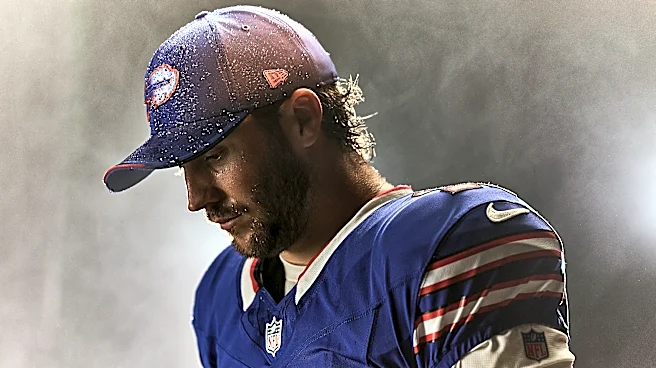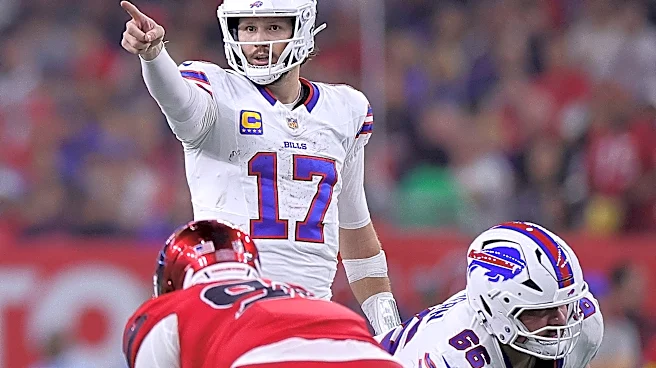


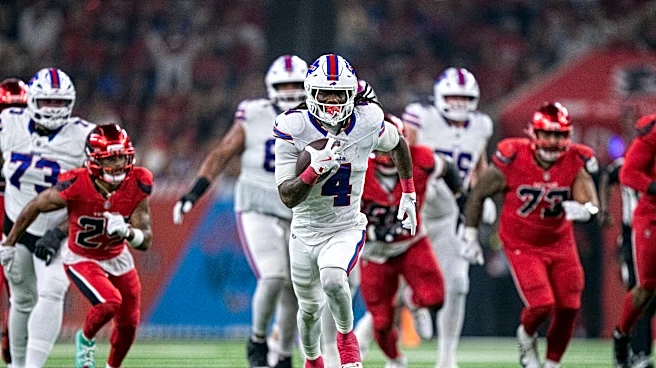
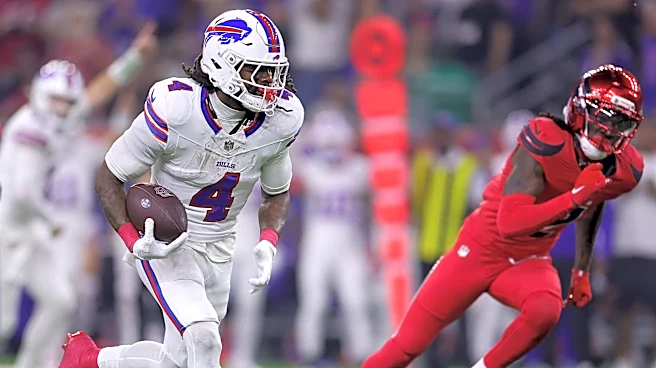
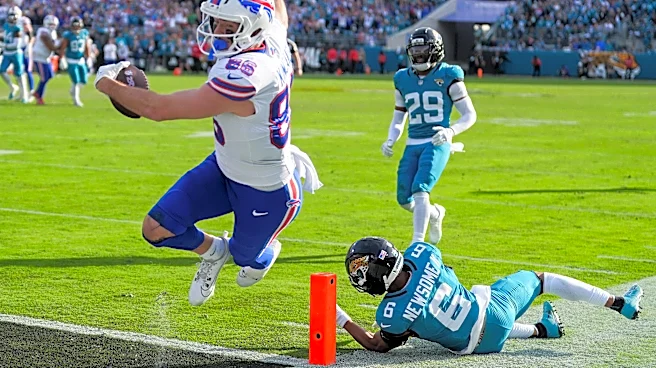
Buffalo Bills quarterback Josh Allen is known league-wide for creating explosive plays outside the structure of the play call. When mere mortals hold the ball at quarterback, it usually leads to disaster. Late throws over the middle, risky tosses into triple coverage, sacks — you name it — and it often happens with later, off-schedule throws.
With Allen, however, those instances are when the magic happens. It’s when he hits Ray Davis fifty yards downfield while Hall of Famer Peyton Manning is yelling
to throw it away. It’s when Khalil Shakir finds spacebetween three defenders on a fourth down to catch a touchdown in such a small window that it would make people who suffer from claustrophobia nervous. It’s when Allen is Allen, as he makes us cringe, hold our breath, cover our eyes, and yell excitedly all in the span of three to five seconds.
Against the Houston Texans, though, holding the football often leads to disaster. With Allen holding the football, scrambling, and searching for big plays down the field, it hasn’t led to success against Houston in the same way it has against other teams. In fact, Allen’s 1-4 career mark against Houston, including a 22-19 overtime playoff loss in his second season, is the worst head-to-head record he has against any team he’s faced so often. His 74 quarterback rating is significantly lower than his career total (94.4), and he completes just 52% of his passes against Houston compared to nearly 64% overall for his career.
Houston has been a house of horrors for Allen and the Bills of late, and one way the team can overcome those struggles is for their top dog to take what the defense gives him in the passing game. What makes Allen great is his ability to break a big play on any given snap, but sometimes, that desire to break the big one leads him to ignore the “easy money” underneath. That puts the Bills in adverse situations offensively, and it allows a defense like Houston’s to do what it does best: hunt quarterbacks.
In Allen’s five matchups against the Texans, he’s averaged at least 2.8 seconds to throw in four of those games. Buffalo lost all four of them. The one time Allen and the Bills beat Houston was when his time to throw was the lowest, coming in at 2.62 seconds on average. Granted, that 40-0 victory likely had less to do with Allen’s throw time and more to do with the lack of talent on Houston’s team in what was ultimately a 4-13 debacle of a season, but it definitely sticks out when comparing his struggles in the other four contests.

In Allen’s first two matchups with Houston, his desire to create big plays while holding the ball was easy to explain. In his rookie year, he averaged 3.15 seconds per pass in a game where he ultimately left with an elbow injury. In the following season, Allen played one of the most reckless playoff games I can remember, holding the ball for an average of 3.28 seconds per pass in the eventual Wild Card loss.
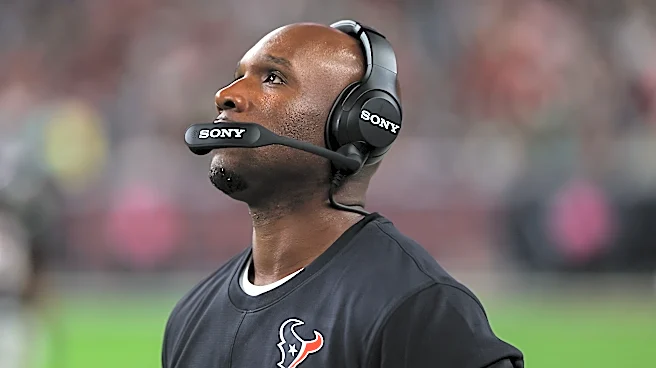
Both of those games were more the product of a young quarterback trying to do too much against a great defense. That can be explained. In the years since Allen has become a star, though, the Texans and head coach DeMeco Ryans have had his number.
In Buffalo’s last two losses at Houston, a 23-20 loss in 2024 where Allen completed just 9-of-30 passes and a 23-19 loss last season where he threw two interceptions against zero scores, Allen’s time to throw was on the higher end. In 2024, he had approximately 3.05 seconds to throw on average, and while he took just one sack, he was pressured often. Last season, Allen had an average of 2.79 seconds to throw. The game plan did seem geared towards shorter, higher-efficiency throws, but as the game wore on, Allen kept trying to make plays downfield—plays that just weren’t there. His time-to-throw number was also lowered artificially by the fact that Houston had an absurd 43% pass rush win rate, which led to a career-high eight sacks in the game.
Allen’s last two games against Houston have seen him eschew the easy money for deep, lower-percentage throws. In that 2024 matchup, especially, it looked as if Allen wanted to prove to everyone, but particularly Stefon Diggs, he could do plenty of damage without his former teammate. In last year’s matchup, there’s an argument to be made that Buffalo’s lack of receiving talent combined with Houston’s front four forced Allen to make chicken salad out of chicken feces far more often than he should have. In both games, Buffalo continuously — and stubbornly — countered Houston’s seven-man drop coverage with a five-man protection scheme, and Houston’s front four still found space despite playing a man down. Buffalo’s receiving corps was unable to do the same.
This week, for better results when trying to solve Buffalo’s Houston problem, the Bills need to rely on quick-game concepts early. Yes, this might mean our favorite bubble screen play call (which, admittedly, did not work at all last November). And while Joe Brady loves the “mesh” concept, running it against what likely will be a zone-heavy Houston defense is not a good idea. Buffalo would be wise to give Allen some easy half-field reads with a built-in checkdown early in the game. It’s been Allen and the Buffalo offense that has been impatient in the recent meetings between these teams; this week, Buffalo needs to keep taking the easy money until Houston’s defense becomes impatient.
Using Buffalo’s advantage in the middle of the field should be a priority this week. Khalil Shakir, Dalton Kincaid, and Dawson Knox need to be the focal points of the passing game, and using newly-acquired DJ Moore as a decoy early and often will help to give those other players space. Does that mean Allen should ignore his newest weapon? Of course not. What it does mean, though, is that I’d rather see him take a five-yard chuck against linebacker Aziz Al’Shaiir before he hurls one into double-coverage with Darryl Stingley Jr. sticking to Moore.

Those deep shots can happen, and they need to at some point, but they don’t have to happen in ways where Allen is left to fend off unblocked defenders. Buffalo should take those shots off of max-protect looks, especially in early downs with their “12 or “13” personnel groupings. Why not use play-action with James Cook to hit Joshua Palmer on a deep crosser on first down? Why not use Jackson Hawes as a sixth offensive lineman while Dalton Kincaid stretches the seam? There are options, but more than we’re used to seeing, I think those options are going to have to come within the structure of the offense rather than after long scrambles where Allen holds the ball.
It might be hard to teach an old dog new tricks, but at 30 years old, Allen still has some time to shift his game depending on the situation in front of him. While the off-schedule big play might be the thing that makes Allen superhuman, in Sunday’s matchup against Houston, Buffalo just needs Allen to be his normal, efficient self.
As good as Allen has been when holding the ball for long periods of time, he has become one of the league’s deadliest quarterbacks when the ball comes out quickly, as well. When the ball comes out in under 2.5 seconds, Allen completes nearly 73% of his passes with a 4:1 touchdown to interception ratio. Sure, that total includes screens, swings, slants, and check-downs, but it keeps the chains moving and keeps the ball in Buffalo’s possession.
In the last two meetings between Buffalo and Houston, it was the Texans defense forcing Buffalo into losses and errors, negative plays which ultimately prevented the Bills from scoring enough to win. On Sunday, Buffalo can flip the script, and the best way for their offense to do that would be to stick to the one authored by head coach and playcaller Joe Brady.
All Time-to-Throw Stats via Pro Football Focus data