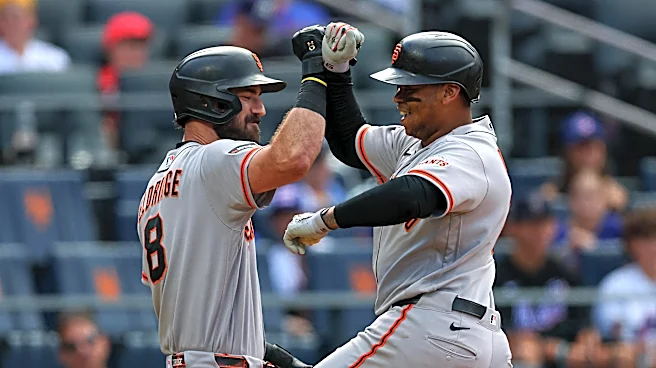


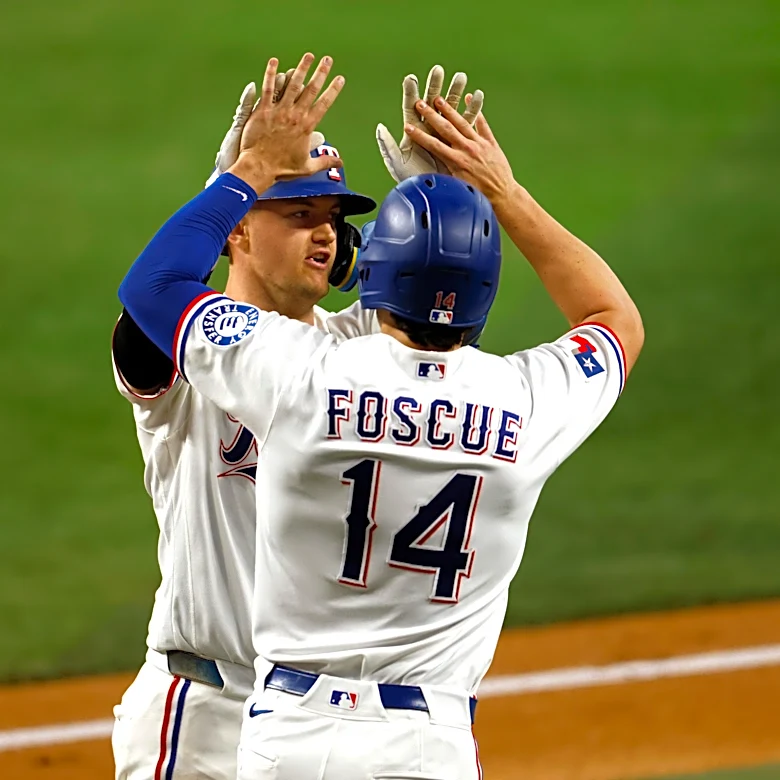
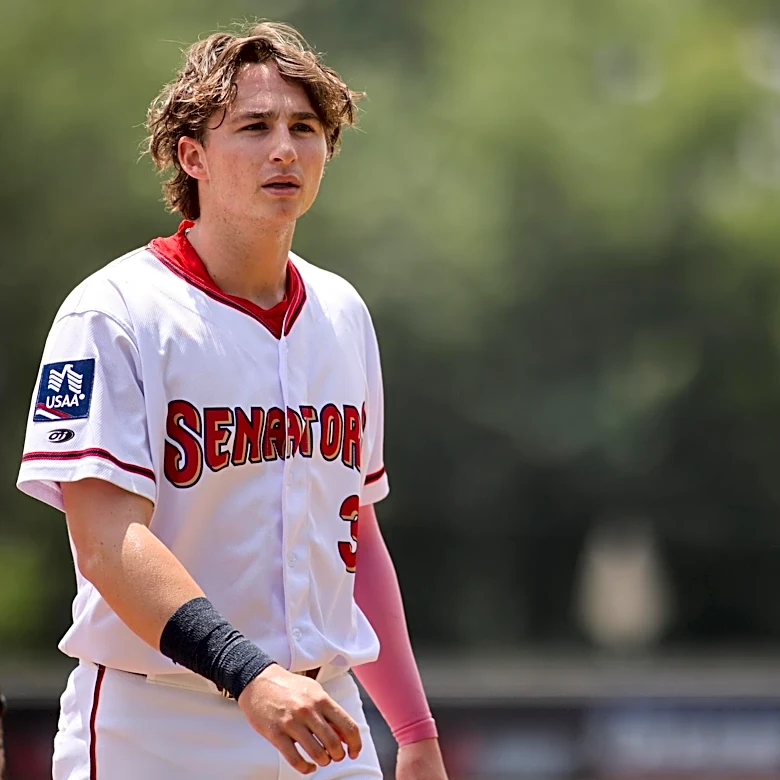
The San Francisco Giants’ wRC+, if you take out March/April, the first 14 days of May, and all of August, was #2 in baseball (112) behind only the Washington Nationals and tied with the Dodgers, Brewers, and Cubs. Sure, they were just 10th in runs, but when the weighted stats are on your side, you’ve gotta use ‘em! Anyway, all that to say that there was a moment in time this season when the Giants had a great lineup. We know their pitching was an ingrown hair that would’ve exploded in October, but how
might their bats have stacked up against the field had they managed to make it to the postseason?
This pointless exercise is inspired by an article on Baseball Savant by David Adler that went up last week titled, “9 stats that will loom large this October.” The Giants do seem to have made their lineup meaningfully competitive in the modern landscape.
Occasionally, anyway.
And just going off the eyes & ears tests (mainly, the looks and sounds of Devers & Eldridge homers).
Statistically, they’re 23rd in runs scored this season and 21st in runs scored over the past five seasons combined. But this season they were (briefly) intriguing enough to spark my imagination! Rafael Devers swaying the outcome of a short series with his bat? Bryce Eldridge and Jonah Cox doing things, too? And what if Matt Chapman and Willy Adames were in the mix? What might a healthy lineup do?
Let’s go through the 9 stats that Adler spotlights.
Bat speed + fast swing rates
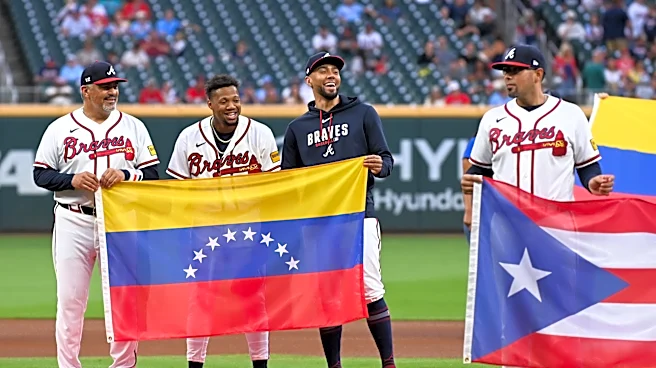
This is a highlight of Atlanta’s lineup, with Ronald Acuna Jr., Austin Riley, Drake Baldwin, Michael Harris II, and Matt Olson all averaging bat speeds of 74.8 mph to 75.8 mph. That puts them all in MLB’s top 50, though none land in the top 20. Bat speed isn’t the be all end all, but it’s worth noting that the top 20 features a lot of great hitters:

What does this have to do with the Giants? Well, to Adler’s point, the key hitters in Atlanta’s lineup are all within the top 50 in terms of bat speed. No other team has five players in the top 50. The Dodgers have 1. The Giants have 0. But the Giants do occupy a lot of slots on the next tier (or four if you want to count Heliot Ramos):
- Bryce Eldridge, 73.4 mph
- (Heliot Ramos, 72.7 mph)
- Casey Schmitt, 72.5 mph
- Willy Adames, 72.3 mph
That’s pretty good! They’re in good company. Bat speed is required to counteract the increased velocities featured in the postseason. But when it comes to fast swing rate — defined as how often their swing is 75+ mph — the Giants don’t measure up. As a team, they have the fourth-lowest rate in the sport (20%). Atlanta is #1 (33.5%). Meaningfully, though, the three “worse” teams than the Giants: Cubs (19.4%), Dodgers (17.6%), and Guardians (16%). The Dodgers and Cubs seem to be doing just fine, offensively, so why should fast swing matter? Per MLB.com,
Similarly to how a hard-hit ball is one with 95 MPH+ of exit velocity as that’s where it begins to “matter,” 75 MPH of swing speed is where you see per-swing production reach league-average, with gains then accruing as swing speed increases (to a point). The difference between a hard swing and any slower swing that did not reach 75 MPH was considerable – there is great value in swinging harder.
Fast swing
.307 BA // .603 SLG // .389 wOBA // 52% hard-hit rate // +0.6 run value per 100
Not a fast swing
.246 BA // .369 SLG // .266 wOBA // 35% hard-hit rate // -3.2 run value per 100
Not referenced in Adler’s article is a look at the quality of contact. The Dodgers lead the sport in Squared-Up contact rate (34.6%). The Giants are #4 (33.4%). Squared-Up is something that only data science could quantify:
A swing’s squared-up rate tells us how much of the highest possible exit velocity available (based on the physics related to the swing speed and pitch speed) a batter was able to obtain – it is, at its simplest, how much exit velocity did you get as a share of how much exit velocity was possible based on your swing speed and the swing of the pitch.
[…]
For Statcast purposes, any swing that is at least 80% squared up is considered to have been “a squared-up swing.”
That means about 1/3 of the time, the Giants attained at least 80% of the highest possible exit velocity on contact. Combined with their lower fast swing rates, you can see how much pitching they’d need to be competitive, as that combo suggests lots of strikeouts and runs scored through dingers.
Lineup diversity
In this section, Adler points out that the Rays’ diverse lineup makes them harder to handle by highlighting their extremes: Junior Caminero’s power and Chandler Simpson’s contact and speed. He has a great image of the two players’ Statcast summary pages with the red and blue bars interlocking, or complimenting each other. The Giants don’t quite have that (because those two players are quite extreme), but here’s the closest they come:

He concludes, “Home runs matter a lot in October, but so does having different types of hitters in your lineup. The Rays can beat you with a bloop or a blast.” Theoretically, the Giants could have done that, too.
Defense is a big difference maker
The third point is that the Cubs’ defense stands out and makes them unique in the playoff field.
And the 2026 Cubs’ advantage in the field is like none we’ve seen since Statcast started tracking. They’ve now prevented more runs with their defense than any team of the last 10 years.
Highest team Fielding Run Value, Statcast era
- 2026 Cubs: +70 runs prevented
- 2018 D-backs: +64 runs prevented
- 2022 Yankees: +58 runs prevented
- 2019 Guardians: +58 runs prevented
- 2022 Astros: +52 runs prevented
- 2019 D-backs: +52 runs prevented
- 2024 Blue Jays: +50 runs prevented
The highest-rated Giants team on this list is the 2023 squad with a +28, good enough for 39th in the Statcast era. You can thank Patrick Bailey and Thairo Estrada for that (and a little bit Brandon Crawford).
The 2026 Giants are 24th in MLB with a -18. The only playoff team in the bottom third is the Philadelphia Phillies (-15, 23rd). So, here’s where the defense part of the “playing winning baseball with pitching and defense” shows up as a huge drag on the Giants.
Wait, we’re not talking about pitching
Okay, 4 of the 9 categories are about pitching. Nobody wants to talk about the Giants pitching or imagine what it would’ve been like had this group stayed healthy and somehow made it into the playoffs. But, Adler’s emphasis is on unique qualities, the big pitches that can swing a short series. He talks about Skubal’s dominant changeup and how it has been one of the best secondary pitches in the game over the past two postseasons (and past three seasons). How Jacob Misioroski’s fastball velocity as a starter should be a difference maker (“In the regular season, two out of every three fastballs Misiorowski throws are 100 mph or faster. Over 40% are 101 mph or faster. Over 20% are 102 mph or faster. Almost 10% are 103 mph or faster.“). The Yankees’ fastballs have different shapes and movements from pitcher to pitcher, and while that doesn’t scream dominance like Misiorowski’s velo, it’s sort of like the Caminero-Simpson comp above, where there’s simply quality extremes that can be hard to stop. And, finally, he mentions how dominant the Padres’ bullpen has been all season.
[By] Statcast’s expected ERA metric, which takes into account a pitcher’s quality of contact allowed, strikeouts and walks, the Padres have three top-10 pitchers: Bradgley Rodriguez (10th), Adrian Morejon (seventh) and, of course, Mason Miller (first).
And talks about Miller’s dominant, unhittable slider.
My post is about the lineup, so I’ll just point out that not even Logan Webb’s arsenal ranks highly — and that’s with removing 2026 from the filter. They don’t have a Skubal, a Mis, or intriguing pitch design with multiple fastball types. In fact, one of the questions in-season was whether or not the rotation of Webb-Landen Roupp-Trevor McDonald simply let hitters become comfortable facing a specific arsenal. And the Giants reliever corps does seem to be a lot of sinker-slider guys, too.
The Giants plainly don’t matchup in the pitching area, at least for this year. They’ve had a lot of pitching injuries and been mostly bad when they were healthy, but I’m sure the front office feels pretty good about their pitching plan and acquisition model going forward, because it’s their plan.
The importance of catcher defense
Adler emphasizes Adley Rutschman’s game-changing defense (+11 Catching/Fielding Runs) but also mentions how critical his excellent ABS challenge “ability” could be in a playoff series, getting strikeouts in key situations. Would a healthy Giants team with Patrick Bailey been a big deal? Well… actually… while Bailey’s remains good (+6 Catching/Fielding Runs), his ABS skills aren’t special: 55% success rate, but also — and I’m not sure what this stat actually means, but it’s what Adler sorts the leaderboard by — just 39th in something called Net Overturns vs. Expected. Daniel Susac and Andrew Knizner measure as good or even slightly better than Bailey.
The power of power
Kyle Schwarber and Bryce Harper are significant power threats in the Phillies’ lineup because they’re among the best hitters against fastballs.
Highest batting run value vs. fastballs, 2026
- Yordan Alvarez: +32 runs created
- Kyle Schwarber: +30 runs created (27 HR, most in MLB)
- Bryce Harper: +28 runs created (18 HR)
- Willson Contreras: +25 runs created
- Ben Rice: +23 runs created
They can slug velo, too. Against fastballs 97 mph or faster this season, Harper is slugging .523 with three home runs. Schwarber is slugging .525 with six homers, the most of any hitter.
Rafael Devers cracks the top 10 with a +20 (8th as of this writing). Bryce Eldridge is +11 and ranked in the forties and with an interesting group of other +11s: Freddie Freeman, Matt Olson, Nick Kurtz, Seiya Suzuki, and Sal Stewart.
Against 97+, Devers slugged .576 with 4 homers while Eldridge slugged .630 with a pair of homers. And just because you deserve something nice, here are both of them:
So, it’s not a stretch to say that the Giants had the offensive firepower to compete in the 2026 MLB postseason… if they’d stayed healthy. And if they’d had the pitching and defense to get them there. You can see the contours of what a successful version of this roster could be. Now it’s up to Zack & Buster to compliment its strengths with the right mix and the right coaching before those strengths age out.