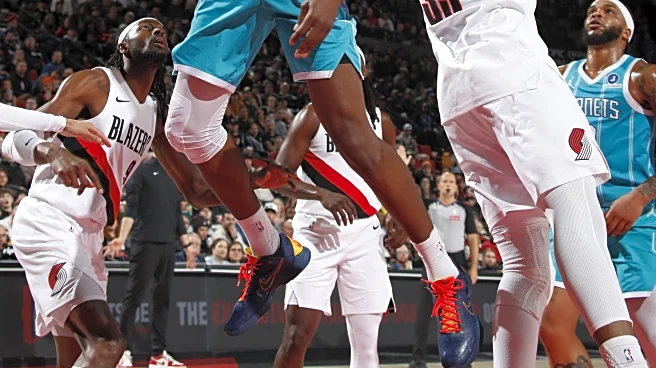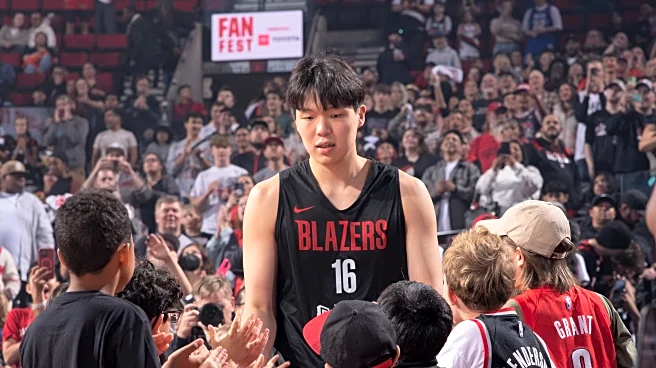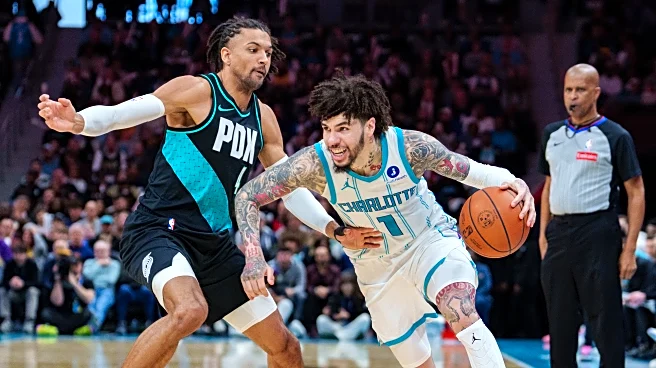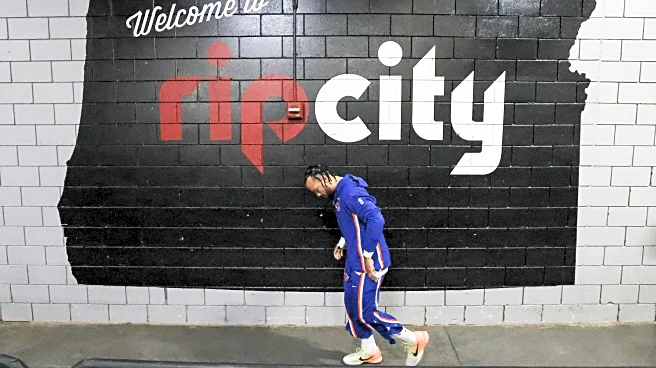

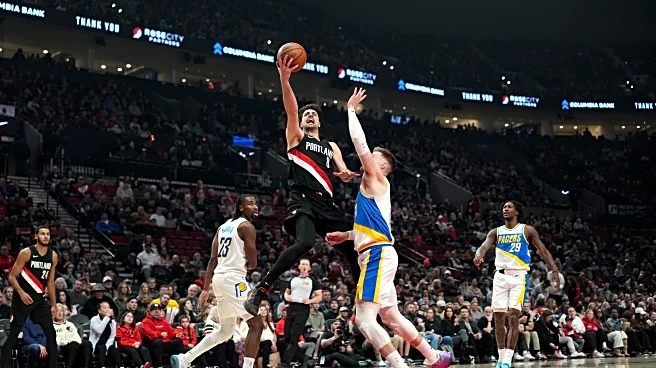
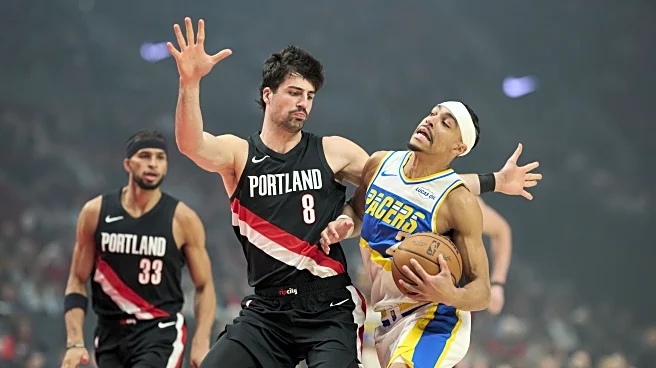

I had the privilege of attending the Moda Center as the Portland Trail Blazers played the Charlotte Hornets on Tuesday night as part of Blazer’s Edge Night, 2026. The game itself was interesting. I’ve already shared some thoughts on it here. As I got the chance to journey home, I settled into other reflections that often cross my mind, what visiting Portland and being in the Moda Center was like.
First of all, let’s divert to the major topic of the season. With arena renovation in the funding process,
many people are asking whether the facility really needs it. Given that, I resolved to take a hard and intentional look at the building itself as I occupied it for an evening.
For those advocating for renovation, I kind of get it. The arena has gotten an electronic facelift with huge screens on either end of the oval and some of those oh-so-vogue LED blinkers adorning the aisleways and walls. But the flashy lighting still illuminates an arena that feels dark, concrete, and frankly, dated.
Portland sits in one of the most unique and beautiful regions in the nation. The environment is unique among NBA franchises. The local populace prides itself on same. Moda Center, as currently constructed, reflects none of this. Floors and walls are grey concrete. Seats are plastic. There’s no wood, no since of organic beauty or greenness, no water reflections or hues either. I understand the team colors are red and black. I wouldn’t advocate a change away from that motif. But shouldn’t there be some indication of where you are, some idea that you’re in Portland, Oregon instead of a functional, but largely industrial-seeming, building camouflaged by flashing lights and whiz-bangs?
Perhaps this is an odd observation, an unrealistic expectation, but there’s no real communal space either, nothing that would connect fans to other fans. People clump together in four places: the entryways and exits to the building, the stairways when in transit, concession lines, and restrooms. Most of the food venues lack chairs or places to sit. The few that have them are still in the business of turning over tables, getting you in and out so the next customer can drop their cash. There’s no place to take a breath, relate, or congregate. Believe it or not, the places with the most organic interaction between strangers are the restrooms. Really?!?
As a result, people around you become obstacles and annoyances—keeping you from moving where you want to go, getting the snacks you’re hungry for, or peeing—and nothing else, ever. Nowhere in architecture or design are fans invited to experience the same thing together, bonding like tourists might bond together when viewing a landmark at the same time. It’s all here, there, and outta my way.
The basketball court and its action are meant to be the main landmark, of course, but even when everyone is gathered around it, interaction is difficult. The seats are hard and slightly too close together in a way that brings you in uncomfortable proximity to your neighbors. At first this might seem like a paradox. “You said you wanted closer interaction! What’s closer than accidentally bumping knees and elbows with the people next to you multiple times?” Oddly enough, being too close triggers the same view of neighbors that you have on too-crowded plane flights. Space comes at a premium. Your neighbor usurps your territory. Even if they’re polite and don’t make physical contact, don’t scream too loudly, and don’t say offensive things, there’s still a sense of being too close for comfort. Mentally, you have to put up a barrier to compensate. Like the middle-seat person on a jet, you shut down, tune out, try to ignore. Any negative contact gets amplified. But even positive contact is kind of unwelcome. “Don’t break the personal bubble, because physically you’re already inside it. Psychologically and socially that’s a bit too close.”
Obviously, we don’t want or expect seats as roomy as a living room easy chair, with barriers and insulation from your neighbors. That’s unrealistic in an arena setting and would also impede contact. But fans do need enough space to feel like they have their own seat (and arms and legs) from which they can reach out safely and interact with each other.
The end result, as I observed it, seemed to be parties huddling together with the people they came with in isolated pods, with as much visible and mental space between the next pod over as possible. I’m not sure that’s the communal effect we’re looking for in the experience. It sure doesn’t give me reason to come back if the game, itself, doesn’t support it.
This sense of isolation was amplified by an issue that appears to come and go by season. The sound effects were LOUD. Like, 200 billion decibels loud. To their credit, the arena team avoided the all-too-familiar plague of incessant interruptions that made talking all but impossible, a failing they’ve had in years past. Interventions, ads, and announcements were appropriately timed, of reasonable length and quantity. I could hear my neighbors about as much as I heard the sound system. That was great! But when the sound system burst forth? Wooof. The opening music had the same effect as those movie-theater THX introductions, except stuck on the highest volume levels for a sustained amount of time. From the get-go, the arena audio had you sitting back in your seat being blown away instead of leaning forward, engaged. We were consuming a show more than we were wrapped up in the action.
The problem is, this isn’t the best of the Blazers. I’ve had interactions with quite a few people who actually work in the organization. They’re great! Almost to a person, they’re warm, engaging, and seem enthusiastic about what they’re doing. In my experience, this is true of security guards, ticket agents, arena crew. Real warmth and humanity pulse within this organization. It’s a very “Portland” feel.
It also feels like, once the show starts, almost none of that comes through. Suddenly the mode shifts and we’re into corporate glitz, L.A.-lite, this is what professional NBA Basketball should be. The whole thing feels clinical. The distance between the organization’s beating heart and the arena experience is wide. And I think that’s kind of sad, because this is what makes Portland different.
I think real moments happen in a few places. Deni Avdija expressing himself on the court, reassuring the crowd that they’ve got this, is pure gold. The people respond to that. On Blazer’s Edge Night a couple (way too few) organic chants started among the crowd. When those upper-deck kids’ voices took up the call, it was pure magic. You could feel the crowd unite. I also love the community feeling of the national anthem, or when a really earnest local dance team takes the floor for halftime. Suddenly everything softens and becomes more human.
But those moments don’t happen often enough. Instead it’s prepackaged video reels, notable mostly for the fact that the person in them is famous rather than any relatability, plus a bunch of advertisements. Even if the Blazers’ video and technical-effects staff is the most accomplished in the league, the product coming out doesn’t take full advantage of that. It’s like watching a bunch of fully-trained chefs church out Applebee’s-Sysco lunches from a microwave. Yeah, it’s food. Yeah, we’ll eat it because it’s lunchtime. Where’s the soul? What’s making me feel better about this experience in a unique, irreplaceable, “Glad I was here today” way?
I don’t think this would be too hard to fix. The Blazers just need to commit to becoming the beating heart of Portland again, realize their distinct advantages in doing so (instead of trying to be the 23rd-best version of the Knicks and Lakers), and decentralize the corporate aspects of the experience in favor of the communal. They need to close the distance between themselves and the fan in ways that speak to hearts and souls, not just eyes and ears.
What would that look like? A few suggestions.
You know that basketball giveaway they do for season-ticket holders? Cool. They should give those people autographed balls for all the money and time they’ve invested. Love it. But why is the focus of the video, “Here we are, the Blazers, giving our precious and unique autographed ball signed by our super-special players to one lucky fan who has paid us a lot of money over the years?” Why aren’t you giving that person context and value and voice too? Why doesn’t the team celebrate the bond and relationship with that particular person that night, showing us who the fan is too? It’s probably as simple as inviting them early (or traveling to their house), sitting down with a video camera, and asking them what they value about the team, their favorite players and memories over the years, what they love about Portland, etc. You get 10-15 minutes of interview and edit it down to 45-60 seconds. Show that on the arena screen right before the presentation and then give the fan the ball, along with your thanks.
This way instead of hearing the Blazers talk about themselves from an exalted mountaintop, we hear about the organic, ground-level relationship between the Blazers and their fans from the fans themselves. These videos make us want to be fans as we directly identify with one and hear how heartwarming and vital that is. People in attendance hear one of us say how much this all means instead of having the Blazers remind us how much it means in a kind of self-interested, aren’t you lucky way. We say, “I could do a video like that,” instead of, “Gee, I wish I could have a ball.” The gift reflects the relationship you’ve already demonstrated rather than replacing it.
When Disney advertises their theme parks, they don’t show videos of empty rides that say, “Look how cool our product is!” They sure don’t give away commemorative t-shirts and trophies in their ads. Instead they show people enjoying the rides and parks, then make those people as relatable as possible so you want to become one of them. The Blazers have the opportunity to do the same thing here.
Let’s move to the players. Can we be done forever with those videos where someone says, “Hi, I’m Player X,” with a tone and posture that’s awkward as HECK? We know you’re Player X. We literally came to see you. We’d love to relate to you better and personalize you, but that doesn’t come from contrived answers to awkward questions in a prepackaged pose. The Blazers video staff should begin to hear, “Hi, I’m Player X,” the same way we all hear a rap opening with the line, “My name is Bobby and I’m here to say…” Yeah…let’s try something different.
A few years ago the team did candid sit-downs with players asking them goofy questions like what’s their favorite vegetable (or whatever). Those were decent. Players naming the other player who’s most likely to X, Y, or Z works too. Or why not just short videos of players meeting fans? Like, could you put your hand on the shoulder of a kid or something? I know not everyone is cut out for that, and it’s fine. We don’t need to see every player in videos, the same way we shouldn’t see every player shooting threes. But give us something that makes these guys more relatable, less produced: hobbies, places to eat, where they go for fun…anything that makes them seem more like a part of the region. If Scoot Henderson collects Pokemon cards and eats at a downtown Greek restaurant, I want to know that! That’s going to make him somebody’s favorite player instantly.
There’s tons more we could talk about, but you get the idea. Hey Blazers, we want to be on this date with you. Maybe just unbutton the top of your shirt, exhale, and let us in? Show us the real you, and how it relates to us. We’re going to like you. It’s not like we’re here for the wins or the big-time show anyway. We’re making do without either! Just be real. Stop talking to us like we’re on an Instagram Reel when we’re sitting right across from you.
Oddly enough, this all came clear to me my last day in Portland. We had a staff dinner that evening, but I was driving home after, no extra night staying. Check-out time at the hotel was noon but the dinner wasn’t until 7:00. I had that whole span of time to kill out in the wild.
Fortunately I had my laptop and had been meaning to start a book I’ve had in the works for a while, so I decided to do the stereotypical thing and sit in a coffee shop, writing.
I knew I didn’t want a big-name franchise shop. This is Portland! The only time “Star” and “Bucks” should come into play is during Giannis Antetokounmpo trade talks. I was also feeling somewhat keenly the grizzled-veteran experience of realizing how much the city had changed and how corporate so many things had become. (The Blazers aren’t alone in that vibe, right?) So I just googled “Coffee shop near me” and picked a random, homespun one a couple miles away.
The place I found, blindly, was called Great North Coffee on Alberta Street. Apparently it’s a micro chain, like four locations. Good enough. This iteration was small, almost hidden in its building. It seemed like a decent place to try. I knew if it wasn’t, there were approximately 100 alternatives within easy reach anyway, so no risk besides six bucks plus tip.
The minute I walked in to Great North, I exhaled. The place seemed vintage without being contrived. There were no airs. It was just homey. And the baristas! I’ve been to LOTS of coffee shops over time. I’ve experienced corporate efficiency, fishing-for-tips niceness, “too hipster for you” pretensions, and the sense that this was THEIR space and you’re just occupying it for a moment. Great North was different. I ended up staying for six full hours. Every…single…barista had the same vibe: This is just us. This is our home. You’re welcome in it. I hope what we make is good. Let us know what you need. As it turned out, their whole theme and mantra was, “Just be friendly to each other.” It permeated every bit of the experience from physical environs to product to personal interactions.
Somehow, in a little hole-in-the-wall on Alberta Street, I found the Portland vibe I had been missing. It came from people who knew who they were, knew why they were there, and welcomed others into it with graciousness. They had literally the best chai I’ve ever tasted (so much so that I loved it hot, and I don’t like hot drinks), but even had it been mediocre, I would have stayed because of the business and the people operating it.
That kind of direct throughput from individual heart to consumer—channeled through corporate processes without being co-opted by them—is what the Blazers need too. They may not be the same small-town, homey-feel operation they were back in the days of their corporate youth, but feeling like that—including the person-to-person connection, community building, and closeness to team—is their key to distinction and identity in an increasingly detached, industrial world. Who cares what the rest of the league thinks? This team doesn’t have to prosper in New York or Chicago or even Salt Lake City. It just needs to be the best Portland it can be.
In any case, thanks to the Blazers, to everyone I met and talked to at this year’s Blazer’s Edge Night, to the staff at Great North Coffee, Alberta St. (who had no idea they’d end up in a blog post and would wonder what the heck this site was anyway), and to all of you who made this possible. It’s always fun to see the team evolve both on and off the floor. Let’s see what happens next year!