
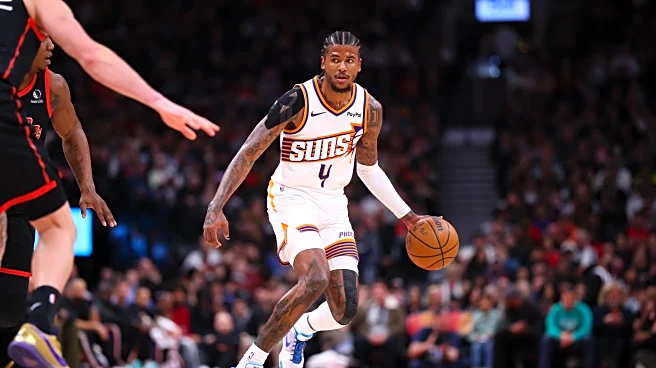
Welcome to SB Nation Reacts, a survey of fans across the NBA. Throughout the year we ask questions of the most plugged-in Suns fans and fans across the country. Sign up here to participate in the weekly emailed surveys.
It is one of those conversations that keeps popping up everywhere around the Phoenix Suns ecosystem. In text threads between fans. In the comment section on Bright Side. In those casual basketball debates that happen around the proverbial office water cooler.
What should the Phoenix
Suns do at the power forward position?
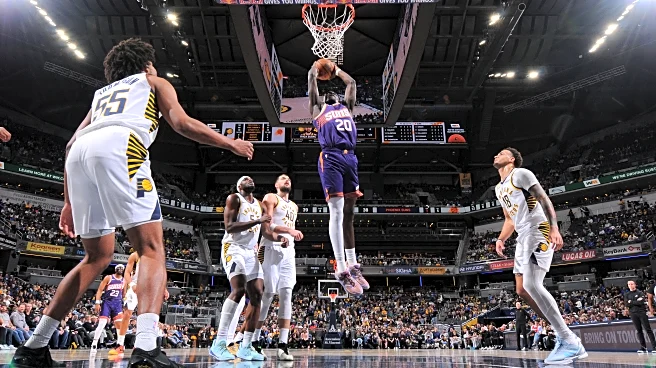
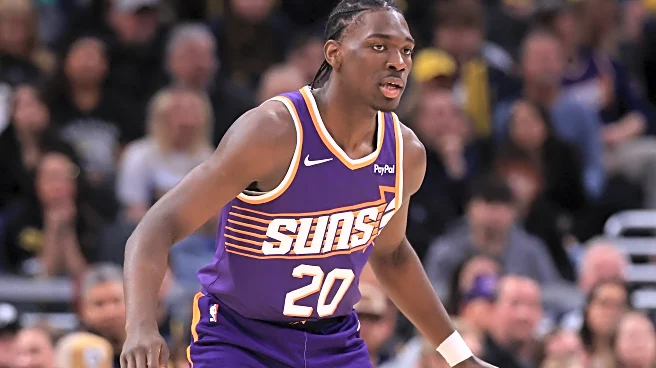
It is a question that has followed this team all season long, and it started last summer while the roster was still being assembled. The reason is simple. The Suns do not have a traditional power forward in terms of size. That conversation began months ago. When training camp approached, the debate centered around two names. Royce O’Neale, who stands 6’6” according to Basketball Reference, and Ryan Dunn, the 6’7” sophomore out of Virginia.
The argument for Royce was easy to understand. He spaces the floor. He understands the system. He brings veteran stability to the lineup. The argument for Dunn leaned in a different direction. He is longer. More defensively inclined. Slightly taller. The type of player who could bring energy and length to a position that traditionally demands both.
That is where the conversation began. It has been the ongoing conversation all season long. And when the Suns lose a game where size becomes the deciding factor, it is the first place people look. The power forward spot. It becomes the easy explanation. The logical one, too. A team with limited size runs into a bigger lineup, the paint starts to feel crowded, rebounds slip away, and suddenly the conversation circles back to the same question: Is there an opportunity to improve that position?
Now we are late in the basketball calendar. The Suns are entering the homestretch with less than a month remaining in the regular season. At this stage of the year, drastic changes are something most teams try to avoid. Rotations have rhythm, players understand their roles, and you do not usually start pulling major levers unless you absolutely have to.
But a new element has quietly entered the discussion. Rasheer Fleming.
The Suns second round pick in the 2025 NBA Draft has begun to carve out real minutes, and more importantly, he has begun to make those minutes matter. When a young player starts producing, it changes the tone of the conversation. Suddenly, the theoretical future becomes something you can see on the floor. And that is why the power forward debate has picked up a little more steam lately. Rasheer Fleming brings something different to the conversation.
He has the size that people have been talking about all season. At 6’9”, he naturally fits the physical profile of a modern power forward. He is long, sporting that condor-ish 7’5” wingspan, and he can stretch the floor with his three-point shot. He has the ability to affect plays defensively in ways that Royce O’Neale simply cannot. The weak side blocks. The length contesting at the rim. The kind of defensive moments that make you pause and say, okay, there is something here.
So the conversation evolves. And honestly, it is a fun one to have. Who should start at the power forward position for the Phoenix Suns?
Should it remain Royce O’Neale, the veteran who spaces the floor, understands the system, and has been a steady part of the lineup all season? Should Rasheer Fleming step into that role and give the Suns the size that people have been asking for since October? Or should Ryan Dunn get another opportunity, seeing as he is still a sophomore, and there is real value in learning what you have in a young player before making long-term decisions?
That is the question on the table. And it is the subject of today’s Suns Reacts.