

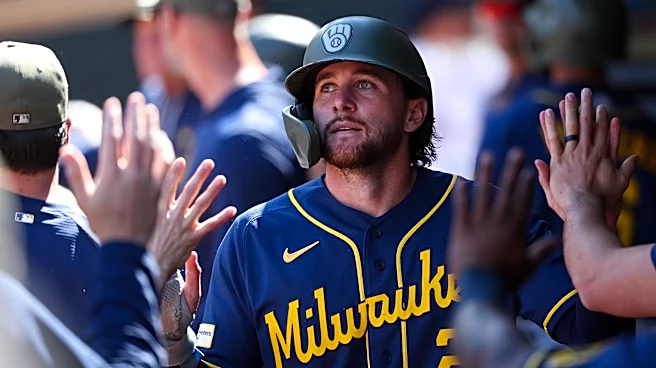
The Brewers do not hit many home runs. When play starts on Friday, they’ll be last in the majors. While I’d be surprised if the Brewers finish the season in last — remember, Jackson Chourio, Christian Yelich, and Andrew Vaughn have all missed significant time, and they’ve closed the gap somewhat in the last week — it does seem like power isn’t going to be a major strength for this team.
But even if I don’t believe the Brewers are going to finish last in the league in homers, it got my twisted baseball-history
brain working. I wanted to know: has a team that finished last in homers ever won the World Series?
The answer is yes, but it’s only happened five times, and two of those occurred more than 100 years ago. But surprisingly, the most recent occurrence isn’t from all that long ago. Let’s look back.
Ancient history: 1906 White Sox
I’d argue that the first two instances shouldn’t really count. The first is the 1906 Chicago White Sox, in what was just the third World Series ever played.
If you aren’t familiar with how baseball was played in 1906, get ready for some numbers.
The White Sox hit seven home runs in 1906.
The league leaders that season, the Philadelphia Athletics, hit 32. The A’s played in Columbia Park, where it was 340 feet down the left field line and — wait for it — 280 feet down the right field line.
Teams just didn’t hit homers in 1906, or, really, in any season prior to 1920. So even though the White Sox finished 16th out of 16 in home runs, they were an above-average offense, at least from a run-scoring aspect — they were sixth in the league in runs scored (and fifth in stolen bases).
Chicago was led by one of baseball history’s most underrated players, the Hall-of-Fame shortstop George Davis; he was 35 in 1906 but led the team with a 120 OPS+ and still had a sterling defensive reputation. The pitching staff had a couple of stalwarts, as well: Big Ed Walsh was on the younger side of his career but was one of four White Sox starters to throw over 200 innings with an ERA+ of at least 109. But Walsh was not Chicago’s best starter that year: that would be Guy “Doc” White, who went 18-6 with a league-leading 1.52 ERA.
So, Chicago didn’t hit homers, but they played good defense, ran the bases well, and pitched well.
Not-quite-as-ancient history: 1924 Nationals
This team also maybe shouldn’t count. The 1924 season is technically outside of the Deadball Era, but barely: no team in baseball hit 100 homers, and only three had more than 72. The Yankees led the league with 98, but 46 of those were hit by one guy.
So, while the Nationals did have the fewest homers in the league — just 22 — they were not a bad offensive team. Their leader that season was the Hall of Famer Leon “Goose” Goslin. He put up a .344/.421/.516 batting line (143 OPS+) and did lead the team with 12 home runs, but he also hit 30 doubles and 17 triples and led the American League with 129 RBIs. Another Hall-of-Fame outfielder, Sam Rice, also played for that team; he hit only one homer (of his 2,987 career hits, just 34 were home runs), but had 39 doubles and 14 triples.
But the player who was really carrying the team, along with Goslin, was arguably the greatest pitcher of all time, who, at age 36, was having a last hurrah: Walter Johnson.
In 1924, the Big Train led the AL in almost everything. He won the pitching Triple Crown with 23 wins, a 2.72 ERA (149 ERA+), and 158 strikeouts, and also led the league in FIP, WHIP, hits per nine, strikeouts per nine, strikeout-to-walk ratio, and shutouts.
A couple other starting pitchers played well for the Nationals, particularly Tom Zachary, but they also boasted a unique weapon for the time: an elite bullpen piece. Firpo Marberry threw 195 innings in 50 games (14 of which were starts) and technically led the league in saves (though that stat wasn’t kept track of for several more decades) with a 132 ERA+.
It was the pitching that really stood out for Washington: they led the majors with a 122 ERA+, way ahead of the next-best AL team. But that wasn’t all they did for run prevention: while it’s hard to know for sure, basic fielding metrics suggest they were the best defensive team in the league. Their shortstop, Roger Peckinpaugh, was not only the subject of a good Joey Votto bit but is credited as the 1924 league leader in dWAR by Baseball Reference.
Modern-ish times: 1965 Dodgers
The next team isn’t from the Deadball Era, but it’s from the closest thing this side of the 1920s.
There’s not a ton of mystery here: the 1965 Dodgers had peak Sandy Koufax. They also got good seasons from two other starters, Claude Osteen and another Hall-of-Famer, Don Drysdale. Out of the bullpen, the Dodgers had a major weapon, Ron Perranoski, in a fireman role.
Offensively that Dodger team was dreadful, but they found a way. They had just an 89 OPS+ and no player on the team had more than 12 home runs, but they were by FAR the league leaders in stolen bases: 172 of them, with second place at just 110. The reason for that was the shortstop, Maury Wills. Wills had already won an MVP in 1962, and he finished third in 1965 on the strength of his league-leading 94 steals (more than all but four other teams). Wills was also a good fielder, as were center fielder Willie Davis, second baseman Jim Lefebvre, and catcher John Roseboro.
The Dodgers really didn’t have anyone who could hit, though. Second baseman Jim Gilliam, who stands out among players of his time for having a high walk rate, led the team with a 121 OPS+; he played only 111 games and hit just .280 with only 27 extra-base hits in total, but he had a .374 OBP, and it was a bad offensive era and a bad offensive ballpark.
This is a clear example of a team that was led by its pitching staff. They led in team ERA by a fairly significant margin; that was partially boosted by Dodger Stadium, but they were just behind the league-leading Pirates in ERA+. They were also first in FIP, and that, combined with one of the best defenses in the league, is what put the Dodgers in the World Series. Koufax did the rest.
A painful memory: 1982 Cardinals
I swear I was not expecting this when I started researching this project, but one of the three teams in the last 100 years to win the World Series with the fewest homers is also the only team to ever beat the Brewers in the World Series.
It was a matchup of extremes. The Cards were dead last in homers with just 67, while the Brewers were the most powerful team in baseball and hit 216 homers, 30 more than anyone else. The Brewers had a 121 OPS+, best in the league by a lot, while the Cardinals were at 95.
That 95 OPS+ mark, though, was far from worst in the league — it was tied for 15th, just below the middle of the pack (remember there were 26 teams then). While the Cardinals didn’t hit homers, they did several other things well: they were second in the league in stolen bases, tied for second in triples, and seventh in walks.
They also played excellent defense, something that’s becoming a trend here. This was Ozzie Smith’s first season in St. Louis. He won a Gold Glove, and Baseball Reference has him as the league’s best defensive player that season. Keith Hernandez also won a Gold Glove at first base, second baseman Tom Herr probably should have, and third baseman Ken Oberkfell could also flash some leather.
Those Cardinals were interesting as far as this exercise goes because unlike the teams we’ve already looked at, they had a good-but-not-great pitching staff. They were third in the league in ERA, but several other teams were close behind; their FIP was a solid but not spectacular 10th in the league. Among their starting pitchers, only Joaquín Andújar stood out: he really did have a fantastic year and went 15-10 with a 2.47 ERA (148 ERA+) and was seventh in Cy Young voting.
But no one else in the rotation stands out, and while Bruce Sutter did lead the majors in saves (36), he had a middling 2.90 ERA (126 ERA+) and significantly worse FIP (3.63). In those bonkers times, though, when awards voters were fetishizing saves, Sutter finished third — ahead of Andújar! — in CYA voting.
Modern times: 2012 Giants
This is the one that’s kind of hard to believe. The first thought that came to my mind was that this must’ve been one of those Giants teams with a fantastic pitching staff, but that’s not the case — Tim Lincecum, the back-to-back Cy Young winner in 2008 and 2009, had already fallen off a cliff, and the 22-year-old Madison Bumgarner wasn’t yet much of a contributor (at least until the Giants were actually in the World Series). Matt Cain was the team’s best starter, but he’d had other better years.
Sergio Romo had an excellent season out of the bullpen, but the Giants’ closer situation was in flux all year; the team leader in saves was Santiago Casilla, who had a 4.14 FIP and 125 ERA+ while picking up 25 suspenseful saves. (The Giants did make Romo the closer before the postseason, and he was nails in October: he finished his 10-game postseason run with a 0.84 ERA, and he saved three of four games in the Giants’ sweep of Detroit.)
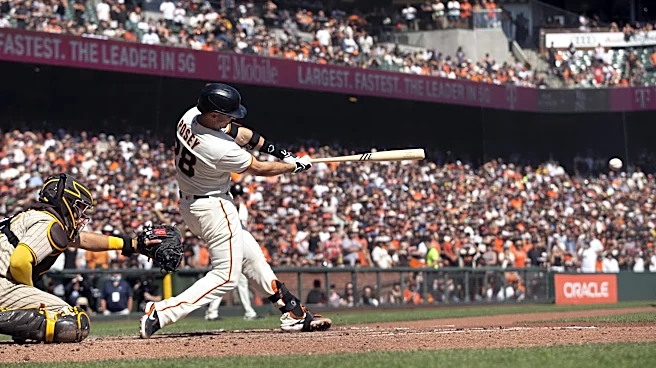
It’s still a little difficult to understand this team’s success, but the most compelling reason is that Buster Posey was 100% deserving of the MVP award he won in 2012. Posey won a batting title and led the majors in OPS+ (171), he hit 39 doubles and 24 homers, and he led the NL with 7.6 WAR via Baseball Reference. But FanGraphs’ framing-influenced numbers think he was even better than that and have him with 9.8 WAR in 2012, the best season ever by a catcher via fWAR.
San Francisco also got a big partial season from Melky Cabrera, who hit .346/.390/.516 in 113 games and would’ve won the batting title had he qualified, but he was suspended for steroid use in August of that season and missed the playoffs. Center fielder Ángel Pagán had the best full offensive season of his career. Pablo Sandoval played pretty well (in only 108 games). Brandon Belt had a 123 OPS+ and 27 doubles but homered only seven times. Marco Scutaro only played 61 games but hit an astronomical .362.
It was a lot of decent offensive players who just didn’t hit homers. San Francisco hit only 103 home runs (the Yankees led the way with 245), but they were 10th in doubles, first in triples, 10th in stolen bases, and fifth in batting average. They had several part-time players who performed quite well, so when starters were missing time, the gap between them and their backups was small. They also play in a tough ballpark.
Put all of that together, and despite being last in homers, the Giants were fourth in OPS+. They were a good offensive team; they just didn’t do it the way we’ve gotten used to. Honestly, they were good in a way that should look familiar to fans of the 2025-26 Brewers.
The bad news
So, there are the reasons to be optimistic that even if the Brewers don’t get out of the home run basement, they can still compete.
Now the reason to be pessimistic: recent trends suggest that this might not be possible anymore.
Since 2020, all six World Series winners have finished in the top four in baseball in homers:
2020 Dodgers: 1st
2021 Braves: 3rd
2022 Astros: 4th
2023 Rangers: 4th
2024 Dodgers: 3rd
2025 Dodgers: 2nd
This unsurprisingly aligns with the trends that some fans bemoan in modern times: that players have stopped putting the ball in play to sell out for the home run.
In the past — not that long ago — teams that struggled with the long ball could adapt and find a different approach. But in modern times, when parades of anonymous pitchers with unhittable stuff arrive in waves, we could be reaching a point where that alternative approach is difficult to find, particularly in the postseason as pitcher usage gets more extreme. In those low-scoring playoff environments, when stringing hits together becomes tougher, it helps immensely to have guys who can run into one.
It doesn’t mean it’s impossible, though. The 2025 Brewers were 22nd in home runs but third in runs scored. The 2026 version of the team is, as of Wednesday, last in homers but seventh in runs scored. But there’s likely to be some difficulty in maintaining that disparity long term, and the postseason question will linger until it doesn’t anymore.
These past examples prove that winning with a low-power team can be done if other aspects of the game are in place. Those other aspects — speed, defense, pitching — are all present in this iteration of the Brewers. They were last year, too. It might just be a matter of things clicking into place at the right time.