



The BLUF
This year’s pool of pitching prospects is rather anemic, especially among the college arms. While many scouts have this class of high school arms as one of the better classes in several years, especially from the left side, that is still not a terribly strong endorsement. Prep pitchers are among the biggest lottery tickets in the draft every season. This year is no exception. There are many who feel the composition of this season’s prospect pool may push Arizona toward taking a pitcher with
their first pick in the draft. This seems unlikely to me, as I will explain in today’s coverage.
This Year’s Pitching Crop Is Not Great
In a year where the draft talent is not particularly strong outside the top-three names, it is even lighter than expected among pitchers. Only two pitchers readily make it into the top-15 of prospect lists; Jackson Flora out of UC Santa Barbara and Cameron Flukey out of Coastal Carolina. To put this into further perspective, both of these pitchers are commonly viewed as having the upside of a mid-rotation starter. That’s it. If these pitchers, the current best in their class, fully develop, they are likely midrotation starters or impact relievers.
Unfortunately for Mike Hazen and the Arizona Diamondbacks, this is a terrible draft to try and improve an organizations depth on the mound. While it is never a great idea to draft for need in baseball, this season underlines that principle by not even providing the general allotment of semi-developed college arms for teams to vacuum up.
Teams Looking for Pitching Should Look to High School
Teams looking for pitching are more likely to find high upside arms in the prep ranks than they are the college ones. This season in particular is a strong one for prep lefties. That said, prep arms are a massive gamble. Prep arms also require strong development pipelines for the drafted arms. It is not a secret to anyone paying attention that Arizona’s pitching development pipeline is terrible at best. While there are some indications that this is slowlyy improving, Arizona is far from being looked at as being a reliable producer of quality MLB arms. For this reason, and because the draft is lacking in upside arms in the college ranks, it seems unlikely that Mike Hazen will expend his draft capital on an arm with the #15 pick in the draft, or even the 31st for that matter.
But, for those that hold out hope that Arizona will address its dire pitching pipeline situation, four prep southpaws rank among the top 30 prospects in this draft class: Gio Rojas, Jared Grindlinger, Brody Bumila and Logan Schmidt. If the odd composition of draft talent results in all four being drafted among the top 30 picks this year, that will equal the high-water mark for high school lefthanders drafted inside the top 30 picks since 1996, the first year in which 30 teams participated in the draft.
The 2000 draft is the only one to see four prep lefties drafted inside the top 30: Mike Stodolka, Mark Phillips, Joe Torres and Sean Burnett. Of those four, Burnett pitched for three teams in nine MLB seasons; the other three failed to reach the majors. Three prep lefties have been drafted top 30 seven times since 1996, most recently in 2017, when MacKenzie Gore, Trevor Rogers and DL Hall were the chosen southpaws.
Granted, these points are only about prep lefties, but it should demonstrate just how dicey selecting a prep arm is. From 2017 (the first draft of Hazen’s tenure) through the COVID draft of 2020, there were 65 pitchers taken in the first round, high school and college combined. Of all those arms, only six have gone on to be worth 10.0 bWAR or better, with Drew Rasmussen leading the pack by quite a margin with 13.8 bWAR. Hunter Greene is likely the best arm in the group and is closing on Rasmussen quickly. Twelve of those selected have so far contributed negative value. Thirteen have never made it to the Majors. That’s 25 of 65 (38.4%) that either never made the Majors or were in over their heads once they did. The number of first round arms that made it to the Majors and settled in as a starter is still somewhat in flux with that group, but ranks somewhere between 14-20 arms (the higher number including some cusp guys like Slade Cecconi). Unsurprisingly, the overwhelming majority of those arms were taken in the upper reaches of the draft in which they were selected. Then there are those, like Alex Faedo, who have positive bWAR, but haven’t pitched in the Majors since 2024. Faedo was a top-50 prospect in 2018. He’s essentially out of the game already, though he is still plugging away vainly in the minors.
All this is to say, taking pitchers is always a crapshoot. Taking pitchers requires an ability to develop them. Taking pitchers expecting to find high upside (as in top half of the rotation talent) usually requires selecting early in the draft and then also having good pitching development. Arizona is neither selecting high in the draft, nor do they have a reputation for developing impact arms.
More About Brody Bumila
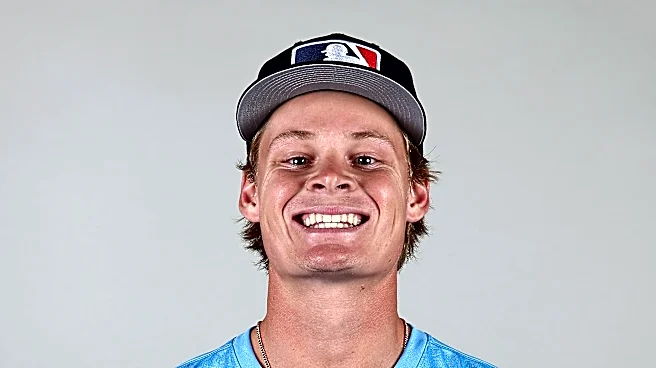
Listed among the lefty prep arms that have first round aspirations is a very unique prospect in Brody Bumila. Bumila is a prepster who already stands 6’9”. Bumila is a power pitcher whose fastball sits 96-98 and has been clocked as high as 101 when he is airing it out. He gets extreme extension in his delivery thanks to a low release height. This lets most of his hard pitches to have a virtual speed in excess of 100. Bumila also features an effective changeup with good velocity separation. Bumila’s change of pace pitch feature good fade and is an effective weapon that he seems unafraid to throw to hitters from both sides. Finally, he rounds out his repertoire with a slider, a pitch still very much a work in progress, but already showing signs of being a plus pitch with slightly more refinement. Bumila has an advanced feel for throwing strikes and has a mound presence made for a top of the rotation starter already. Bumila is largely seen as a top-10-15 talent in this draft. However, due to the track record for prep arms, especially from the left side, most prognostications have Bumila going somewhere from the Padres at #21 to somewhere in the second round. If the Diamondbacks are going to buck their normal draft trend and they decide to take a pitcher with their first pick (as some are suggesting might be a good idea), Bumila probably represents the highest upside arm to be found in the draft. Of course, he also comes with the caveat of needing an organization that will be patient with his development as he is only 18 and is going to need to work through the development of his pitches as he finishes filling out while throwing extreme heat from a taller than usual position.
Conclusion
Mike Hazen is not nearly as set in his draft ways as many seem to make him out to be. That said, there will be plenty of players that fit the “Hazen player profile” should Hazen and his scouting team choose to go that route again. While many suggest that the composition of this draft pool might entice Arizona to take a swing at a pitcher, given the other names available and the organization’s lack of proven developmental talent, it seems unlikely. Of course, the team isn’t going to get better at dveloping pitching until they start attempting to develop more pitching. If there is a pitcher with the right profile to find success in the hitter-friendly environments of the Arizona pipeline, Bumila mostly fits the mold (though he would do better to be right-handed to best ameliorate the issues). While I do not expect Mike Hazen to select a pitcher with either the 15th or 31st picks, Bumila will be one to watch for those hoping that Hazen will try some outside the box thinking for this draft. Tune in for the next installment in this series where we will look at prep bats.