



“It’s a tough one, because you’d have to eliminate so much else,” Grand Canyon University president Brian Mueller said in 2022. “With Title IX rules and you’ve got to build a 50,000-seat arena or stadium, you’re really going to lose money for 10 to 15 years, and you’d have to get that money someplace else.”
While Mountain West schools across the country throw on the pads and prepare for spring football practices, the only pigskin the GCU campus sees is perhaps a student tossing one around in the quad.
On the surface level, football may be a pathway to success in all facets. Michigan and Florida are recent examples, with their football brands leading the charge for an overall boisterous NIL and booster funding en route to basketball national titles.
In the Mountain West, Boise State reaped the benefits of a College Football Playoff appearance in 2024-2025, riding it to an invitation to the new-look Pac-12.
But with the Broncos riding off into their PAC sunset, is a non-football school the answer to filling that blue turf void?
The answer may be yes, because rather than adding another football program, the Antelopes bring a setup to the MWC that no other current member can offer.
As a private for-profit university, Grand Canyon is operated under the eye of corporations and individuals, rather than a state-funded and non-profit school.
A school that runs like a business, in a college sports world that is now exactly that, may be a perfect match. What is a great way to advertise your “business”? Have your name plastered on the March Madness brackets each year.
It is this kind of setup that has Grand Canyon ahead of the pack. In 2025, when the ‘Lopes made the big dance, 13-seed GCU had almost double the basketball expenses of the other three 13-seeded programs (Yale, High Point, Akron).
Their “for-profit” system may be unique, but Grand Canyon hasn’t been alone in competing as a private university, taking on other private institutions in the WAC, such as Seattle University and Abilene Christian University.
Now, in the Mountain West, they stand alone, being the only private university out of the 10 current and future conference schools.
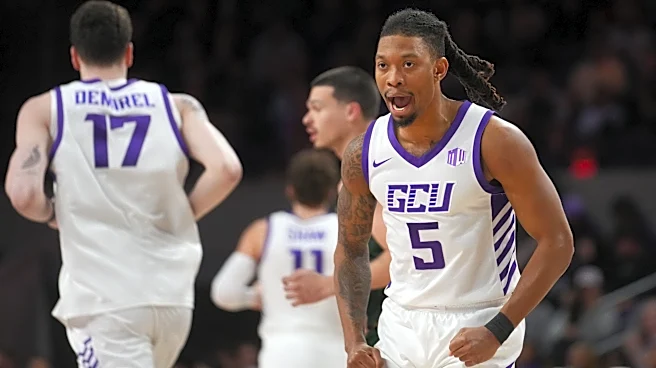
And instead of considering adding more sports, they are cutting down, ending their men’s volleyball program last spring to help support the costs of a NIL-accelerated Division I landscape on the basketball court.
Pushing all their chips into basketball is how the ‘Lopes have created such a disparity in the rankings of budget: As of early 2025, GCU sat at eight out of nine in total budget, but first in men’s basketball budget and second in women’s.
This financial freedom allows Grand Canyon to be active in acquiring talent, such as nabbing Dusty Stromer from Gonzaga, another private institution that strives on the basketball court, and Jaden Henley from UNLV, the Mountain West’s leader for total budget, but a fourth-place school when it comes to men’s basketball spending.
GCU will likely only grow as they get comfortable with their new conference, fielding television and media deals that were not on the table back in the WAC.
“Eyes on GCU help so much with the TV exposure we got this year. We’ve heard from people all around the country that didn’t realize how good our crowd was,” GCU men’s head coach Bryce Drew said after the Mountain West tournament in March. “They didn’t realize the players that we had. I think that exposure is hopefully going to kick-start us to even better things next year.”
Now in the 2026 portal season, Drew, who sports a $1.73 million annual price tag himself, will get back on the recruiting and transfer trail, checkbook in hand.