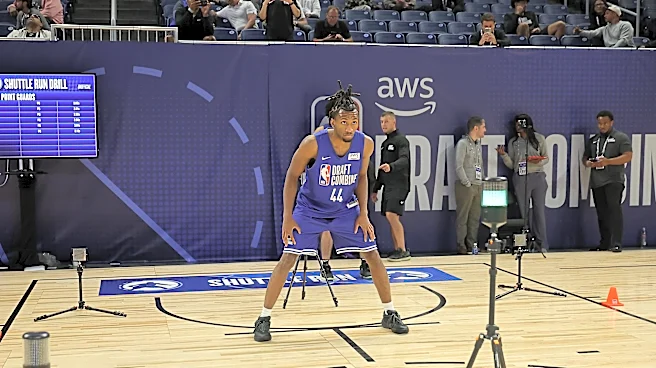





For just the fifth time in franchise history, the Washington Wizards have the first pick in the NBA Draft. In what may turn out to be a rare stroke of good fortune, they’re at the top of a loaded draft class.
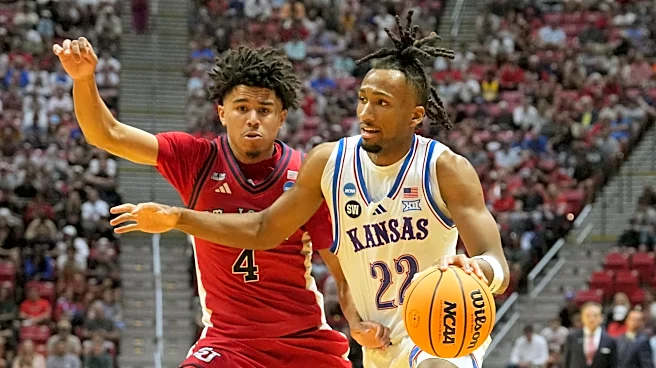
The consensus on the 2026 draft is that Brigham Young forward AJ Dybantsa will be the top pick. That’s the story from the Rookie Scale Consensus Big Board, and — despite recent reporting that Washington’s decision-makers are leaning towards Kansas guard Darryn Peterson — the FanDuel betting odds
are essentially unchanged.

If Peterson is the choice, where would he rank among the franchise’s top draft prospects? The team’s draft history goes back to 1961, when they came into existence as the Chicago Packers. They became the Zephyrs the following season (a definite name upgrade).
They got a new city and a new name for their third season when they became the Baltimore Bullets. After 10 years in Baltimore, they moved to DC, played one year as the Capital City Bullets, then 23 seasons as the Washington Bullets. “Wizards” has been their most enduring moniker — 29 seasons and counting.
While the team’s draft haul has been…spotty…they’ve also drafted some truly accomplished players. Using only their pre-draft accomplishments and accolades, here’s my top 10 prospects in franchise history. At the end, I’ll figure out where Peterson would fall, if he turns out to be Washington’s pick this year.
- 1961 — Walt Bellamy, C | Indiana | Round-Pick: 1-1 — Terrific prospect. Two-time All-American at Indiana University and starting center on the 1960 gold medal U.S. Olympic basketball team. That team included Jerry West, Oscar Robertson, and Jerry Lucas — all of whom Bellamy joined in the Hall of Fame. It also included future Chicago/Baltimore teammate Terry Dischinger. He lasted a little over four seasons with the franchise before getting dealt to the New York Knicks for three players and cash.
- 2010 — John Wall, G | Kentucky | 1-1 — Big, fast, strong, great leaper. Wall was an elite high school player (No. 2 recruiting rank behind Derrick Favors, who must have been something in high school), He led a dominating Kentucky squad and collected an array of NCAA accolades, including first-team All-American, SEC Player of the Yea, Freshman of the Year, and SEC Tournament MVP). He was a very good NBA player — five-time All-Star, second team All-Defense, third-team All-NBA, and he even won a dunk contest.
- 1962 — Bill McGill, C | Utah | 1-1 — Credited with inventing the jump hook, McGill was kinda the Dybantsa of his time. Allegedly, he taught the shot to Bob Petit, who turned it into a go-to scoring move that took him to the Hall of Fame. McGill led the NCAA in scoring in 1961-62 (38.8 points and 15.o rebounds per game), carried Utah to the Final Four, and was a three-time All-American. He got one full season with the Zephyrs, and part of a season with the Bullets. He ended playing three seasons in the NBA, three more seasons in the minor league North American Basketball Association, and two seasons in the ABA.
- 1968 — Wes Unseld, C | Louisville | 1-2 — Taken after Elvin Hayes (they’d team up to win a title for Washington in 1978), Unseld became the greatest player in franchise history. He joined Wilt Chamberlain as the only player to win Rookie of the Year and league MVP in the same season. He was a great college player — All-American and two-time Missouri Valley Conference Player of the Year.
- 1994 — Juwan Howard, F | Michigan | 1-5 — A key member of the Fab Five squad at Michigan, Howard was first team All-American, a strong candidate for NCAA Player of the Year, and was a key contributor to a team that made consecutive runs to the NCAA championship game. The Bullets/Wizards helped undermine his career (in my view) by attempting to make him into a SF when his entire game was 12-feet and in. He was never particularly great in the NBA (he was an All-Star once and would not have gotten that honor in an era with semi-decent analytics), but he did last 19 seasons.
- 1962 — Terry Dischinger, G/F | Purdue | 2-10 — NCAA scoring champion, three-time All-American, member of the gold medal 1960 Olympic team. Dischinger played two good seasons for the Zephyrs and Bullets, got traded to the Detroit Pistsons, served two years in the military (he was in ROTC in college), and then played another six seasons with the Pistons and the Portland Trail Blazers.
- 1967 — Earl Monroe, G | Winston-Salem State | 1-2 — Monroe was a small college superstar. He led the “College Division” in scoring (41.5 per game) and might be the greatest player to ever emerge from an HBCU. He got four seasons in Baltimore before they traded him to the Knicks.
- 1963 — Rod Thorn, G | West Virginia | 1-2 — Two-time All-American, NCAA Tournament Most Outstanding Player in 1960, led WVU to the Final Four. He lasted one season in Baltimore before they sent him to the Pistons with Dischinger. He played eight seasons in the NBA and made a name for himself as a coach and executive.
- 2013 — Otto Porter Jr., F | Georgetown | 1-3 — Porter was a very good college player — second-team All-American, Big East Player of the Year, finalist for the National Player of the Year Award. After a quasi-redshirt rookie season (hip injury), he became a deadly shooter and excellent team defender. He got five-plus seasons in Washington before the Wizards traded him to the Chicago Bulls. Porter was a starter on the Golden State Warriors’ 2022 championship team, and played 11 seasons in the NBA.
- 2012 — Bradley Beal, G | Florida | 1-3 — SEC Freshman of the Year, First-Team All-SEC, and allegedly the second-coming of Ray Allen. Beal worked hard to improve his ball handling, passing and strength, and he became a three-time All-Star and third-team All-NBA selection. He’s played 14 seasons so far, with at least one more still to come.
A few honorable mentions:
- Rasheed Wallace, 1-4 — second team All-American, first-team All-ACC, ACC Tournament MVP
- Kwame Brown, 1-1 — McDonald’s and Parade All-American
- Greg Ballard, 1-4 — First-team All-Big Ten, honorable mention All-American, leader of Indiana’s undefeated national championship team (1975-76)
- Jeff Malone, 1-10 — First team All-American, SEC Player of the year
Peterson — if he is indeed the pick — would have to crack the top 10 on this list despite playing just one season of college basketball. On his pre-draft resume:
- Naismith High School Player of the Year
- McDonald’s All-American Co-MVP
- honorable mention All-American
- All-Big 12 Second Team
Where would that fit in Washington franchise history? To me, it’s clearly behind the top three. I think he slots in at four — behind Unseld and ahead of Howard. I’d accept arguments for slotting him as low was eighth. That’d be after Monroe and Dischinger but ahead of Thorn, Porter and Beal. I don’t really see a way to put him any lower.
No matter how I look at it, if Peterson is the pick, he’ll join the team as one of the top prospects in franchise history.