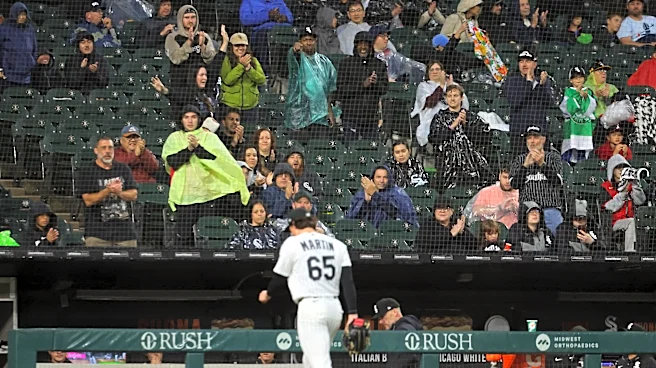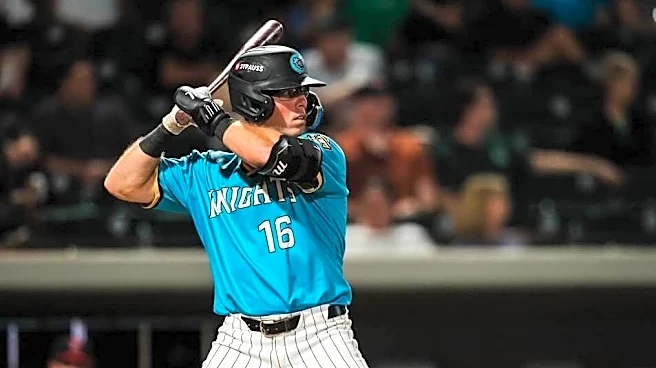





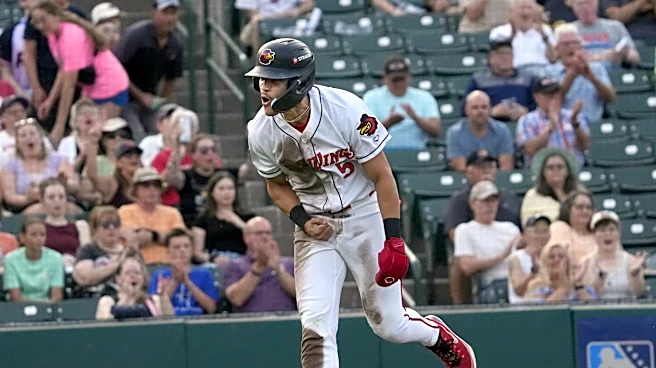
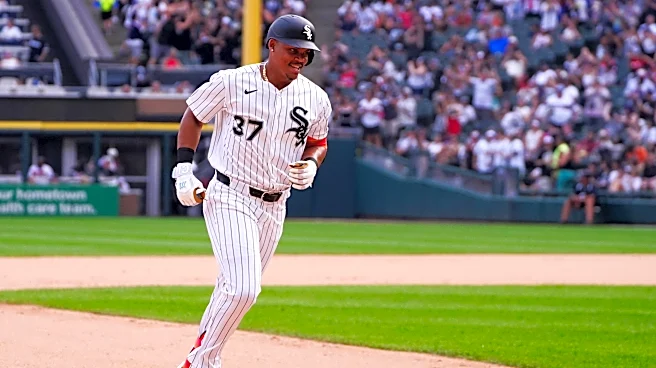
For an affiliate whose primary role is to serve as the last checkpoint for MLB readiness while having some fun along the way, the Charlotte Knights delivered much more on the latter than the former. Finishing tied for second place in the International League East with an 81-68 record and +126 run differential, Chicago’s Triple-A club exhibited remarkable growth from 2025’s frustrating 65-85 finish and -100 run differential.
Charlotte’s success this year is even more impressive considering the strength
of its division. The Rochester Red Wings dominated the field with 90 wins, helped by a lights-out 45-29 road record. If the Washington Nationals swapped rosters with their Triple-A affiliate, they might have an easier time reaching 81 wins. Syracuse and Scranton/Wilkes-Barre also caused trouble in the East, each winning more than 77 games, while the top three teams in the West finished with more than 80 wins. Falling short of the playoffs in such a competitive division makes the Knights’ season that much more impressive.
Charlotte consistently had a rotating set of key offensive contributors, but one guy played the most consistently.
Ryan Galanie, 1B
After tying up loose ends in Birmingham, Galanie became a pivotal member of Charlotte’s lineup. He slashed .283/.343/.516 and hit a career-high 19 homers for Charlotte, including five in June, when he batted .355 with a 1.083 OPS. Galanie’s ability to get on base and move runners around the diamond, and not just crack home runs, stands out as a first baseman. Although he’s not a top-30 prospect in the farm system, Galanie’s a guy to monitor this fall.
May was Galanie’s lone stumble at the plate, though even then he hit .213/.295/.479 and drew nine walks. That batting average might look familiar to a couple of current starting infielders. Yes, Munetaka Murakami and Colson Montgomery, I’m looking at you two.
Though they were less steady, a few other bats regularly earned South Side Sox’s game MVP or runner-up honors.
Rikku Nishida, 2B/OF, No. 29 Prospect (MLB Pipeline)
The Knights made good use of Nishida’s patience at the plate. He batted leadoff 105 times and posted a .289 average and .422 on-base percentage. Even during a slower second half, his plate discipline made him a threat regardless of the score or the number of outs.
Nishida may be a 4A player, but he stepped into Jacob Gonzalez’s role in Charlotte and helped spark several needed rallies.
Andy Weber, INF
Called up from Birmingham in late spring, Weber made an immediate impression in June, collecting 29 hits and driving in 20 runs. He finished his time in Charlotte with a .251/.312/.423 slash line, 15 homers and 35 walks. His production tapered off late in the season, but his hot bat at the bottom of the order helped keep the offense moving.
Weber’s defense at shortstop needs work, and his strikeout total climbed, but his versatility on the left side of the infield could make him one of Charlotte’s first call-up options if injuries hit the White Sox in 2027. Whatever next season brings, he should have another chance to show off his bat-to-ball skills with the Knights in April.
While the offense often received the most recognition this year, Charlotte’s pitching also deserves applause. The pitching deck got shuffled several times throughout the season, largely because the parent club mismanaged its bullpen, but two guys thrived by staying with the Knights nearly the entire season.
Jairo Iriarte, RHRP
It took Iriarte two years to settle into the Sox after leaving the Padres in the Dylan Cease exchange, but better late than never. He spent 17 games proving that he was ready to face higher-caliber hitting than what Double-A could provide, and he followed through. Iriarte finally dropped his ERA below 3.00, giving up just 18 earned runs and 28 walks in 64 1/3 innings. He also dramatically cut his WHIP from nearly 2.00 to 1.18 since last year, and he held hitters to a .207 batting average. When Iriarte entered the game this year, a sigh of relief followed, rather than a groan.
The jury is still out on whether Iriarte will rejoin the Sox or remain in the minors. The jump from Charlotte to Chicago is steep, but this season gave him a stronger case for making it.
Garrett Schoenle, RHRP
Schoenle was a go-to option for the Knights in the late innings. He posted a 3.12 ERA and 1.27 WHIP, catching hitters looking and keeping runners off base. After spending nearly a month on the injured list, he showed little rust upon his return in May, allowing three runs on 10 hits and four walks over 10 1/3 innings.
He hit a rough patch in mid-August, allowing four runs in three games after rarely giving up more than four in an entire month. The stumble was brief, though, and Schoenle finished the season much as he started it.
It should be a roster management crime that Schoenle didn’t spend a single day on the 40-man roster, let alone the 26-man. Given how well he pitched early in the season, continuing to turn to Huascar Brazobán in August and hoping he wouldn’t give up a run was a baffling choice.
Charlotte missed the playoffs by five games in the first half and 5 1/2 in the second, but the Knights still put together a solid season. They didn’t send as many players to the majors as expected, though David Sandlin and Sam Antonacci have made their mark on the Sox while working through the usual learning curves. After last year’s wave of promotions depleted Charlotte’s talent pool, that shortfall is understandable.
The Knights grew stronger as the season went on, bolstered by players arriving from High-A and Double-A, including Riley Unroe and Nick Altermatt. With a talented roster and several players on the cusp of reaching the majors, Charlotte is well positioned to be the team to beat in 2027.