

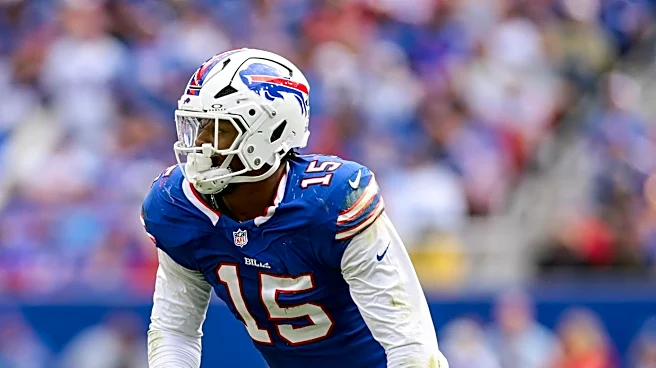
Picture this, Buffalo Bills fans: the team has an elite running back. That player averages over 5.5 yards per touch. He’s become one of the main focal points of the offense. He’s a threat to score a touchdown every time he touches the football. He can gain tough yards between the tackles, but he also has the breakaway speed necessary to create explosive plays on the ground.
The only issue? He fumbles—a lot. In fact, he fumbles once every 50 times he touches the football, which is well above the league
average. Should the Bills be nervous? Should they bench him? He has a capable backup running back who has come in and played well in spurts, but that backup is a backup for a reason, which is that he isn’t nearly the overall threat that the starter is.
For those of you wondering who we’re talking about, the answer might not be as obvious as you’d assume. The player is question is Thurman Thomas, Hall of Fame running back and 1991 NFL MVP. The backup is Kenneth Davis, a good-not-great running back in his own right who operated as a great change-of-pace back for the Bills. The fumble data is correct, per Pro Football Reference, as it covers the first five seasons of Thomas’ illustrious career.

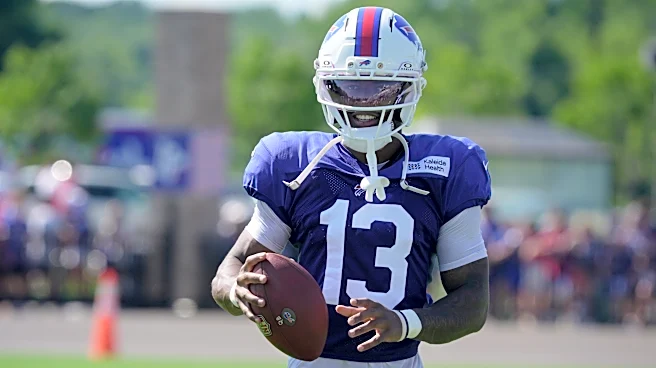
Why discuss Thurman Thomas and his fumbles in the year 2026? Because for Bills fans of a certain age, we’re seeing something close to deja vu all over again in Buffalo’s current top running back, James Cook III.
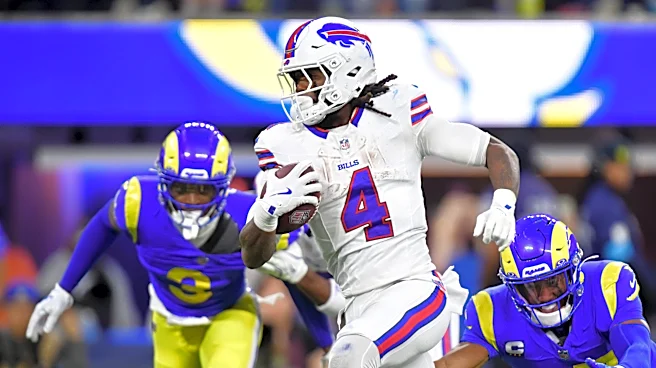
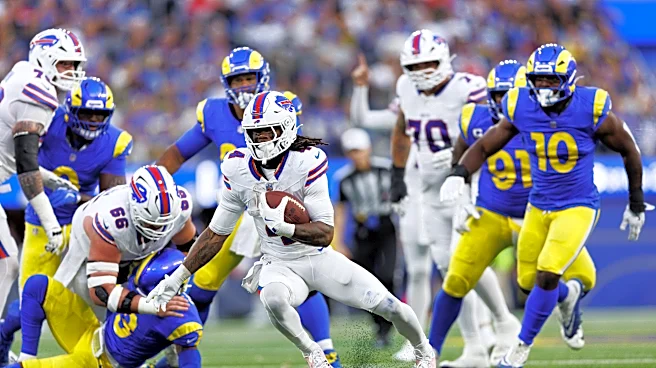
Cook is a dynamic runner who clearly needs to be a big part of Buffalo’s offense. Over the course of his five-year career, he already has three Pro Bowl nods and a Second-Team All-Pro selection on his resume. He led the NFL in rushing touchdowns with 16 in 2024, then followed that up by leading the NFL in rushing yards with 1,621 in 2025. In just four-plus seasons with Buffalo, Cook is fifth all-time in franchise history in rushing yards, trailing only Thomas, O.J. Simpson, Fred Jackson, and…quarterback Josh Allen. He’s fourth all-time in franchise history in rushing touchdowns behind Allen, Thomas, and Simpson.
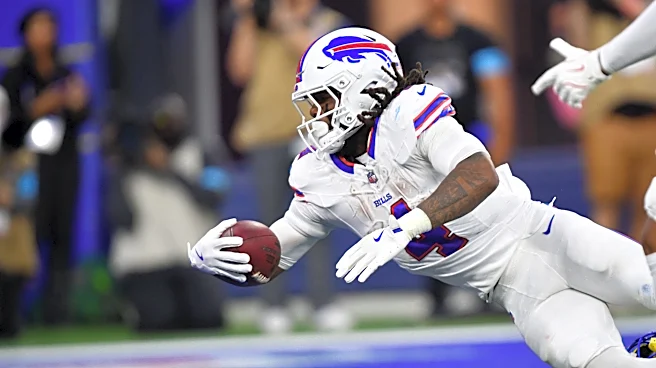
All of the information above is very, very good. Cook is an elite running back, and he is a threat to score every time he touches the football. However, of late, he’s also a turnover waiting to happen. Cook has fumbled 17 times in his career, including the playoffs, and 11 of those fumbles have occurred since the beginning of the 2025 regular season. Given that he has 487 touches in that same time frame, that means that Cook fumbles a dismal once every 44 touches. Yes, that means he’s currently fumbling at a higher rate than Thurman did, and Thurman was a fairly notorious fumbler throughout much of his career.
The frustrating issue with Cook is that this problem is definitely a more recent issue. In his first three seasons, including the playoffs, Cook totaled 750 touches. He fumbled just six times, which equates to once every 125 touches. That kind of ball security is elite-level stuff, and the fact that he’s shown himself capable of it raises some questions in my mind.
First, is Cook’s recent uptick in fumbles something sustainable? Is there a change in technique that’s led him to fumble more? Have opposing teams recognized a flaw in his game that has made it easier for them to punch the ball out of his grasp? I don’t see a noticeable difference in the way Cook runs or carries the football over the last two seasons as opposed to the first three years of his career, so I think we can rule that one out quickly. Perhaps with more touches comes more scout tape, and that scout tape shows a player vulnerable to the “Peanut Punch.”
However, for these fumbles to come in such bunches feels like there must be an element of bad luck involved, too. Despite the horrendous fumble rate over his last 23 games, Cook clocks in at a fumble every 73 touches for his career. That’s better than Thurman Thomas by nearly ten touches, as Thomas fumbled once every 64 times he touched the football throughout his career. Given that he was fumbling once every 50 touches through his first five seasons, we can see that Thomas improved in that area as his career went on. Cook’s career is far from over, but he’s done the exact opposite in taking a sharp downward turn in fumble rate.
Maybe you’re sick of a historical comparison and would rather see how Cook’s fumble rate ranks among his contemporaries. Below, here are ten high-volume backs, their total touches over the last two seasons (including playoffs, where applicable), and their total number of fumbles in that span:
There it is in black and white. Cook, while an elite talent with the ball in his hands, has also tried into a turnover waiting to happen over the last season-plus. His fumble rate is nearly equal to that of New York Giants running back Cam Skattebo, who has five fumbles in 216 career touches, or one fumble every 43 touches. No one doubts that Cook is a better player than Skattebo. However, it’s alarming for the Bills that both players are that close in fumbles per touch.
This isn’t a call to bench James Cook, nor is it a backdoor way to say that the Bills need to feed him the football less. Actually, the problem lies in exactly the opposite of those discussion points. Buffalo needs Cook to play, and they need him to play at an elite level. They also need to give him the football, especially as their top receiver, DJ Moore, continues to deal with a lingering shoulder injury. Arguably, Cook is the most important person on Buffalo’s offense whose name isn’t Josh Allen. That’s what makes his fumbles so concerning.
Could the Bills give Ray Davis more snaps if Cook continues to give the ball to their opponents? Absolutely. Davis has two fumbles in his NFL career—both of which have come in playoff games. Counting his kickoff returns, Davis has 269 career touches, so he fumbles once every 135 touches. He averages 5.1 yards per touch in the regular season throughout his career; Cook, by comparison, averages 5.6 yards per touch in the regular season.
Perhaps Cook’s ball security would improve with fewer touches, as his explosion in fumbles has also come during a two-year timeframe where he has seen a serious uptick in usage. Is it fatigue that’s causing him to be less secure with the ball?
Well, if the Bills give their most dynamic non-quarterback offensive player fewer touches, that circles us back to the issue raised above: The Bills need Cook to be successful on offense. Part of being successful, though, is by following head coach Joe Brady’s mantra of making sure that the team can “put the ball down” after each play. Far too often, Cook is putting the ball on the ground rather than giving the offense a chance to put it down.
The numbers are there, and they don’t paint a pretty picture for James Cook’s ball security. With a defense struggling as badly as Buffalo’s is, the offense can I’ll afford to give opposing teams more possessions. Cook has to protect the football. The Bills need him to figure out his issues—and fast.
All data courtesy of Pro Football Reference