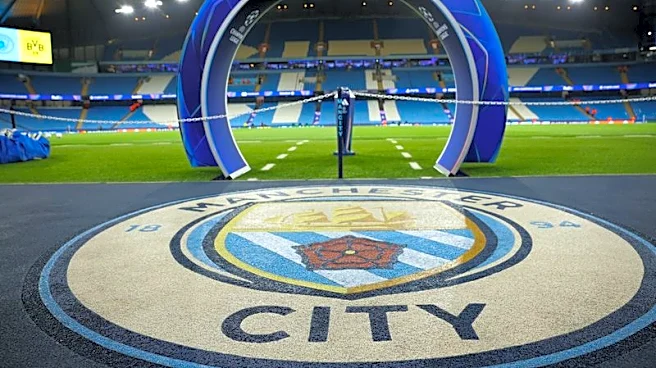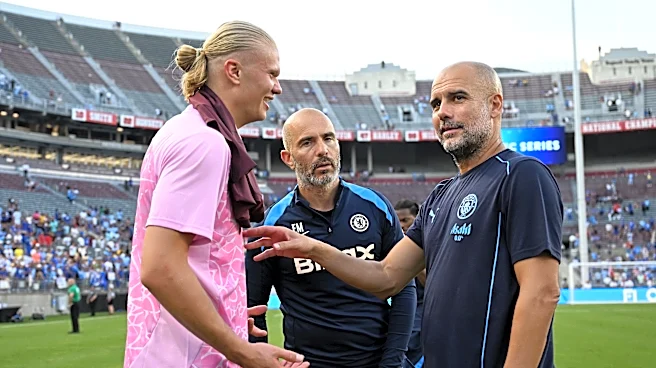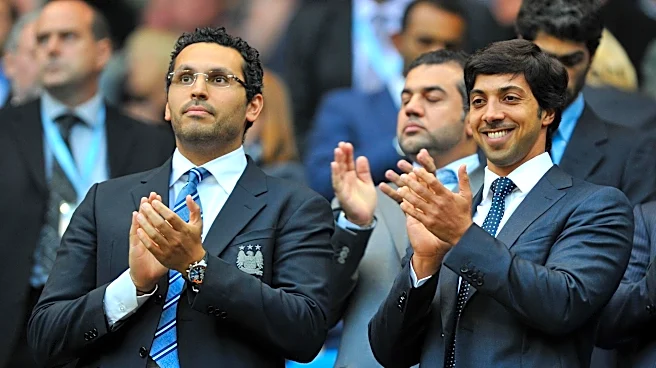




It has been eight years since Manchester City’s financial malfeasance, or the parts which we now mostly know about, at least, was first reported on by Der Spiegel. And it has taken the last three years for the Premier League to investigate, charge, and—as of yesterday—finally find Manchester City guilty of 114 of 115 charges.
Before digging deeper into what that might mean moving forward we should, for a moment, step back and revisit the actual charges, as reported by the BBC:
- 54 charges: Failure to provide accurate financial information from 2009/10 to 2017/18
- 14 charges: Failure to provide accurate details for player and manager payments from 2009/10 to 2017/18
- 5 charges: Failure to comply with UEFA’s rules including Financial Fair Play (FFP) from 2013/14 to 2017/18.
- 7 charges: Breaching Premier League’s Profit and Sustainability Rules (PSR) from 2015/16 to 2017/18.
- 35 charges: Failure to coopoerate with Premier League investigations from December 2018 to February 2024.
The sum of it is that
City’s spending has caused intentional, malicious, and incalculable harm throughout the English football pyramid. The Premier League itself have spent three years now pursuing these charges. Taken at face value, it’s not a stretch to say that every single team in the Premier League and English Football League over that time along with teams elsewhere throughout Europe, were impacted in some direct or indirect way by City’s actions since 2009.
Of course, the most visible and obvious examples of this harm is losing out on trophies—which is something Liverpool fans have certaintly suffered directly, and arguably more than anyone—and European places, and the financial benefits those confer. I’ll circle back to that point in a bit, but for the moment I’d like to focus on all the other harm to all the other teams in the football pyramid, because it’s not just about trophies and the Champions League.
When I say the harm caused by City is incalculable, I really mean it.
Think about it for a second.
Every time City finished above another team in the final table, every team below them suffered. In the Premier League, that translates to £2.7 million per spot in the table. Now think about what that adds up to every team that finished below City since 2009/10.
Now think about every team that was relegated with the help of Manchester City, not just because of basic table position math but because of direct results—defeats which might have cost them potentially hundreds of millions of pounds. At least for the side finishing 18th, relegation is often the matter of a point or two. You can add that in alongside every team that missed out on the European places by a few points and perhaps with a heavy defeat to City along the way, once again potentially costing them tens or hundreds of millions. Or the teams that would’ve advanced in domestic or European tournaments, were it not for facing a financially doping City.
Now let’s take it a step further. A step down the hypothetical “what if” rabbit hole, and ask about all the players that City signed, that other clubs couldn’t. Or the inflation their spending contributed to around Europe. Then there are the truly incalculable knock-on effects, clubs that potentially could have turned a better finishing position or European qualification into something sustainable and long-lasting were it not for City.
Yes, it’s all getting a bit nebulous, but if you are looking at the true cost of City’s actions since 2009—and looking at levying a fine that fairly reflects the harm caused to other clubs—we are talking billions of pounds, easily.
And what about the trophies? The fame? The financial windfall from becoming one of Europe’s most successful clubs over the last 15 years?
As other teams suffered—falling short of their goals while fruitlessly spending more in an ill-fated attempt to simply keep up, or at least not fall further behind—City prospered. City won 19 domestic trophies, two more in Europe, and a FIFA Club World Cup. City became an international commercial juggernaut, earning sponsorship deals off their success, and selling merchandise all over the world.
All ill-gotten gains.
All at the expense of others.
All while flouting the rules and then spending years covering it up.
All of this adds up to the need to punish Manchester City Football Club, and to do so to the fullest extent possible.
It’s hard, though, to imagine what justice looks like here. What punishment fits the crime? I believe reasonable people can disagree about what is appropriate here, but I do not believe reasonable people can argue that the punishment should be anything short of severe.
I believe that Manchester City need to, at the very least, be expelled entirely out of the Premier League and English Football League—the top 4 professional divisions. That would be a good start, and it would be a fitting punishment for their 15 years of dominance atop the English football pyramid, all at the expense of every team below them.
Moreover, they should have to pay a fine in excess of £1 billion, at a minimum. And this money needs to be used to support clubs throughout the pyramid, especially in the lower tiers, helping the numerous clubs that are threatened with solvency issues which have resulted, in part, from the massive spending in the Premier League. City should also be held liable in civil court from the many clubs who directly suffered financial losses because of their cheating.
And finally, City need to be stripped of all their titles won post 2009. All of them. Even the ones won after 2018. Because without a decade of cooking the books and buying the best team money can buy, they could not continue their era of dominance. Additionally, they were still found guilty of failure to cooperate with the Premier League until February 2024, thereby slowing down the investigation, and thereby allowing them to continue to win without punishment.
For the record, I do not believe City’s stripped titles should go to the runners up. Including Liverpool. It would not be fair from a sporting perspective. And as we know, winning a title isn’t about the shiny thing at the end but about the journey along the way. Winning several trophies retroactively does nothing to replace the feelings and memories—for better or worse—experienced along the way.
Although Liverpool fans have a right to be angry at the titles lost directly to City, it’s worth remembering that of all the clubs in England and Europe, Liverpool at least arguably suffered the least. The Reds missed out on some silverware, but their status and their financial security did not suffer because of City; Liverpool were still very much able to win titles in England and Europe during City’s reign.
Moreover, Liverpool’s successes were made all the more impressive by overcoming the financially doping juggernaut City illicitly constructed. Liverpool had the resources and clout to compete on and off the pitch, and for a time it felt as though they were the only club that consistently could. That’s not something any other club can really say, and it should be worth something.
So again, I do not want City’s titles given to Liverpool. This is not about Liverpool, and we would be wise to keep it that way. What I want is justice—as much as can be restored—for the rest of the English football pyramid.
Manchester City need to be punished, and for reasons far beyond the narrow scope of sporting integrity in Europe and England. Globally, we’re all under attack by a combination of repressive regimes, global monopolies, and oligarchs, none of whom feel that they are constrained by the law. And in most cases, they’re not.
In this way, Manchester City and their complete disregard for the governing laws of the game are a microcosm for the threat posed by oligarchs around the globe, and it’s hard not to view them as part of the same spectrum of the corrupt and powerful as Gianni Infantino and his FIFA enablers and sycophants.
We need to relearn how to fight back against billionaires and repressive regimes and corrupt interests. We need it now more than ever. We need to relearn how to hold everyone equally accountable under the law. Football at the end of the day may not be the most important place for that to happen, but there’s no reason it can’t be one of the places it starts—where those sorts finally start to again feel something resembling consequences for their actions.
If we can hold Manchester City accountable for their crimes and punish them accordingly, then maybe we can start holding others to account too. It’s a nice thought, at least, that.