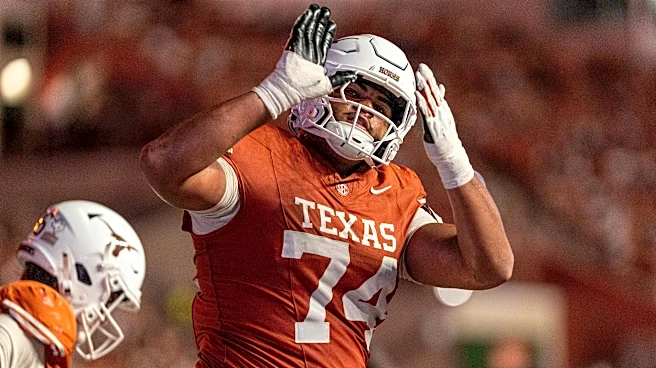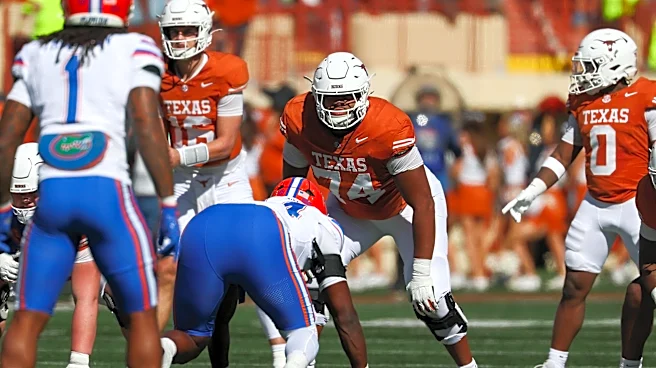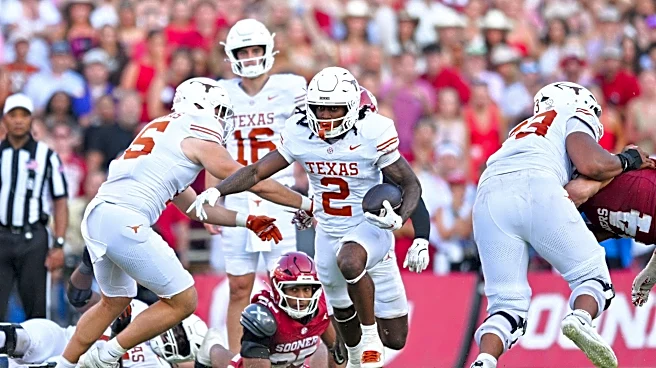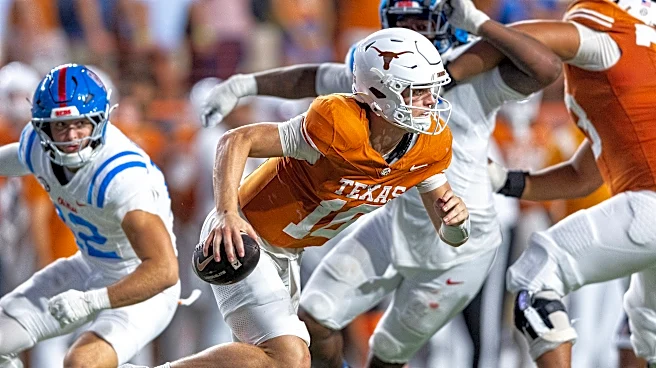




AUSTIN — When Texas Longhorns sophomore running back Michael Terry III arrived on the Forty Acres as the nation’s consensus No. 1 athlete in the 2025 recruiting class out of San Antonio Alamo Heights, the coaching staff had a difficult decision to make about his future position.
Terry filled numerous roles in high school, from wildcat quarterback to running back to wide receiver, even playing some on defense. The projection for him wasn’t clean — listed at 6’3, 216 pounds, Terry was a tweener, tall
for a modern running back, at a height/weight combination at the top end of successful wide receivers, and in need of gaining weight to play H-back.
“He was an athlete by label, right, and so you try to figure out, okay, where’s the best way for this guy to have success? And looking at his body and his structure and his skill set, we initially thought wide receiver, maybe even an H-back, might be the best place for him to go,” Sarkisian said.
The staff settled on wide receiver, and Terry went through spring practice, summer conditioning, and preseason camp at the position.
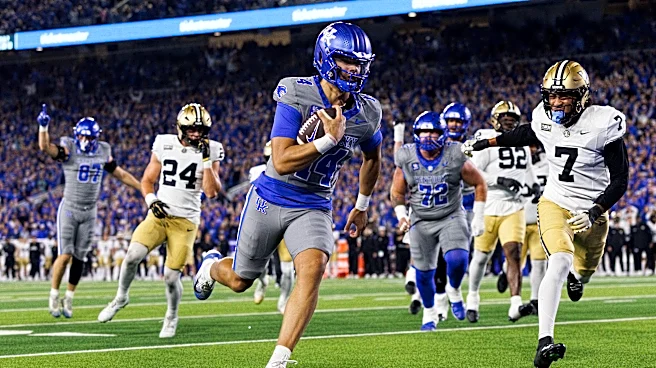
Midway through the season, Texas had a problem — the Longhorns were dealing with injury issues at the running back position and had suffered the departure of their biggest-bodied running back, Jerrick Gibson, who left the program prior to the Kentucky game in order to preserve his redshirt before entering the NCAA transfer portal.
The Longhorns needed a scout-team running back to emulate 223-pound Wildcats standout Seth McGowan and his backup, 6’2, 227-pound Dante Dowdell. Terry filled the role out of necessity.
Early in the week, the defensive coaches had a message for Sarkisian — the new scout-team running back was giving the first-team defense problems and the Texas coach needed to take a look at the tape.
Sarkisian saw what his defensive coaches saw, and Terry made the switch to running back, a “really challenging” move midway through the season.
“Not so much physically, but mentally,” Sarkisian said. “You’re learning the offense as a receiver, and now all of a sudden you’re going back to running back, and you’re trying to learn protections, you’re trying to learn run-blocking schemes, you’re trying to learn the nuances of the fundamentals, the techniques at the position.”
Terry had never played running back full time before, but he worked at it, and kept working at it, according to Sarkisian, even through the offseason, when he decided against leaving and looking for something easier than competing for the fourth-team running back role after Texas landed two top-tier backs from the portal in the wake of signing the No. 7 ball carrier in the 2026 class, Florida’s Derrek Cooper.
“I’m really proud of Michael because it could have been easy at the end of the year to jump in the portal like a lot of other guys do, and hey, I want to go be this or be that or go somewhere, and this guy just stayed to the grind and stayed working,” Sarkisian said.
New running backs coach Jabbar Juluke worked hard with Terry to learn the nuances of the position that he was thrown into midseason. Now at 229 pounds, Terry was playing a minor role for the Longhorns as he reached the one-year anniversary of his move to running back, receiving 10 total carries late in the non-conference wins over the Bobcats and the Roadrunners, including seven carries for 39 yards against UTSA with four forced missed tackles, gaining 31 yards after contact, according to Pro Football Focus.
When conference play started, Terry saw the field for one snap against Tennessee and two against Florida, playing in a 31 personnel short-yardage package.
Injuries finally gave Terry his first big shot when senior running back Hollywood Smothers missed the Ole Miss game with a shoulder injury and Cooper was only able to play three snaps.
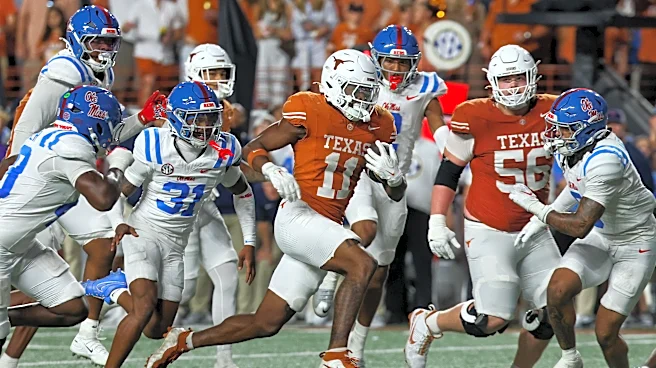
Terry took advantage with eight carries for 41 and his first career touchdown, ripping off two runs of 10-plus yards. The longest run of Terry’s brief career, a 19-yarder down to the goal line, set up the go-ahead touchdown run by senior quarterback Arch Manning midway through the fourth quarter.
Of the 41 yards gained by Terry, 15 came after contact as Terry showed decisiveness as a one-cut runner who is difficult to bring down once he generates momentum.
In pass protection, Terry did give up one quarterback hurry in four snaps, but also had a good rep, and possesses the size and mass to be effective in that role.
“What a debut for Michael Terry to really play significant snaps at running back. I thought he played a heck of a game, was impactful in the game, not only in short-yardage and third-down situations, but obviously when he had some opportunities to carry the ball on first, second down,” Sarkisian said.
Without any information on when Smothers might return and because Cooper hasn’t really been fully healthy since he got injured on his first collegiate snap, the Longhorns will almost certainly need their running back depth with five regular-season games remaining in the eight-game stretch to end the season.
And Terry now looks like he can be a factor at the position.