
Three years ago, at this time, the Orioles were wrapping up their first AL East title in nine years while on their way to an AL-best 101-61 record. Fast forward three years, and the O’s are back in the depths of disappointment that plagued this team for the entirety of the 2000s and the early days of the Mike Elias rebuild. Sure, this team isn’t going to lose 100+ or even 90+ games. But for a team many picked to win 85+ games, finishing this season with a losing record is perhaps even more disappointing.
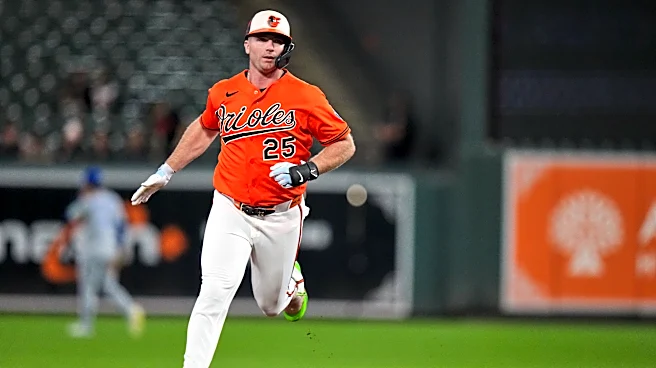
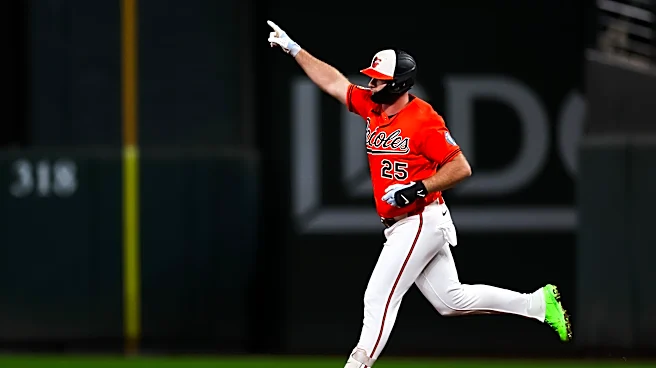
And yet, this team doesn’t feel that far away, talent-wise, from the team that won the division a short while ago. In Pete Alonso, the Orioles have their biggest star since prime Manny Machado. Gunnar Henderson has almost inexplicably regressed, but has still managed to put up 50+ XBHs amidst his most disappointing professional season. And the rotation, although lacking a true bona fide star, is perhaps in the best position it’s been in since before Elias took over.
Assuming there is baseball in 2027, a presumably reimagined front office will have plenty of work to get this team over the hurdles it failed to clear in 2025 and 2026. With one eye now firmly on the future, I look at just how far apart the current Orioles roster is from the best team of the Elias era.
Infielders
2023: (C Adley Rutschman, 1B Ryan Mountcastle, 2B Adam Frazier, 3B Gunnar Henderson, SS Jorge Mateo, UTL Ramón Urías, UTL Jordan Westburg, DH Ryan O’Hearn)
Total bWAR: 17.9, Total OWAR: 17.8, Total DWAR: 2.6
2026: (C Samuel Basallo, 1B Pete Alonso, 2B Jackson Holliday, 3B Christian Encarnacion-Strand, UTL Blaze Alexander, UTL Jeremiah Jackson, DH Coby Mayo)
Total bWAR: 13.3, Total OWAR: 13.8, Total DWAR: 0.6
Only one spot in the infield shows the 2026 O’s beating the 2023 team: ‘26 Pete Alonso bests ‘23 Ryan Mountcastle by a full 2.2 bWAR, without factoring in the two home runs he hit last night against the Blue Jays. Christian Encarnacion-Strand also barely edges out ‘23 Jorge Mateo, despite having about 150 fewer PAs; such has been CES’s offensive impact since joining the Orioles in July. Blaze Alexander also outplayed Ramón Urías by 0.1 bWAR despite more than 100 fewer PAs.
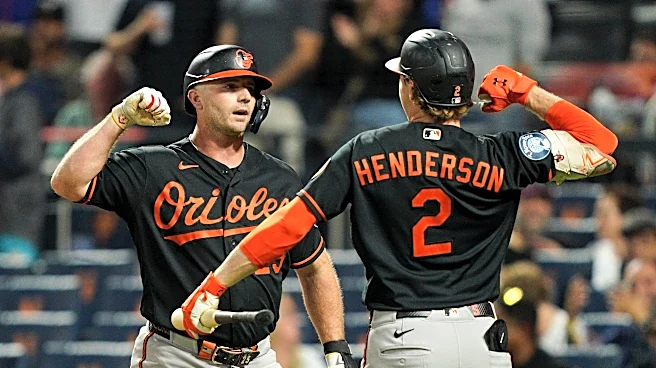
The easiest way to bridge the gap between this year’s Birds and the ‘23 O’s is just to get a better version of Gunnar Henderson. Three years ago, Henderson was a 6.1 bWAR player and a Top 10 MVP finisher. This year, he’s down to 3.0 bWAR while seeing a noticeable drop both offensively and defensively. However, there is still the lingering question of “Who is the real Gunnar Henderson?” Over his first two full seasons, he averaged 7.5 bWAR. Over the last two seasons, that average has dipped to just above 4.0 bWAR.
Getting full seasons out of all their best infielders might also just be enough to pick up the slack. Alexander looked like an All-Star at times this year, but was limited to just 93 games thanks to hand and back injuries. Not factored into the 2026 Orioles’ final numbers is the 2.1 bWAR Adley Rutschman contributed before being traded, nor the 100+ games Jackson Holliday and Samuel Basallo missed with hand, shoulder and wrist injuries.
Coby Mayo also seemed to take a huge leap after being moved to full-time DH with part-time 3B duties after the emergence of CES. If you keep that dynamic going, get healthy seasons from Basallo and Holliday and replace Jeremiah Jackson’s ABs with a healthy Jordan Westburg and you have a completely remade infield. However, that’s a lot of big “ifs” that rely on an oft-injured team to suddenly stay healthy.
Outfielders
2023: (LF Austin Hays, CF Cedric Mullins, RF Anthony Santander, OF Aaron Hicks)
Total bWAR: 9.4, Total OWAR: 8.4, Total DWAR: -0.3
2026 (LF Dylan Beavers, CF Colton Cowser, RF Leody Taveras, OF Tyler O’Neill)
Total WAR: 2.4, Total OWAR: 2, Total DWAR: -0.2
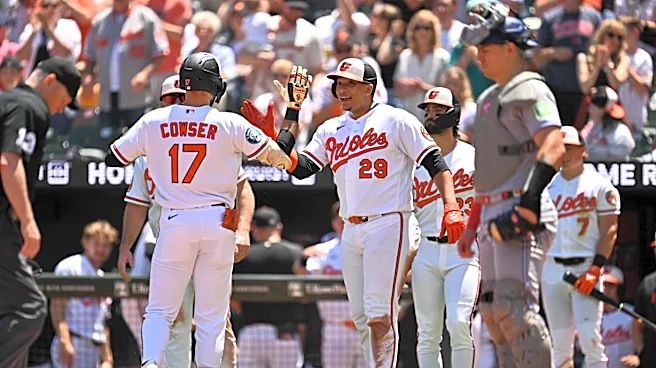
Colton Cowser was a reasonable facsimile for Cedric Mullins this year in CF, though Cowser leans even more heavily toward defensive value while still struggling to find offensive consistency at the big league level. The rest of the 2026 outfield was largely a disaster. Beavers failed to take a meaningful step in his full rookie season; Taveras was great during his first month in Baltimore but has failed to do anything meaningful since; O’Neill, as always, was strong in flashes but missed nearly half the season with injuries.
Both Austin Hays and Anthony Santander were more good than great in 2023, but both look like sure fire All-Stars when compared to the corner outfielders from this year’s squad. Even past-his-prime Aaron Hicks from 2023 would have given the Orioles better play than they got from most of their OFs this year.
However, it also must be taken into account that Taylor Ward’s 2.7 bWAR doesn’t get factored into the 2026 group’s total after he was traded to the Mariners at the deadline. Even Ward, though, was somewhat of a disappointment after the presumed power hitter posted a higher OBP than SLG with the O’s. Baltimore is thin on internal solutions, with only Enrique Bradfield Jr. and Heston Kjerstad as the only potentially impactful players in the minors. Short of making Alexander a full-time OF, the front office will have to pursue outside reinforcements once the lockout ends.
Starting rotation
2023: (RHP Kyle Bradish, RHP Grayson Rodriguez, RHP Dean Kremer, RHP Kyle Gibson, RHP Tyler Wells)
Total bWAR: 9.5
2026: (LHP Trevor Rogers, RHP Kyle Bradish, RHP Shane Baz, RHP Brandon Young, RHP Chris Bassitt)
Total bWAR: 7.5
Despite putting up 2.0 fewer bWAR than their 2023 counterparts, the rotation is arguably in a better spot now than it was three years ago. The biggest difference is that Kyle Bradish produced at an elite level in 2023 (4.8 bWAR) and no one reached that high in 2026. The Orioles’ best two starters by bWAR this year (Rogers—2.2, Young—2.2) don’t even combine to equal Bradish’s 2023 campaign.
However, context is important when evaluating this year’s rotation. Baz had a 4.11 ERA, but a 3.61 FIP, and suffered from the constant pressure of having to pitch with terrible run support. This year’s Bradish had a 3.49 ERA through his first 20 starts, but then put up a 5.83 ERA over his last 9 starts in his first full season back from Tommy John surgery.
It was also a tale of two seasons for Rogers. Through his first 10 starts, he had a 6.84 ERA as he suffered from the effects of missing two weeks due to illness. In 19 starts since the beginning of June, Rogers has a 2.92 ERA, 115 Ks in 117 IP and has limited opponents to a .228 average.
The plan to make this rotation playoff-worthy is simple: re-sign Rogers and spend the $18.5M they gave Chris Bassitt on someone with more upside than a 37-year-old, 12th-year veteran. Fail to re-sign Rogers and the task of fielding a competitive rotation becomes exponentially more difficult.
Bullpen
2023: (RHP Félix Bautista, RHP Yennier Cano, LHP Danny Coulombe, RHP Brian Baker, RHP Mike Baumann)
Total bWAR: 7.6
2026: (RHP Andrew Kittredge, RHP Rico Garcia, RHP Yennier Cano, LHP Josh Walker, RHP Cam Sanders)
Mike Elias has been largely successful at piecing together relief corps from the castoffs of other teams. Three years ago, it was relative no-names like Yennier Cano, Danny Coulombe and Brian Baker who formed the heart of the O’s bullpen. This year, we’ve seen guys like Rico Garcia, Josh Walker and Cam Sanders all step up to become fixtures in the O’s pen.
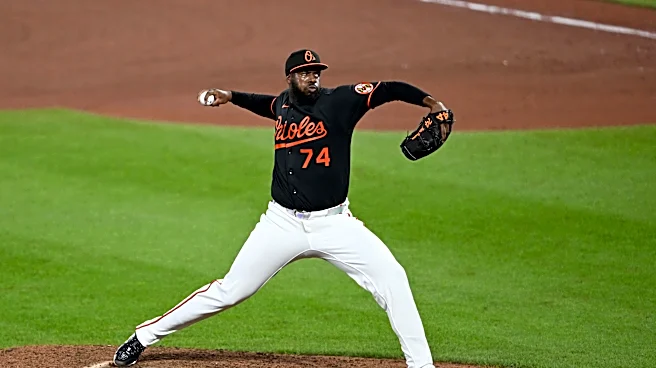
Where the front office has failed is in replacing the irreplaceable force that was 2023 Félix Bautista. They tried to replace the once-again injured Bautista with former All-Star Ryan Helsley. He made 17 appearances before being shut down for the season at the beginning of July. Helsley’s role then went to Kittredge, who posted a -0.4 bWAR this season (compared to Bautista’s 3.0 from 2023). Short of signing Yankees’ closer David Bednar in free agency or getting an unexpected return to form from Bautista, closer may continue to be one of the team’s biggest holes in 2027.