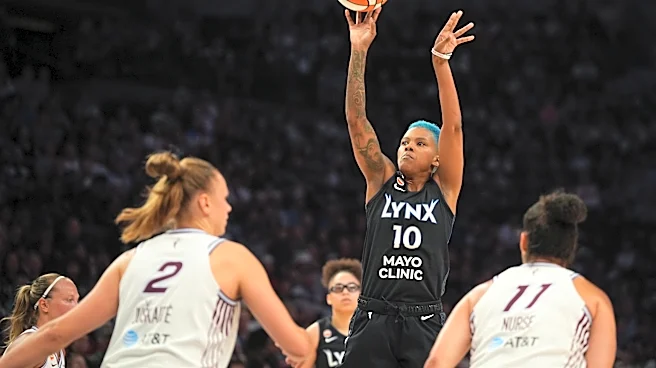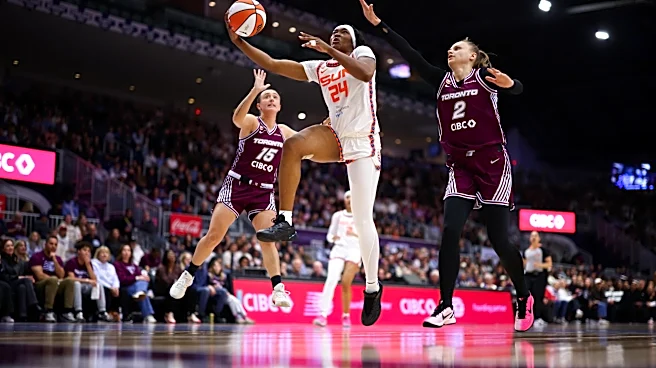





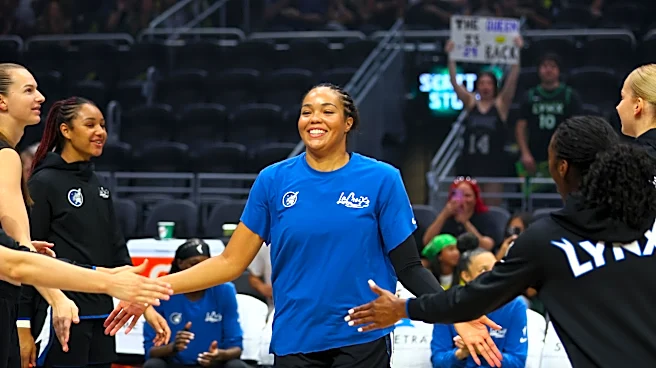
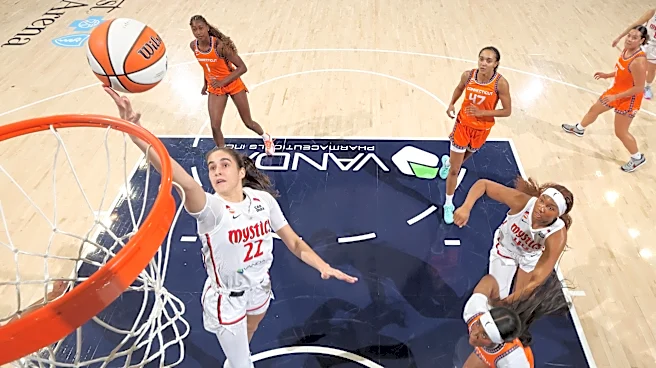

The Toronto Tempo and Connecticut Sun have officially inaugurated the 2026 WNBA trade deadline.
Aneesah Morrow is headed from the Sun to the Tempo in exchange for a 2028 second-round pick and the rights to Maria “Masha” Kliundikova.
Let’s hand out grades for both teams. In the comments,
let us know if you agree, and provide your own evaluation.
Toronto Tempo: A

Scuttlebutt swirled about Toronto’s search for a young big to pair with their backcourt of Marina Mabrey and Brittney Sykes, with reporting suggesting that the Tempo were willing to sacrifice their 2027 first-round pick in order to address this need.
These rumors emerged before Brittney Sykes was officially ruled out for the remainder of the 2026 season due to her foot injury. But even if Sykes was to return and play at the All-Star-level she had established and Toronto was to acquire a high-priced frontcourt upgrade, the Tempo were a long shot to make the playoffs, as they are now 5.5 games out of the No. 8 seed.
That meant they were risking sending out a lottery pick that could be the No. 1 pick in what is projected to be a loaded 2027 WNBA Draft. That would have been insane.
This trade, however, satisfies Toronto’s desire to add some oomph to their froncourt, without the unnecessary future risk.
It’s been an uneven season for Morrow (more on that below), but when given the opportunity, she’s produced.
In the 15 games in which she played more than 20 minutes, she racked up nine double-doubles. Overall, she’s averaging over 11 points and almost nine boards per game, albeit on shooting percentages that need to perk up. She’s a hard worker who’s eager to expand her game, even if her experimentation from behind the arc is still a bit ambitious.
Her relentless mentality likely appealed to Toronto, as it perfectly matches that of Mabrey and Sykes. And with two more seasons after this one on her rookie-scale contract, she is cost-controlled contributor for a team that, presumably, will be looking to add more talent in the offseason for a 2027 playoff push.
Morrow doesn’t solve all of Toronto’s issues. But, she certainly makes them better, both in the immediate and, more importantly, beyond. Considering Kliundikova’s inconsistent commitment to the WNBA, this deal was a no-brainer for Toronto.
Connecticut Sun: D

The Sun poorly managed Morrow’s second season, resulting in a poor return for a player with her potential.
As noted above, Morrow produced when given an opportunity to do so. On a team stacked with theoretical, young and developing talents that didn’t exactly fit together, Morrow and her archetype—an undersized forward who thrives on hustle—seemingly fell out, or in and out, of favor with Connecticut and their future vision.
Of course, with a new ownership and management group ready to assume control of the organization as soon as they decamp to Houston and become the Comets, it’s worth wondering if Comets’ voices, whispering into the ears of the Sun leadership, influenced the organization’s handling of Morrow.
After this Sun group drafted Morrow with a 2025 first-round pick, their decision to allot her an inconsistent role and then trade her for a future second-round pick and player who might not frequent the WNBA seems odd. This, however, is all speculation.
There’s more to Morrow. Yet, the Sun decided not to take advantage of all she has to offer, whether for their own benefit or to command more value in a transaction.