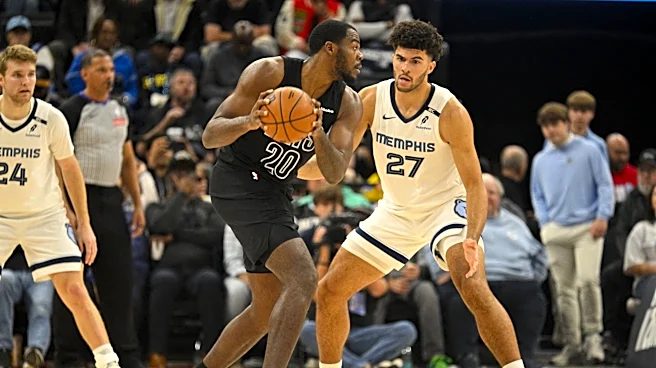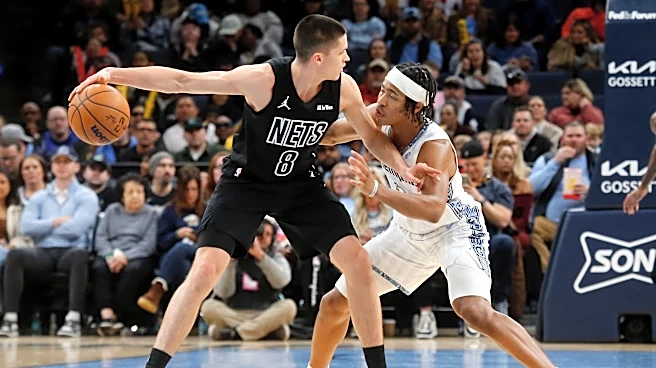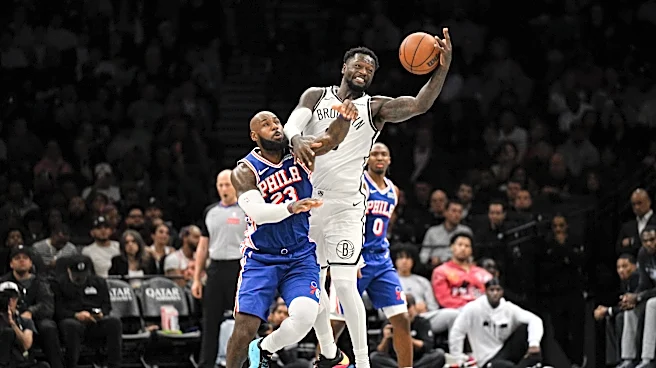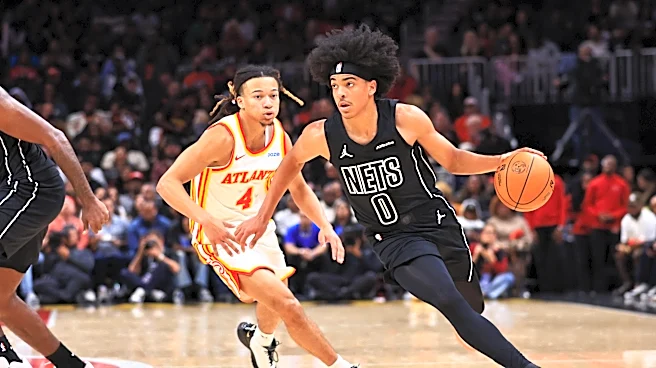



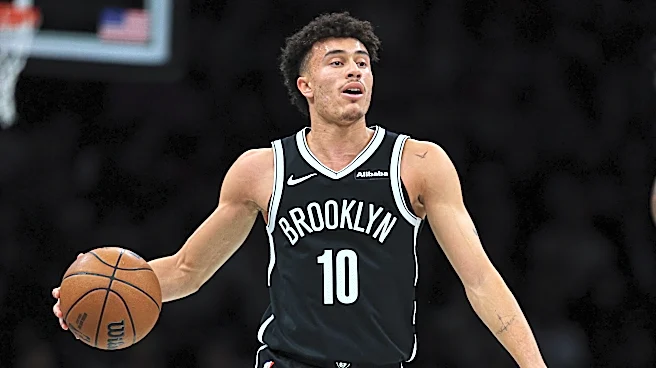
The Nets’ loss to Memphis was bad in several ways, but many fans fastened on the starting lineup, which fell behind by eight points in the first 6 minutes, as the source of the trouble.
“Maybe start a PG—you have two decent ones in Traore and MBJ.”
“We purposely handicapped ourselves by starting Egor at point guard. What was the point of that?”
“To Jordi, just play more Mikel Brown Jr. This team doesn’t have a real PG. … Everyone tries to score on their own. Porter and Randle like to score on their own,
especially Randle.”
“Not starting a PG made no sense.”
“That starting lineup Jordi put out today was absolutely disgrace to the fans and the game of basketball itself. What is he trying to prove? This isn’t a fantasy game Jordi. Positions matter.”
For the game as a whole, that starting lineup had a net rating of -2.7 per 100 possessions, hardly
“disgraceful.” (The team’s net rating in the other 35 minutes was -24.5 per 100 possessions.) The
clamoring for a traditional point guard was mostly beside the point, a frustrated response to a bad
game. Yet, it fit with a broader narrative questioning the Nets’ lineups and offensive style in the first
dozen games of the season.
One frequent complaint is that rookie lottery pick Mikel Brown, Jr., has played just 31% of the team’s
minutes, often out or limited due to an early-season ankle roll, “management” of a prior back injury, and
illness. Fans are understandably eager to see this presumed key to the team’s future on the court.
Sophomore Nolan Traore has shown flashes in his absence, but he has played just 22 minutes per game,
sitting frequently even when Brown has been unavailable, with the Nets relying instead on 6’9” Egor
Dëmin to man the point.
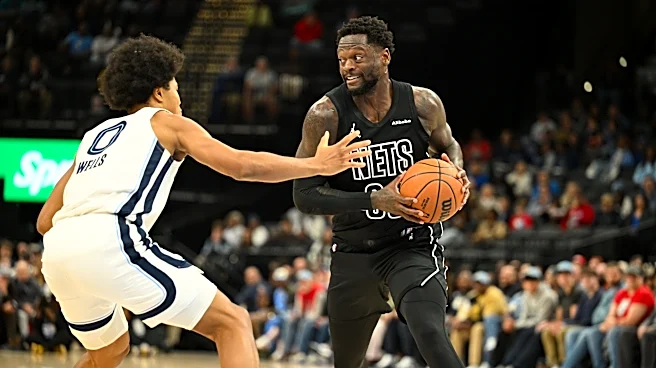
Meanwhile, veteran forward Julius Randle has led the team in usage, often serving as a hub of the
offense. Many fans have complained that Randle pounds the ball, stifling the flow of the offense and
taking shots from his teammates. Randle came to the Nets to be a “floor raiser,” but some see him as an
obstacle to progress and want to trade him as soon as possible.
An obvious problem with this narrative is that the Nets have played better without their “true” point
guards than with them. In 241 minutes with Traore on the court, they’ve been outscored by 10.1 points
per 100 possessions. In 182 minutes with Brown on the court, they’ve been outscored by 11.3 points per
100 possessions. In 185 minutes with neither on the court, they’ve outscored their opponents by 2.8
points per 100 possessions. They have been a better-than-average NBA team when both sit, and one of
the worst teams in the league when either is on the court!
Of course, those numbers depend a lot on who plays with whom. With small samples and a lot of
squinting, it’s possible to see promise—or doom and gloom—almost anywhere. But even looking at minutes shared with the Nets frontcourt starters, Traore has a net rating of +6.5, Brown (in just 18
minutes) -10.4, and “not a point guard” Dëmin +21.9.
One logical reaction to that fact is to consider development the Nets’ top priority. Traore and Brown are
young players with a lot of potential, second year player Traore even younger than rookie Brown. Brown, in particular, is the Nets’ highest draft choice in 16 years since before they made the move from Newark to Brooklyn.
Having wasted an entire season to be able to draft him, it only makes sense to double down on that
investment. If that dooms the Nets to bottom-dweller status this season, so be it. However, few of the
fans clamoring for more of Traore and Brown make that argument. Most seem convinced—contrary to
what the stats say so far—that playing them more would produce immediate improvement.
NBA tracking data allow for a deeper dive into the performance of the Nets’ top four ball-handlers, as
measured by touches per minute on the court. The two “traditional” point guards, Traore and Brown,
unsurprisingly lead the team in touches per minute. They’ve done a good job of limiting turnovers,
which is often a fault of young ball-handlers. But their touches have been relatively unproductive,
leading (directly or indirectly) to .26 and .24 points per touch, respectively. (The average scoring rate for
the team as a whole is .29 points per touch. That difference may sound small, but with almost 8
offensive touches per minute of game action, it amounts to about 15 points per game.)

Randle, whose supposed ball-hogging and flow-stopping have made him a fan whipping boy for many of
the Nets’ early-season woes, has been massively more effective with the ball in his hands, generating
.334 points per touch. And that is not just “trying to score on his own.” He also has more assists per
touch (and more potential assists, including missed shots) than any of the Nets’ other top ball-handlers.
Despite slightly sub-par shooting efficiency and a rash of turnovers (easily the highest turnover
percentage since his rookie season), he has been one of the Nets most effective offensive players so far
this season. (Only Michael Porter, Jr., and hot-shooting Moe Wagner have produced more points per
touch, and only Dëmin, Danny Wolf, and Day’Ron Sharpe have higher offensive ratings.)
Dëmin’s ball-handling profile is distinctive, perhaps a reflection of the Nets’ vision of him as a high-IQ
connector. He holds the ball less than Brown, Randle, or Traore, and takes fewer shots per touch.
Nonetheless, Demin’s assists and points per touch are roughly comparable to Traore’s and Brown’s. After an
early-season slump, his true-shooting percentage is now well above last season’s, and well above the
team and league averages. Whether he operates more as a distributor or as an off-ball scorer may vary
from night to night; but for now, his team-high offensive rating probably ensures that he will have
plenty of opportunity to refine his role(s).
How the Nets manage the tension between development and respectability over the course of this
season remains to be seen. As fans, we can only hope that the performance of the youngsters improves
to the point that Jordi Fernandez and his staff see them as attractive options, even on a team that is
trying to win.