

Ah, Halloween. On this glorious intersection of Allhallowtide and capitalist consumerism run rampant, we herald in the year’s final days by celebrating all things spooky, as we let ghouls, goblins, and children dressed up in overpriced costumes run wild in one last day and night of outdoor tomfoolery before the cold darkness of a lockout-lengthened winter sets in.
In the spirit of this haunting-filled day, let’s look back at the last few years. While, perhaps understandably, we tend to focus on the Yankees’
recent history, many of the decisions made over the last couple of years have been influenced by actions — or the lack of action — taken by the team as long ago as a decade. Which moves have haunted the Bronx the most in recent years? Let’s take a trip down memory lane.
Austerity in 2018-2019
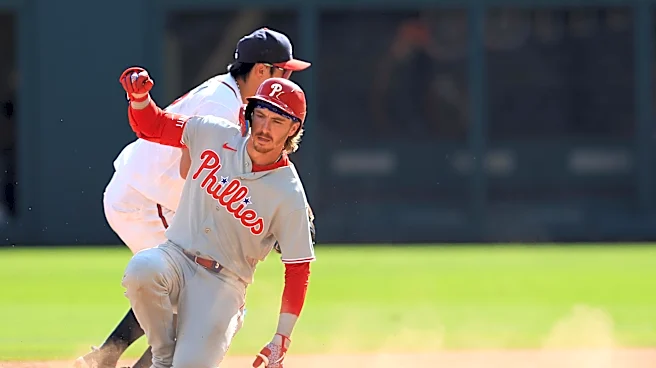
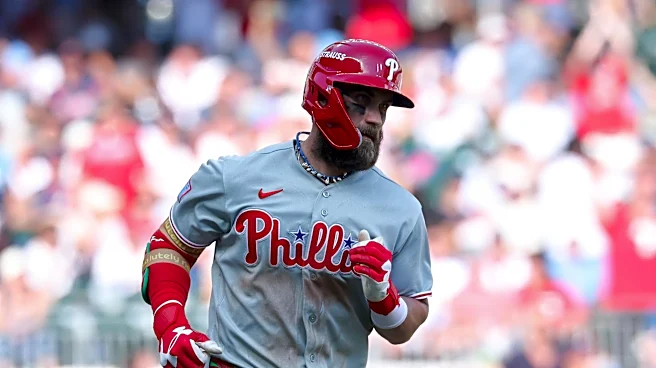
To some extent, everything comes back to the 2018-19 offseason, when Manny Machado and Bryce Harper were free agents. Following a year in which the Yankees won 100 games but were absolutely shellacked by the eventual champion Red Sox team. That Bombers team had an aging Brett Gardner in left, Didi Gregorius out for months due to a torn UCL, and a ton of uncertainty in the infield — Luke Voit’s breakout was fun, but there’s always reason to be wary of an age-27 breakout at first base; meanwhile, a young Gleyber Torres and Miguel Andujar had finished second and third in the AL Rookie of the Year voting, but there was reason to skeptical of Andujar’s performance at the plate and his ability to stick at third long-term. In short: the Yankees were good, but not so good that they couldn’t benefit from adding a superstar in his age-26 season, and lo and behold, not only were there two of them out there on the market, both were interested in donning the pinstripes — and Harper was supposedly even willing to learn first base to do it.
So naturally, the Yankees prioritized getting under the luxury tax, and well, since then, they’ve had problem after problem that could’ve been solved by literally having paid one of these two guys — especially Machado. Concerns about Andujar turned out to be warranted, and then he tore his labrum. It’s only now as a part-time player over the past two years that he’s finally been able to carve out a role for himself. Gio Urshela was really good replacing him during the #NextManUp campaign, and followed that up with a solid 2020, but soon regressed into the journeyman utility player he had been. The Josh Donaldson experience? A disaster. DJ LeMahieu? The first contract worked, but he soon became always injured. Oswaldo Cabrera? Although a fun player, never more than a fill-in. Jazz Chisholm Jr.? A second baseman out of position. Ryan McMahon? Somehow a brief improvement before an ugly 2026. Sure, Machado’s contract is now a bit of an albatross, as he’s owed $39 million through 2033, but that’s the result of the extension the Padres signed him to, not the original deal.

The biggest excuse given for not seriously pursuing Harper in 2018 was that he was an outfielder, and the Yankees had plenty of depth there. Well, Father Time came for Gardner, injuries caught up to Giancarlo Stanton and Clint Frazier, and Aaron Hicks experienced a severe and sudden decline. Since 2019, the Yankees have traded for Joey Gallo, Harrison Bader, Alex Verdugo, Juan Soto, Trent Grisham, Cody Bellinger, and Heliot Ramos in order to fix their outfield — and that doesn’t include the small army of players acquired simply to get injuries, such as Mike Tauchman and Jake Bauers, or the multiple prospects who have failed to stick. The team sure could’ve used Harper in any of those stretches … oh, and as it turns out, he’s a decent enough first baseman, too — yet another position that has been a bit of a revolving door.
Sure, the Yankees may currently be fine at the first base/DH spot and have their corner outfield set, but let’s be real, each of the last few seasons has ended with Hal Steinbrenner on the podium saying the team needs to be more consistent at the plate, and either one of these two would have gone a long way towards remedying that problem.
The Shortstop Problem
In the days following the 2014 season, the main question surrounding the Yankees was, “How are they going to replace the legendary Derek Jeter?” The solution, as it turned out, was rather easy: Didi Gregorius, a young shortstop acquired from the Arizona Diamondback as part of a three-way deal in exchange for Shane Greene. While it wasn’t quite as seamless as the DiMaggio-to-Mantle transition in the 1950s, Sir Didi went on to become a fan favorite — and, at least during the juiced ball era, a veritable middle-of-the-order bat.
Unfortunately, once Gregorius’s years of team control ran out after the 2019 season, the Yankees embarked on a years-long merry-go-round trying to replace him. First, the team turned to former top prospect Gleyber Torres, who had performed admirably filling in at shortstop when Gregorius was injured but was clearly most comfortable at the keystone — something that was clear to anybody with eyes after the 2020 season; the team then had to keep him at short after re-signing LeMahieu instead of making a harder push for Francisco Lindor. When that, rather predictably, failed, the team had to use Urshela and the anonymous Andrew Velazquez there down the stretch in 2021.

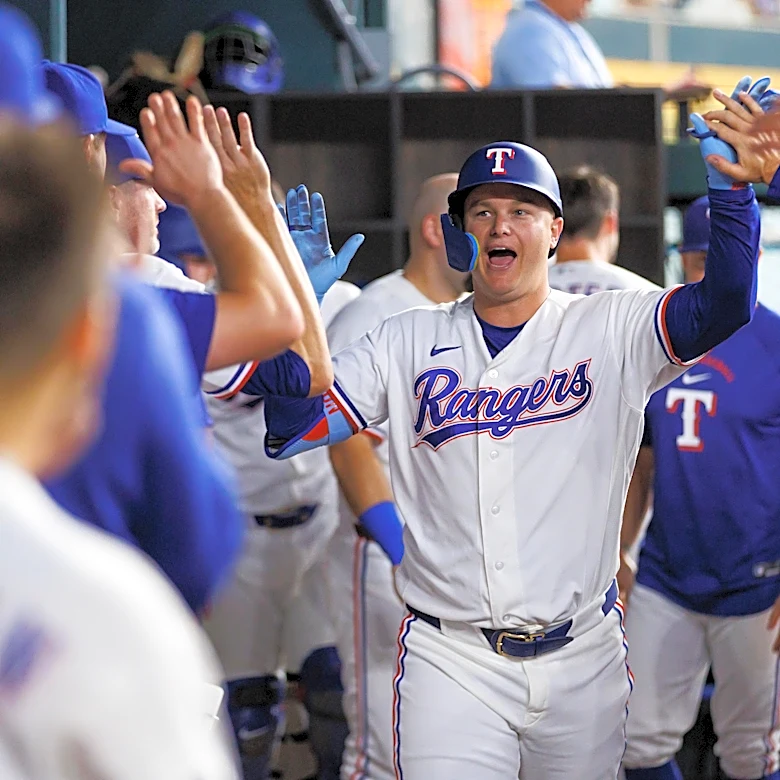
Rather than trying to sign Carlos Correa to the pillow contract he ended up getting from the Twins or making a play for future Rangers World Series MVP Corey Seager, the Yankees then swung a deal for Isiah Kiner-Falefa (not a bad player, miscast as a starting shortstop on a contender). When that went bust, they then handed the keys over to another top prospect who profiled more as a second baseman while in the minors, Anthony Volpe. The 22-year-old beat out fellow acclaimed up-and-comer Oswald Peraza, but neither were truly up for the job. Despite some stretches of time in which he looked to be taking the next step offensively — and a Gold Glove in what was admittedly a down year for AL shortstops — that ended as well as the Torres experiment. In the meantime, they opted not to pursue a shortstop in free agency, leaving them with no other options.
Will George Lombard Jr. help get the Yankees out of their post-Gregorius cycle, and finally allow this ghost to reset? I’m hopeful, but it remains to be seen.
The Devin Williams Conundrum
Once the Yankees signed Max Fried during the 2024-25 offseason, the rotation seemed to be a bit overflowing with arms, especially lefties. As such, the team decided to package Nestor Cortes with Caleb Durbin, a relatively minor infield prospect whose stock had risen during the 2024 season, and sent them both to the Brewers in exchange for arguably the best closer in baseball, Devin Williams. It was a move that, at the time, made sense: Clay Holmes was departing in free agency, the team needed another bullpen arm, and at the time, Nasty Nestor was behind Fried, Gerrit Cole, Carlos Rodón, Luis Gil, and Clarke Schmidt in the rotation pecking order.
This move, though, has already had major consequences — and will continue to do so, for the foreseeable future. First, the injury bug hit the Yankees rotation hard in 2025: Cole missed the full season with a torn UCL, Schmidt was gone for the latter half, and Gil made just 11 starts. The team was forced to rely on Marcus Stroman, who they had tried to dump that winter, and Ryan Yarbrough, who was signed as a bullpen arm, for 17 starts (oh, and both of them also hit the shelf). If it wasn’t for Cam Schlittler’s breakout and the trio of Fried, Rodón, and a rookie Will Warren making 33 starts apiece, the season would’ve been a disaster; and while Cortes himself spent much of the year injured, the psychological part of trading away what would have been sorely-needed depth stung.
To make matters worse, Durbin has developed into a solid third baseman with a league average bat, who finished top-three in the NL Rookie of the Year vote in 2025 before getting shipped to the Red Sox over the winter. Although he’s no superstar, his 4.4 rWAR/2.8 fWAR would have been miles better than the replacement-level play the Yankees got at the hot corner this season.
Had Williams been a dominant closer, this would have been an OK pill to swallow. Except … he was easily the second-worst closer the Yankees have had in recent years, and probably the worst when you factor in only the performance on the field.
Aroldis Chapman
The list of baseball-related things my Boston friends and I agree on is very short. Johnny Damon was fun to watch. The Mookie Betts trade was a disgrace. Aroldis Chapman sucks.
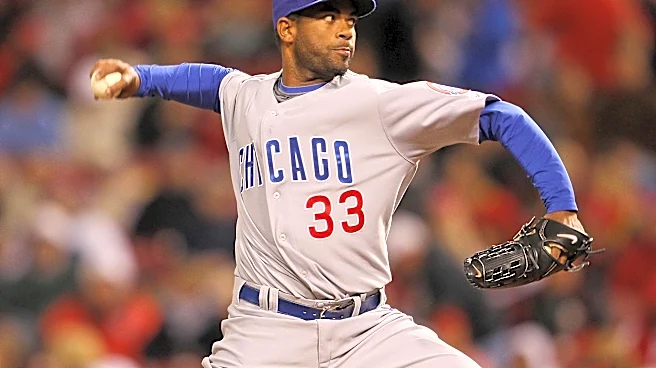
Yea, that’s pretty much it. From a purely baseball perspective, the decision to trade for Chapman was great — the prospects the Yankees sent over didn’t really amount to anything. The decision to trade him to the Cubs was even better, as it introduced Gleyber to the Bronx and brought Adam Warren back where he belonged. The decision to sign him again that winter was…defensible, even if I didn’t exactly love the idea of spending big money on a reliever during what I expected to be a down year (remember, expectations heading into 2017 were low). So why does this move haunt the Yankees? Well, because I absolutely despise the fact that he ever donned the pinstripes, and hate the fact that, if I ever need to look up his stats on Baseball Reference after he retires, there’s a solid chance the site will use a picture of him in a Yankee uniform as his profile picture since his seven seasons in the Bronx represents—and will likely forever represent—his longest tenure with any one team.
You’ll hear boos from more than just ghosts if you ever play that clip in the Bronx.